Why Homemade Biscuit Mix Tastes Better Than Boxed Baking Mix
Quick Answer
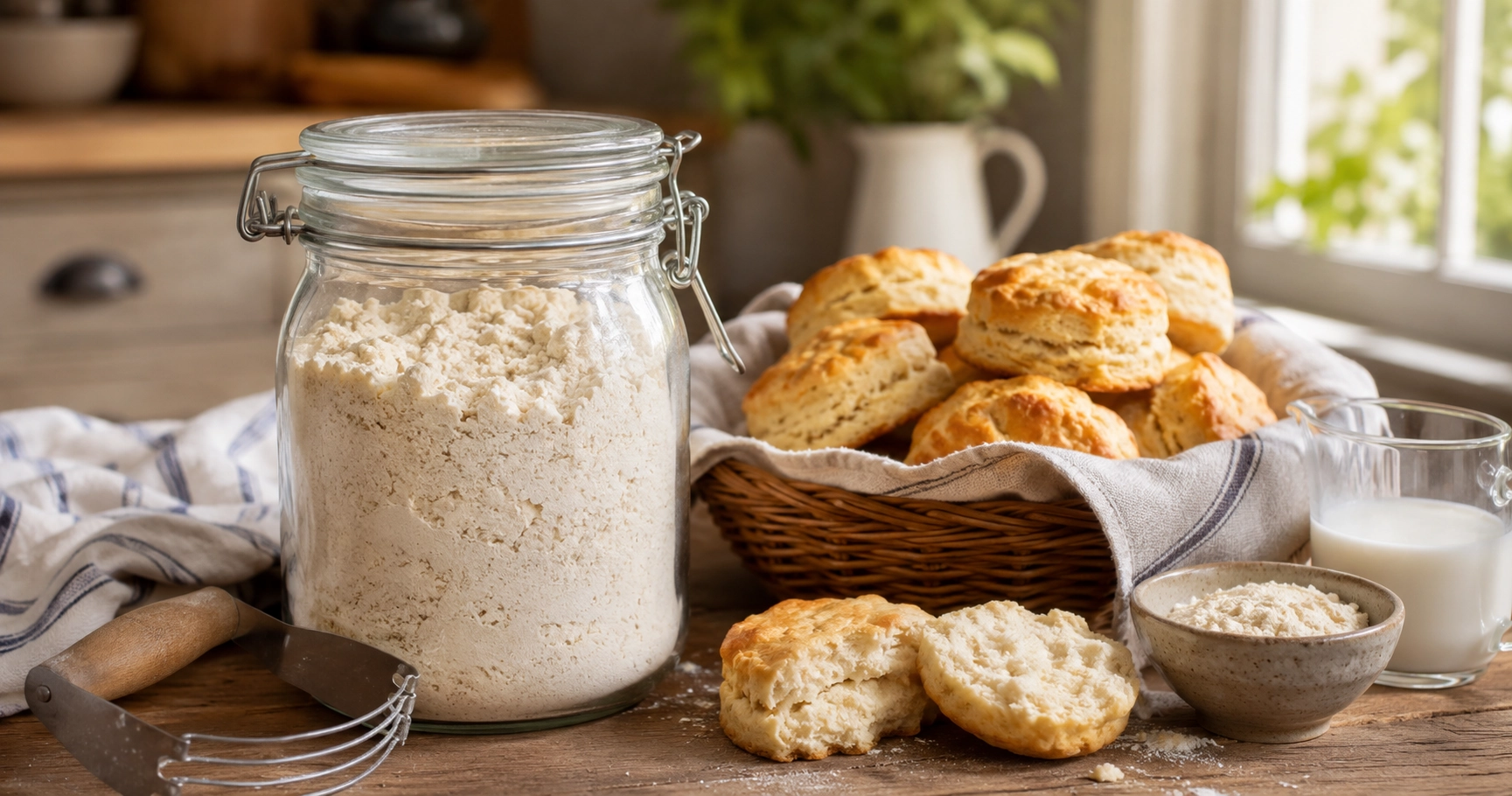
Homemade biscuit mix combines flour, baking powder, salt, and shelf-stable shortening into a make-ahead baking base that can be stored until you need biscuits, dumplings, cobbler topping, or a quick casserole crust. Because the fat is already blended into the flour, preparing biscuits only requires adding milk.
The homemade version preserves the speed and versatility of boxed baking mix while giving you control over the flour, salt, leavening, and type of shortening used. One cup of homemade biscuit mix can replace one cup of boxed all-purpose baking mix in recipes that call for a similar mix.
This recipe makes approximately 7 cups of biscuit mix. For one batch of eight to ten biscuits, combine 2¼ cups of the prepared mix with ⅔ cup milk.
Real-World Observation
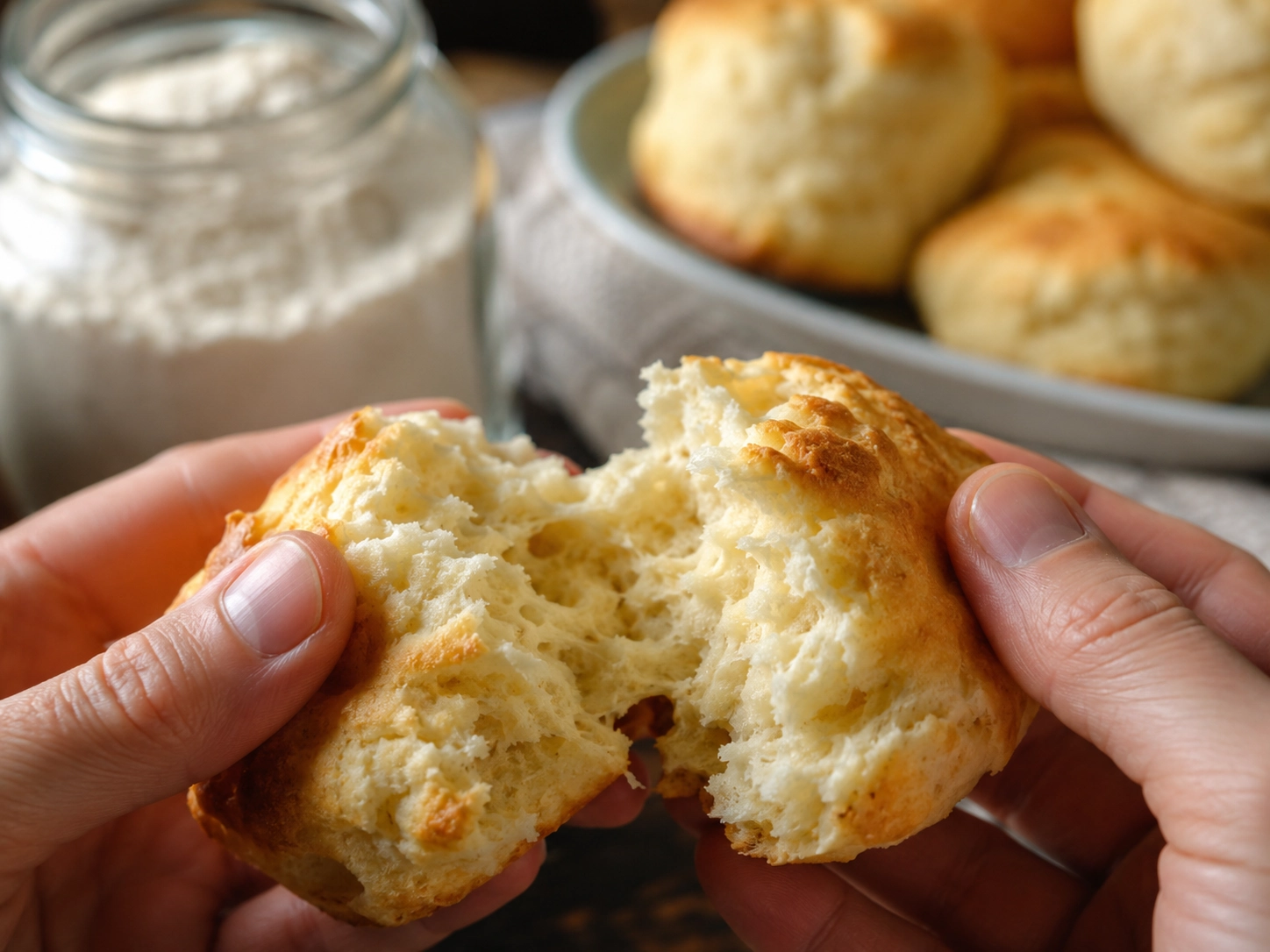
Biscuit dough often looks rougher than people expect. It does not need to become smooth or elastic. Small dry-looking areas usually disappear as the dough is gently folded and patted, while continued stirring can make the finished biscuits noticeably firmer.
The way the biscuits are cut also affects how they rise. Pressing a biscuit cutter straight down leaves the edges open so the dough can expand upward. Twisting the cutter compresses those edges and may produce shorter or uneven biscuits. Drop biscuits avoid that step entirely and produce a softer, more rustic shape.
The Real Food Upgrade
Boxed Baking Mix
Boxed biscuit and all-purpose baking mixes offer speed, consistency, and versatility. The flour, leavening, salt, and fat are already combined, so the same mix can be used for biscuits, dumplings, pancakes, cobblers, and casserole toppings.
That convenience is useful, especially when a recipe needs to come together quickly. The flour, salt level, leavening, and type of fat, however, have already been selected.
Homemade Biscuit Mix
Homemade biscuit mix keeps the most practical feature of boxed baking mix: the shortening is already blended into the dry ingredients.
Preparing the mix ahead means there is no need to measure flour, baking powder, and salt or cut fat into the flour every time biscuits are made. Scoop out the amount needed, add milk, and mix briefly.
The homemade upgrade also provides flexibility. You can control the salt, select the flour, and choose a shelf-stable shortening that suits your kitchen. The mix can then support breakfasts, soups, casseroles, dumplings, cobblers, and other comfort-food recipes.
Why This Recipe Works
All-purpose flour provides the structure that allows biscuits to hold their shape while remaining tender. Measuring the flour lightly prevents the mix from becoming overly dense.
Baking powder provides the lift. The amount is balanced so the mix can produce tall biscuits without leaving a noticeable leavening flavor.
Salt seasons the dough and keeps the biscuits from tasting flat. Because the mix may also be used in savory casseroles and dumplings, the salt remains moderate enough to work with broths, cheese, gravy, and other seasoned ingredients.
Shelf-stable vegetable shortening coats part of the flour and limits how much gluten develops when milk is added. This helps create a tender biscuit while allowing the mix to remain ready for baking.
The shortening must be evenly distributed. Pieces should be no larger than small peas, with most of the mixture resembling coarse crumbs. Large pieces can create greasy pockets, while overworking the shortening into a paste can make the mix heavy.
Milk hydrates the flour and activates the baking powder. Adding only enough milk to bring the dough together helps prevent spreading and keeps the biscuits tender.
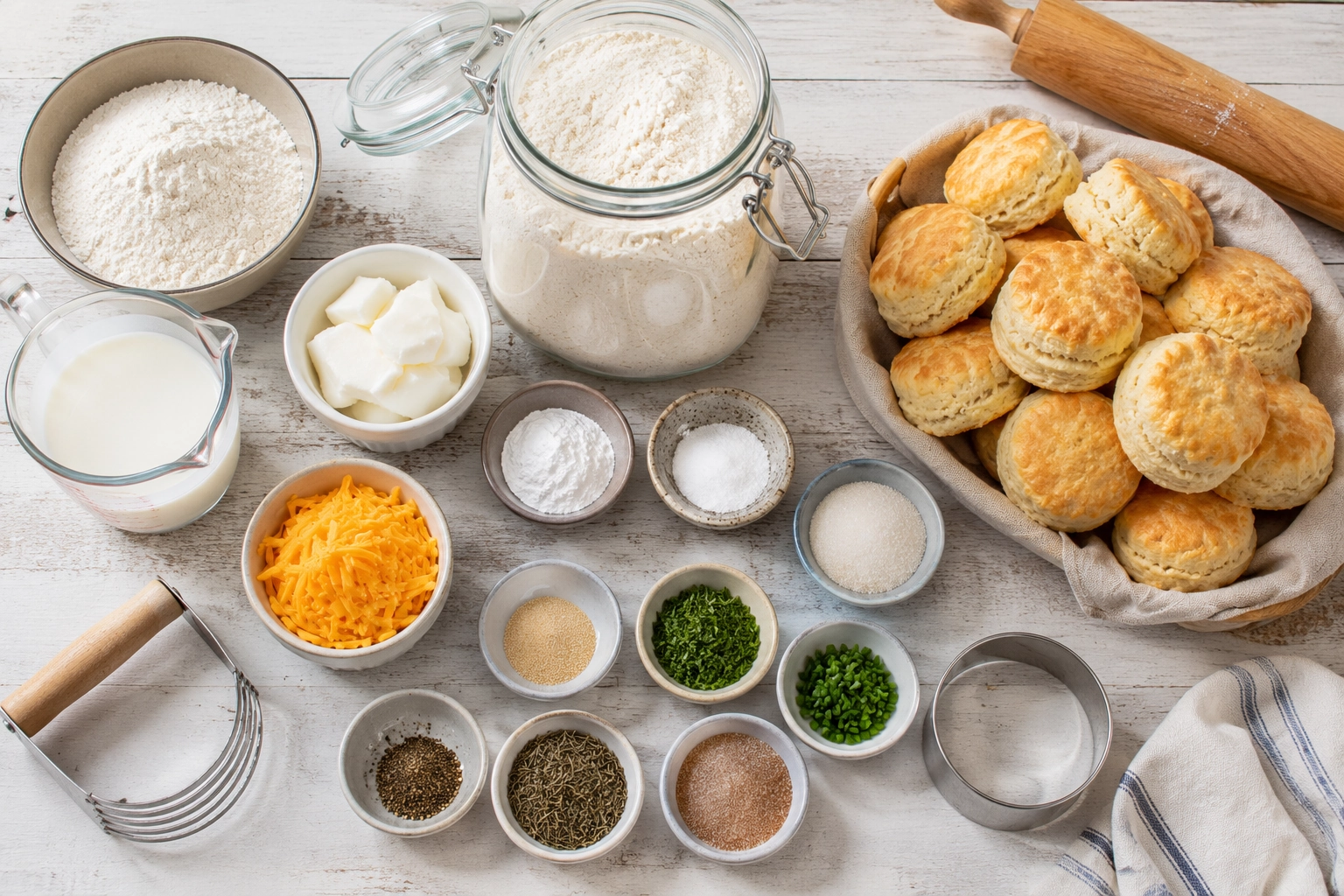
Ingredients
Main Ingredients
To Make Rolled Biscuits
How to
Make Drop Biscuits
Optional Additions
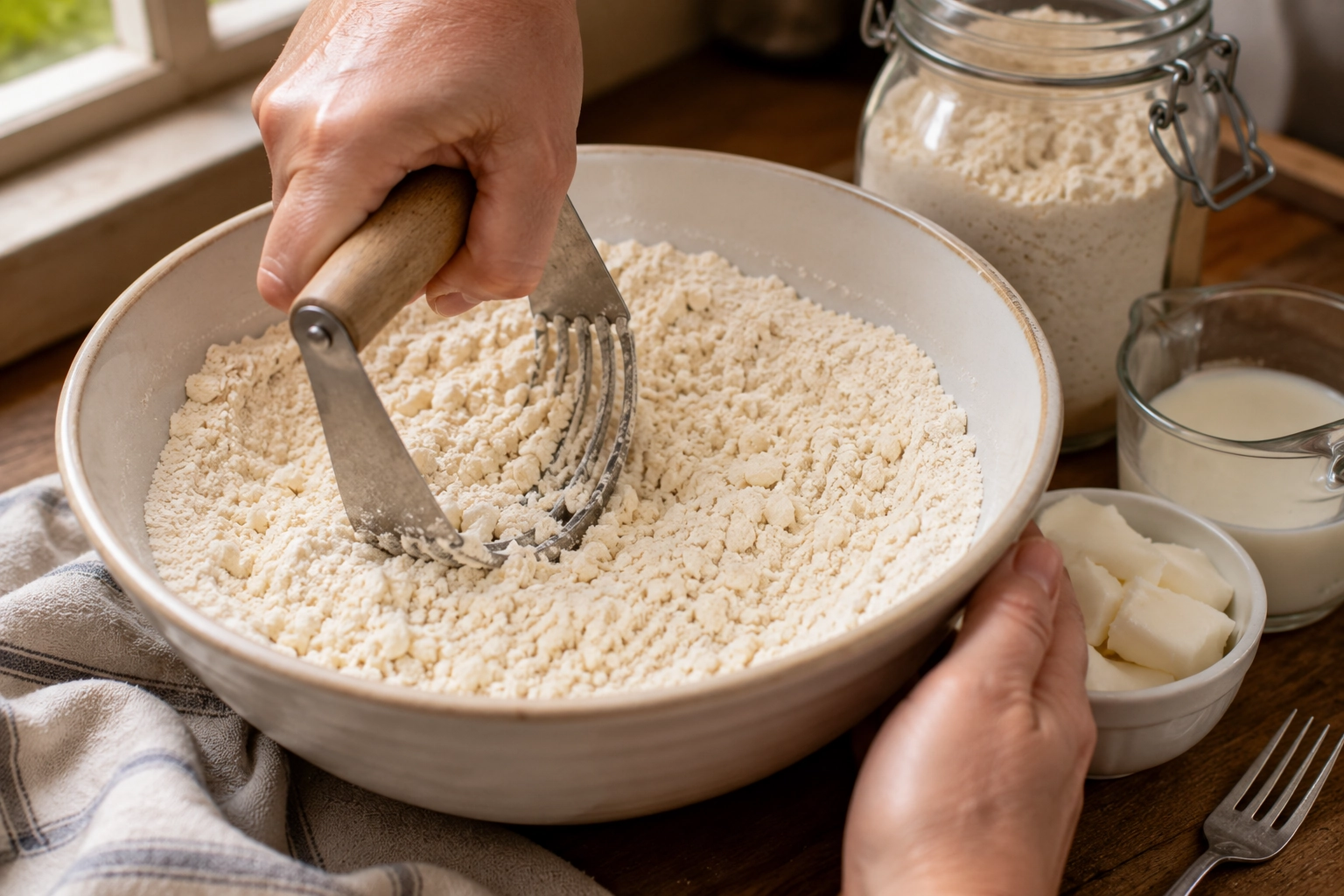
Instructions to Prepare the Biscuit Mix
1. Add the flour, baking powder, and salt to a large mixing bowl.
2. Whisk until the baking powder and salt are evenly distributed.
3. Add the vegetable shortening.
4. Use a pastry cutter, fork, or clean fingertips to work the shortening into the flour.
5. Continue blending until the mixture resembles coarse crumbs and no large pieces of shortening remain.
6. Transfer the biscuit mix to an airtight container.
7. Label the container with the preparation date and biscuit directions.
Instructions to Make Rolled Biscuits
1. Heat the oven to 450°F.
2. Place 2¼ cups Homemade Biscuit Mix in a medium bowl.
3. Pour in ⅔ cup milk.
4. Stir gently until a rough dough forms and no large pockets of dry mix remain.
5. Turn the dough onto a lightly floured surface.
6. Fold the dough over itself three or four times without kneading it smooth.
7. Pat the dough to approximately ¾ inch thick.
8. Cut the biscuits with a floured biscuit cutter, pressing straight down without twisting.
9. Arrange the biscuits on an ungreased or parchment-lined baking sheet.
10. Place the biscuits close together for softer sides or farther apart for crisper edges.
11. Bake for 10 to 12 minutes, until the tops are lightly golden.
12. Serve warm.
Instructions to Make Drop Biscuits
1. Heat the oven to 450°F.
2. Place 2¼ cups Homemade Biscuit Mix in a medium bowl.
3. Add ¾ cup milk.
4. Stir gently until a thick, scoopable dough forms.
5. Drop rounded portions of dough onto an ungreased or parchment-lined baking sheet.
6. Bake for 10 to 12 minutes, until the surfaces are set and lightly browned.
How Much Homemade Biscuit Mix Replaces Boxed Baking Mix?
Use homemade biscuit mix as a direct volume replacement in recipes that call for boxed all-purpose baking mix:
1 cup homemade biscuit mix replaces 1 cup boxed baking mix.
Because boxed products can vary in salt, fat, and leavening, the finished texture may differ slightly in recipes developed around a particular brand. For biscuits, dumplings, cobblers, and basic casserole toppings, the homemade mix can generally be substituted cup for cup.
One batch of eight to ten biscuits uses 2¼ cups of mix.
Add these directions to the storage label:
For rolled biscuits: Combine 2¼ cups mix with ⅔ cup milk. Pat ¾ inch thick and bake at 450°F for 10 to 12 minutes.
For drop biscuits: Combine 2¼ cups mix with ¾ cup milk. Scoop onto a baking sheet and bake at 450°F for 10 to 12 minutes.
Biscuit Mix vs Self-Rising Flour
Self-rising flour contains flour, baking powder, and salt. It does not usually contain fat.
Homemade biscuit mix contains those same dry ingredients plus shortening. That added fat is what makes the mix behave more like an all-purpose boxed baking mix.
When using self-rising flour for biscuits, butter or shortening must still be cut into the flour before the milk is added. With this biscuit mix, that step has already been completed.
Rolled Biscuits vs Drop Biscuits
Rolled biscuits use a firmer dough that can be patted and cut. Folding the dough a few times creates subtle layers, while cutting it into rounds produces a more uniform shape.
Drop biscuits use slightly more milk, creating a softer dough that is portioned with a spoon or scoop. They have irregular surfaces, crisp ridges, and a tender center.
Both versions use the same stored mix. Drop biscuits are faster because they require no flouring, folding, patting, or cutting.
Biscuit Mix vs Pancake Mix
Biscuit mix contains shortening, which helps create tender biscuits and allows the mix to serve as a base for dumplings and casserole toppings.
Homemade Pancake Mix does not contain fat in the stored mixture. Milk, egg, and melted butter or oil are added when the pancake batter is prepared.
The two mixes may contain similar flour and leavening ingredients, but they are balanced for different textures. Biscuit dough should remain thick enough to hold its shape, while pancake batter needs to spread across a griddle.
Flavor & Outcome
The finished biscuits have a lightly salted flavor, a tender interior, and a thin golden surface. Because the mix contains shortening rather than butter, the flavor remains neutral and works with both sweet and savory meals.
Rolled biscuits have more defined layers and a slightly firmer exterior. Drop biscuits have irregular, lightly crisp edges and a softer, more uniform center.
The biscuits are softest while warm. As they cool, the crumb becomes slightly firmer. Covering them loosely with a clean towel for several minutes helps retain moisture without making the surfaces wet.
For a buttery finish, brush the tops with melted Homemade Butter immediately after baking or serve them warm with Homemade Garlic Herb Butter.
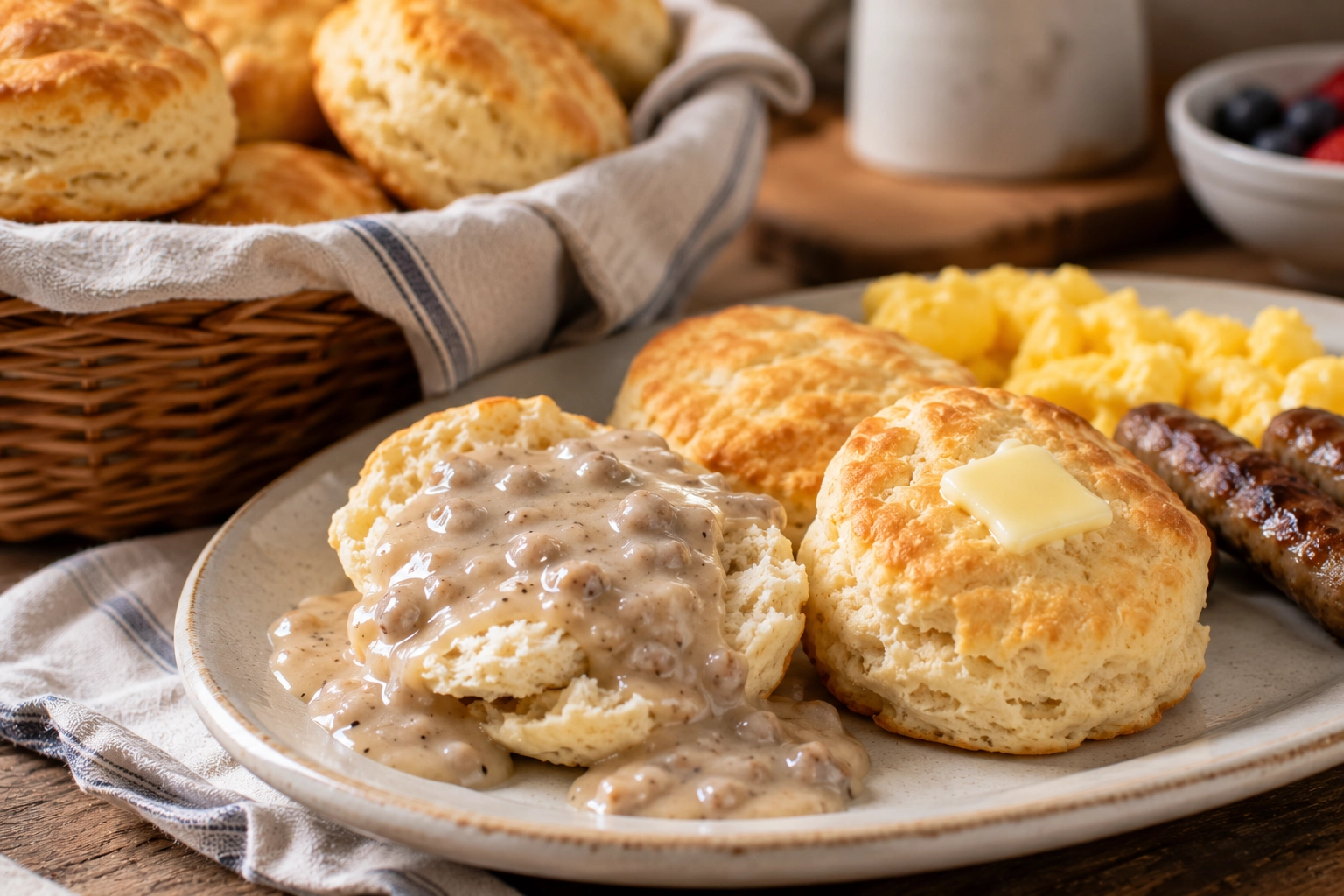
Serving Ideas
Use Homemade Biscuit Mix for:
Storage & Make-Ahead Tips
Pantry Storage
Store the prepared mix in an airtight container in a cool, dry pantry.
Because the recipe contains shelf-stable vegetable shortening, it can be stored at room temperature. Keep it away from the stove, dishwasher, sunlight, and other sources of heat or moisture.
Freezer Suitability
Homemade biscuit mix can be frozen in an airtight freezer-safe container for up to six months.
Measure the mix before freezing it in individual 2¼-cup portions for faster biscuit preparation. Allow a portion to sit at room temperature briefly before adding the milk.
Shelf Life
For the freshest flavor, use pantry-stored biscuit mix within three months.
Although the dry ingredients may remain usable longer, shortening can gradually develop a stale or rancid flavor, and baking powder can lose strength over time.
Discard the mix if it develops an unusual odor, visible moisture, discoloration, or hard clumps that do not break apart.
Make-Ahead Notes
Prepare the complete mix in advance and store it in one large container or divide it into 2¼-cup portions.
Separately portioned containers make biscuit preparation especially simple and help keep the leavening and shortening evenly distributed.
Stir or shake a large container gently before measuring, since the finer ingredients may settle during storage.
Common Questions
What is homemade biscuit mix made of?
Homemade biscuit mix is made from all-purpose flour, baking powder, salt, and shelf-stable vegetable shortening. Milk is added when it is time to make biscuits or another recipe.
Why did my biscuits turn out dense or tough?
Dense biscuits are commonly caused by overmixing, kneading the dough too much, adding excessive flour, or using old baking powder.
Stir only until the dough comes together, fold it a few times, and stop handling it once it can be patted and cut.
Can I use butter instead of shortening?
Butter can be used for biscuits, but it should not be mixed into this pantry-stored formula. Butter contains water and requires refrigeration.
To use butter, store only the flour, baking powder, and salt as a dry mixture. Cut cold butter into the measured dry ingredients immediately before adding the milk.
Can I use the mix for dumplings?
Yes. Combine the mix with enough milk to create a soft, scoopable dough. Drop spoonfuls onto gently simmering soup or stew and cook according to the dumpling recipe.
Avoid stirring the dumplings after they are added, as this can cause them to break apart.
Can I use whole wheat flour?
Replace up to half of the all-purpose flour with whole wheat flour. The mix may need slightly more milk because whole wheat flour absorbs additional liquid.
Using only whole wheat flour will produce denser biscuits with a more pronounced grain flavor.
Next Real Food Upgrade
After making your own Homemade Biscuit Mix, try Homemade Gravy Mix. Both are practical pantry shortcuts for comfort-food meals, but gravy mix creates a savory sauce for serving over warm biscuits, mashed potatoes, meat, casseroles, and vegetable dishes.