Why Homemade Gravy Mix Tastes Better Than Store-Bought
Quick Answer
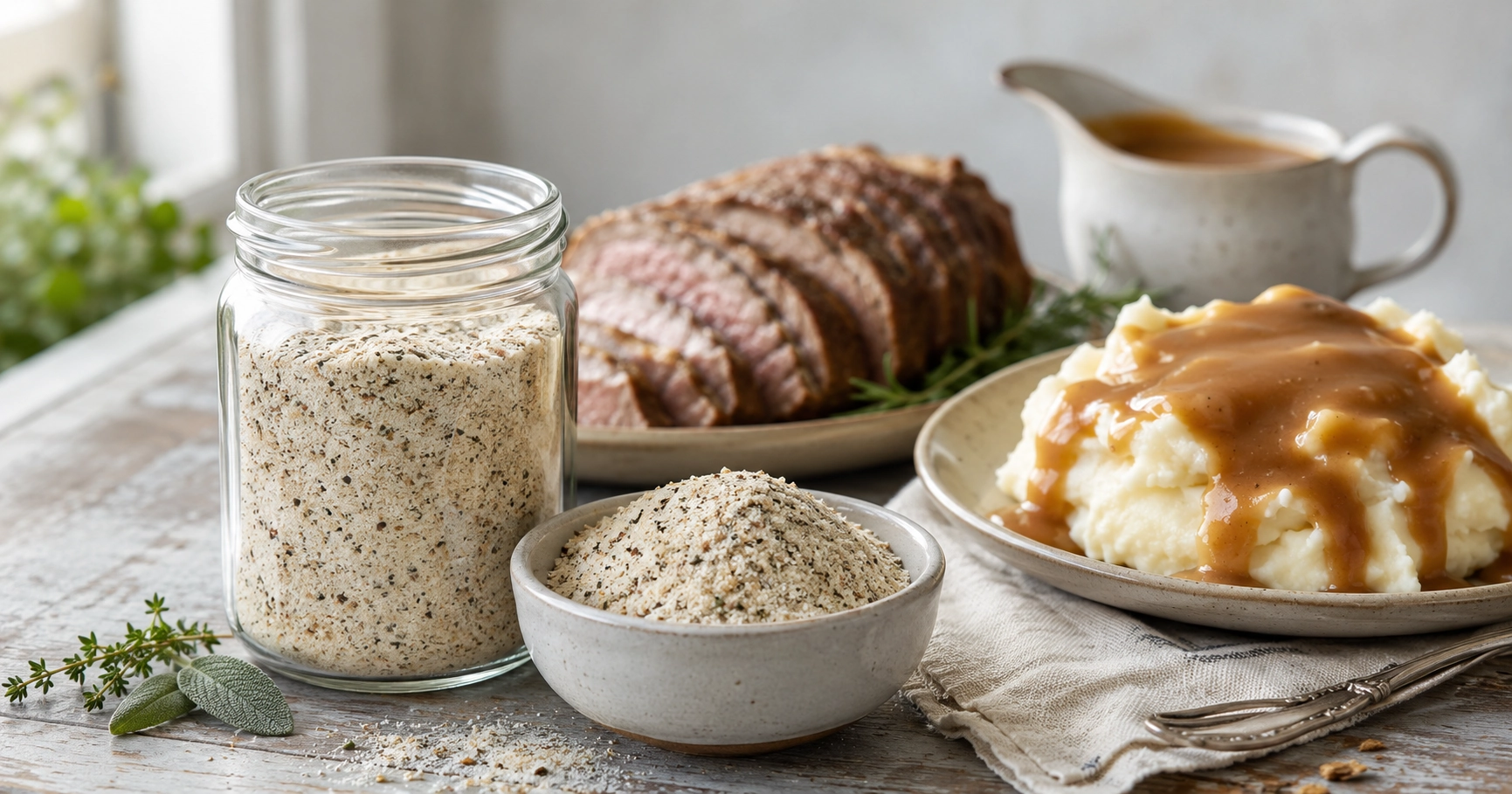
Homemade gravy mix combines flour, cornstarch, onion, garlic, pepper, and mild herbs into a dry pantry blend that can be turned into gravy with broth or pan drippings. The chosen liquid determines whether the finished gravy tastes like beef, chicken, turkey, or vegetables.
Store-bought gravy packets provide speed and predictable results. The homemade upgrade gives you control over the salt, seasoning, thickness, and type of broth used. A prepared jar also replaces several individual packets while remaining useful for everyday meals and holiday cooking.
Real-World Observation
Gravy continues to thicken as it simmers and usually becomes slightly thicker again as it cools. A batch that looks a little loose in the saucepan may reach the right consistency by the time it is transferred to the table.
Pan drippings also change the final result. Drippings from roasted meat add browned flavor and fat, but they may already contain salt and seasonings. Gravy made with drippings should be tasted near the end of cooking rather than seasoned heavily at the beginning.
The Real Food Upgrade
Store-Bought Gravy Mix
Packaged gravy mix is portioned for quick preparation and produces a consistent thickness. It can be useful when there are no pan drippings or when gravy needs to be made in a few minutes.
The broth flavor, salt level, seasoning, and thickening power are already determined. Each packet also makes a fixed amount, which may not match every meal.
Homemade Gravy Mix
Homemade gravy mix provides the thickening and seasoning foundation while leaving the liquid up to the cook.
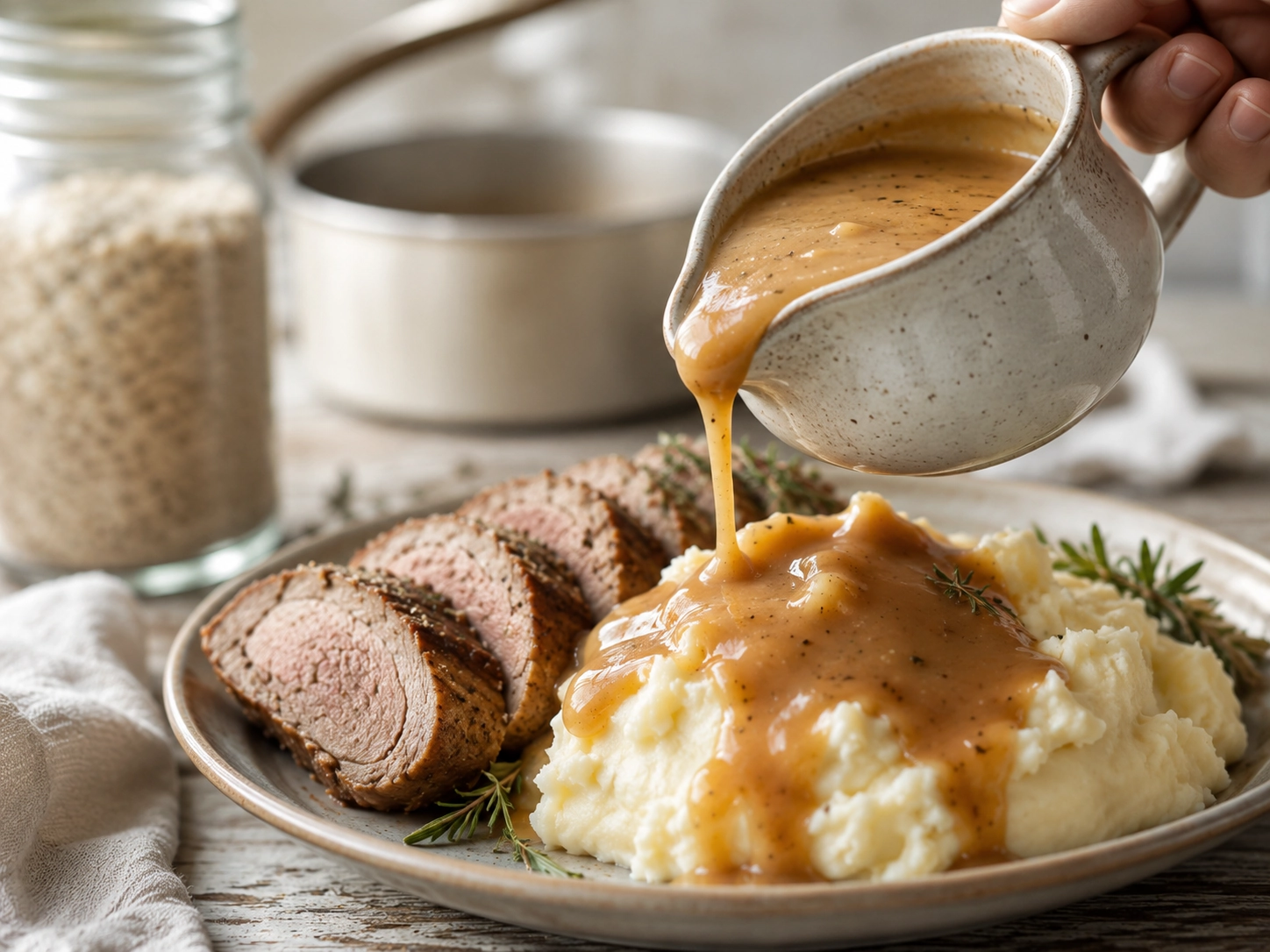
Beef broth creates brown gravy for meatloaf, roast beef, or mashed potatoes. Chicken or turkey broth produces a lighter gravy for poultry and holiday meals. Vegetable broth creates a meatless version that works with potatoes, biscuits, and roasted vegetables.
The practical upgrade is flexibility. You can change the broth, incorporate pan drippings, adjust the final thickness, and prepare only the amount needed.
Why This Recipe Works
All-purpose flour provides body and gives the gravy a familiar, rounded texture. It thickens more gradually than cornstarch and benefits from several minutes of simmering.
Cornstarch adds extra thickening power and helps the gravy become smooth without requiring a traditional butter-and-flour roux. Using both flour and cornstarch creates a dependable result while keeping the dry mixture simple to prepare.
Onion powder and garlic powder add savory flavor without introducing pieces that could interrupt the smooth texture. They also blend evenly throughout the dry mix.
Black pepper provides a mild background bite. Thyme works with beef, chicken, turkey, and vegetable broth, while a small amount of sage supports poultry without making the blend taste like stuffing seasoning.
Paprika contributes warm color and a subtle roasted note. It is not strong enough to make the gravy taste smoky or spicy.
Salt is left out of the main mixture because broth, bouillon, and pan drippings vary widely. This allows the finished gravy to be seasoned after the liquid has reduced.
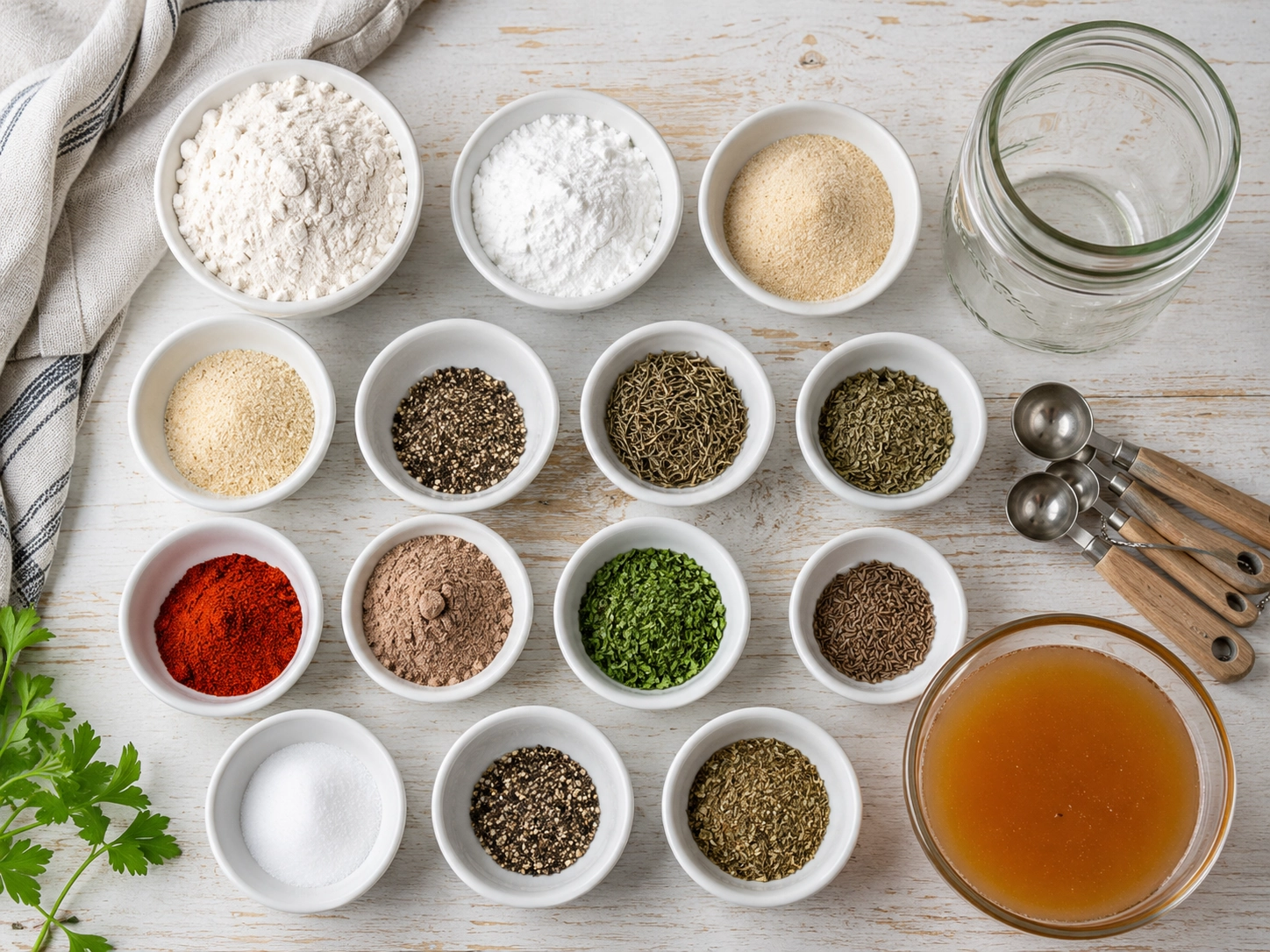
Ingredients
Main Ingredients
Optional Additions
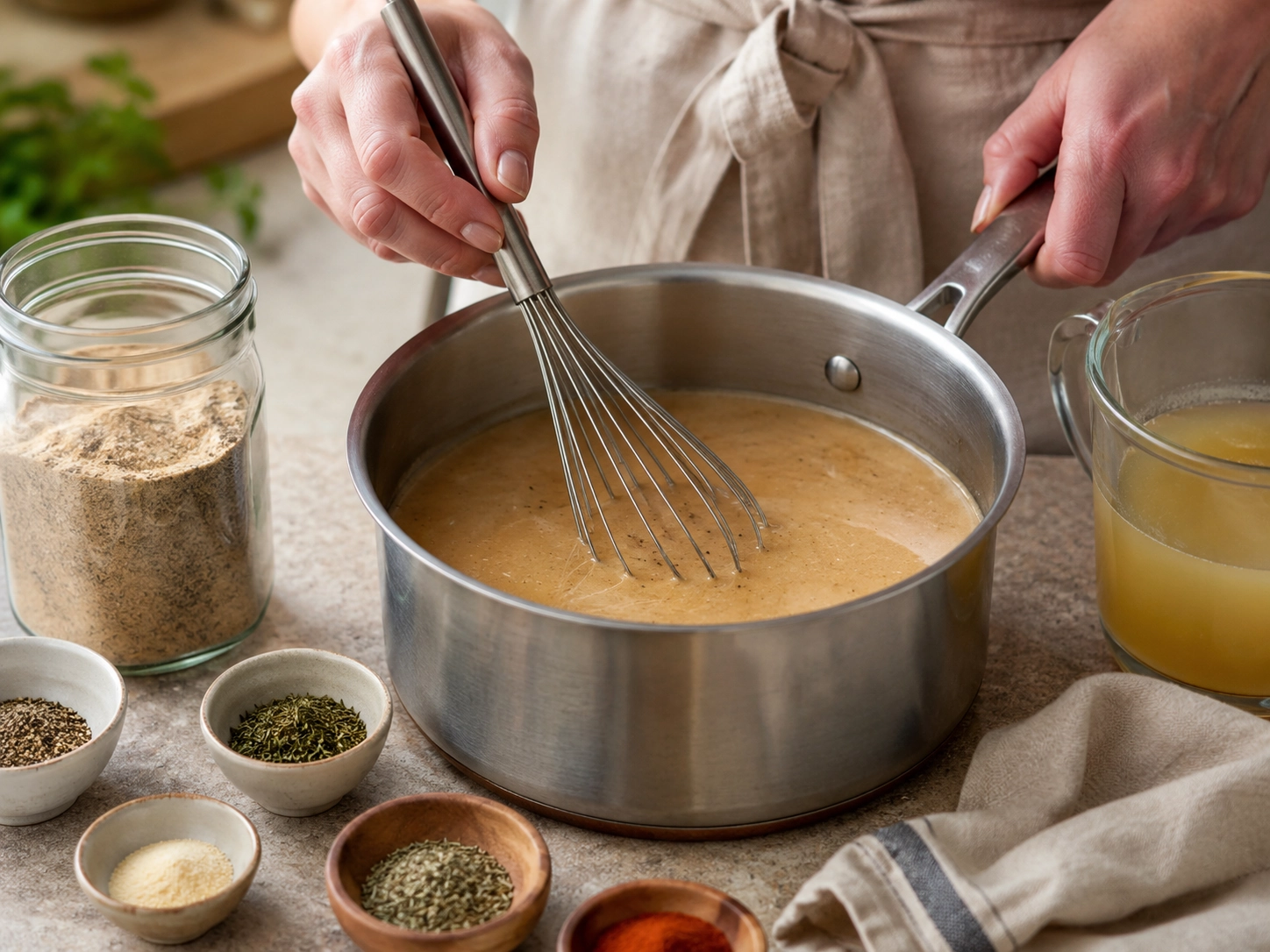
Instructions
1. Add the flour and cornstarch to a medium mixing bowl.
2. Whisk until the two powders are evenly combined.
3. Add the onion powder, garlic powder, black pepper, thyme, sage, and paprika.
4. Whisk again until the seasonings are distributed throughout the mixture.
5. Break apart any remaining lumps with the back of a spoon.
6. Transfer the gravy mix to a clean, completely dry jar.
7. Seal the jar tightly and label it with the preparation directions.
8. Stir or shake the mix before measuring because the finer ingredients may settle during storage.
How to Turn Dry Gravy Mix Into Gravy
1. Measure 1/4 cup homemade gravy mix into a medium saucepan.
2. Add 1/2 cup cold broth and whisk until the mixture is smooth.
3. Gradually whisk in another 1 1/2 cups broth.
4. Place the saucepan over medium heat.
5. Cook while whisking frequently until the gravy begins to simmer and thicken.
6. Reduce the heat and simmer for 3 to 5 minutes to cook the flour fully.
7. Taste the gravy and add salt or additional pepper as needed.
8. Add more broth for thinner gravy or continue simmering for a thicker consistency.
9. This amount makes approximately 2 cups of gravy.
Flavor & Outcome
The finished gravy is smooth, savory, and thick enough to coat meat, potatoes, or biscuits without becoming stiff. Its exact flavor depends primarily on the broth or drippings used.
Beef broth produces a darker gravy with a stronger roasted character. Chicken and turkey broth create a lighter color and allow the thyme and sage to become more noticeable. Vegetable broth creates a milder version that can be adjusted with mushroom powder, black pepper, or additional herbs.
Gravy made entirely with broth tastes clean and consistent. Gravy made with pan drippings has more variation because the browned bits, fat, and seasonings from the cooked meat become part of the sauce.
Gravy Mix vs. Au Jus Mix
Gravy mix contains flour and cornstarch because it is intended to thicken. The finished sauce should coat meat, potatoes, biscuits, and vegetables.
Au jus mix is intended to create a thinner, broth-like liquid. It is commonly served with roast beef or French dip sandwiches and should soak into the meat or bread rather than coat it heavily.
Au jus can be turned into gravy by adding a separate thickener, but the two pantry blends are designed for different starting results.
Gravy Made With Broth vs. Pan Drippings
Broth creates dependable gravy even when no meat has been roasted. It also makes it easy to choose the flavor before cooking begins.
Pan drippings contain concentrated juices, browned bits, seasonings, and fat from cooked meat. They create a deeper roasted flavor but may need to be strained or skimmed before use.
To combine the two methods, measure the defatted pan drippings and add enough broth to make 2 cups of liquid. Use that mixture in place of the broth in the preparation instructions.
Brown Gravy vs. Chicken or Turkey Gravy
Brown gravy is usually made with beef broth, beef drippings, or a combination of both. Mushroom powder, black pepper, or a small amount of onion seasoning can deepen its flavor.
Chicken and turkey gravy use poultry broth or drippings and usually have a lighter color. Thyme, sage, and black pepper support the poultry flavor without overpowering it.
The same dry gravy mix works for both because it provides the thickener and background seasoning rather than the main broth flavor.
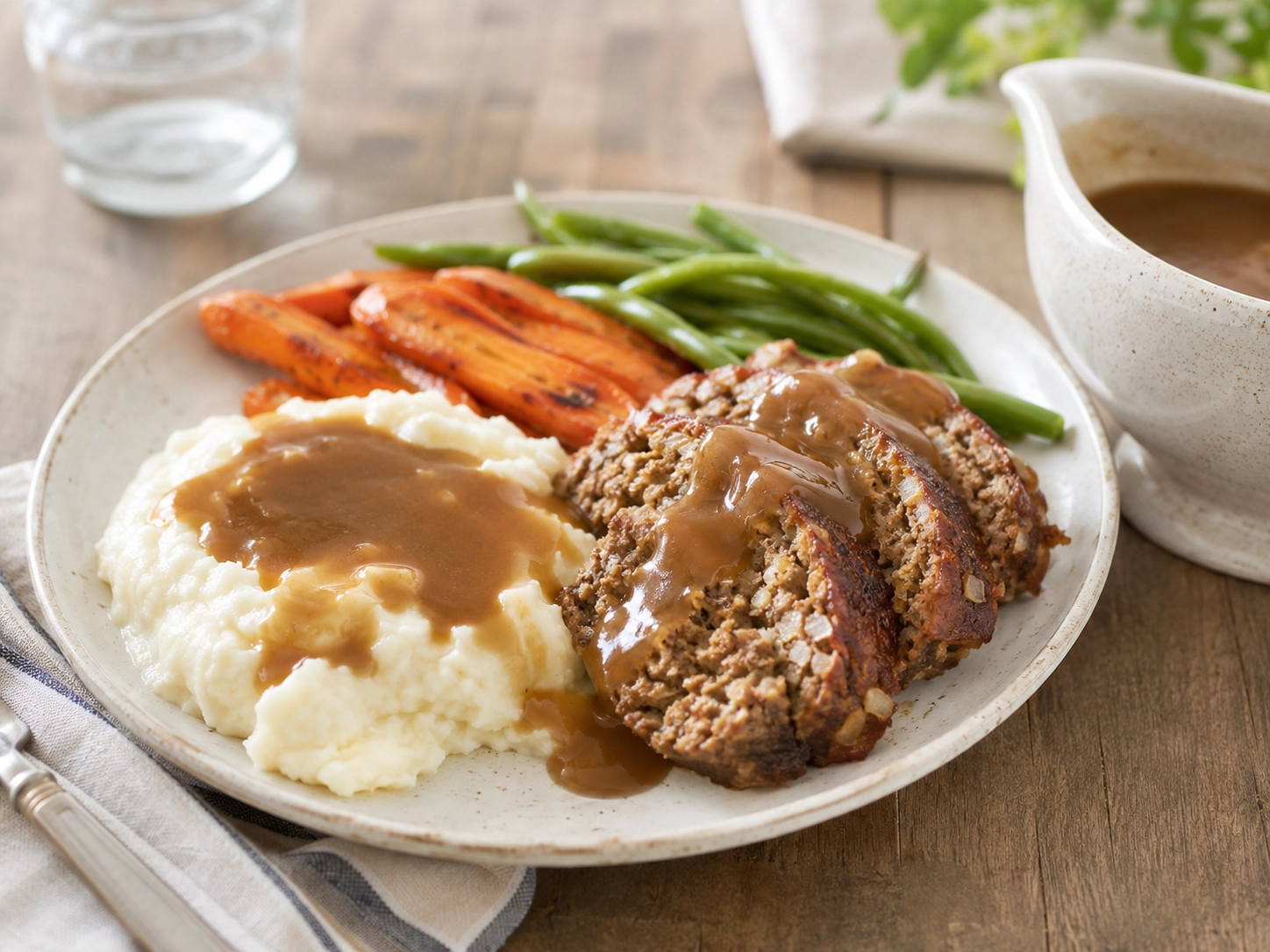
Serving Ideas
Use homemade gravy with:
Storage & Make-Ahead Tips
Pantry Storage
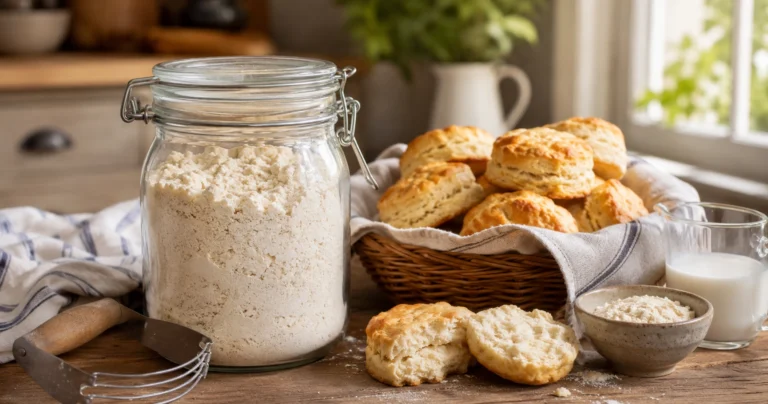
Store the dry gravy mix in an airtight container in a cool, dry cabinet. Keep wet utensils and steam away from the jar because moisture can cause the flour and cornstarch to clump.
Refrigerator Storage
Store prepared gravy in a covered container in the refrigerator for up to four days.
Shelf Life
For the strongest seasoning flavor, use the dry mixture within six months. Its practical storage life also depends on the freshness of the flour, cornstarch, and dried herbs used to make it.
Make-Ahead Notes
The dry mixture can be prepared well before holiday meals or roast dinners. Label the jar with the ratio of 1/4 cup mix to 2 cups broth.
Prepared gravy can also be made earlier in the day and reheated over low heat. It will thicken during storage, so keep additional broth nearby for loosening it.
Common Questions
What is homemade gravy mix made of?
Homemade gravy mix contains flour and cornstarch for thickening, along with onion powder, garlic powder, pepper, and herbs. Broth or pan drippings are added when the gravy is prepared.
Can I make gravy without meat drippings?
Yes. Use beef, chicken, turkey, or vegetable broth as the liquid. Pan drippings add roasted flavor, but they are not required for smooth, savory gravy.
How can I keep homemade gravy from becoming lumpy?
Whisk the dry mix with a small amount of cold broth before adding the remaining liquid. Beginning with cold liquid allows the flour and cornstarch to disperse before heat activates their thickening power.
Continue whisking as the gravy warms, especially around the bottom and corners of the saucepan.
How can I adjust the thickness?
Add warm broth a few tablespoons at a time when the gravy is too thick. When it is too thin, simmer it longer so more liquid evaporates.
For a larger adjustment, whisk 1 tablespoon of gravy mix with 2 tablespoons of cold broth. Slowly add that mixture to the simmering gravy.
Can I add butter to the gravy?
Yes. Whisking in 1 to 2 tablespoons of butter near the end gives the gravy a smoother finish and richer texture.
Next Real Food Upgrade
After making your own gravy mix, try homemade onion soup mix. Both blends replace individual seasoning packets and work with roasts, slow cooker meals, and savory side dishes, but onion soup mix places more emphasis on concentrated onion flavor.