Why Homemade Blue Cheese Dressing Tastes Better Than Store-Bought
Quick Answer
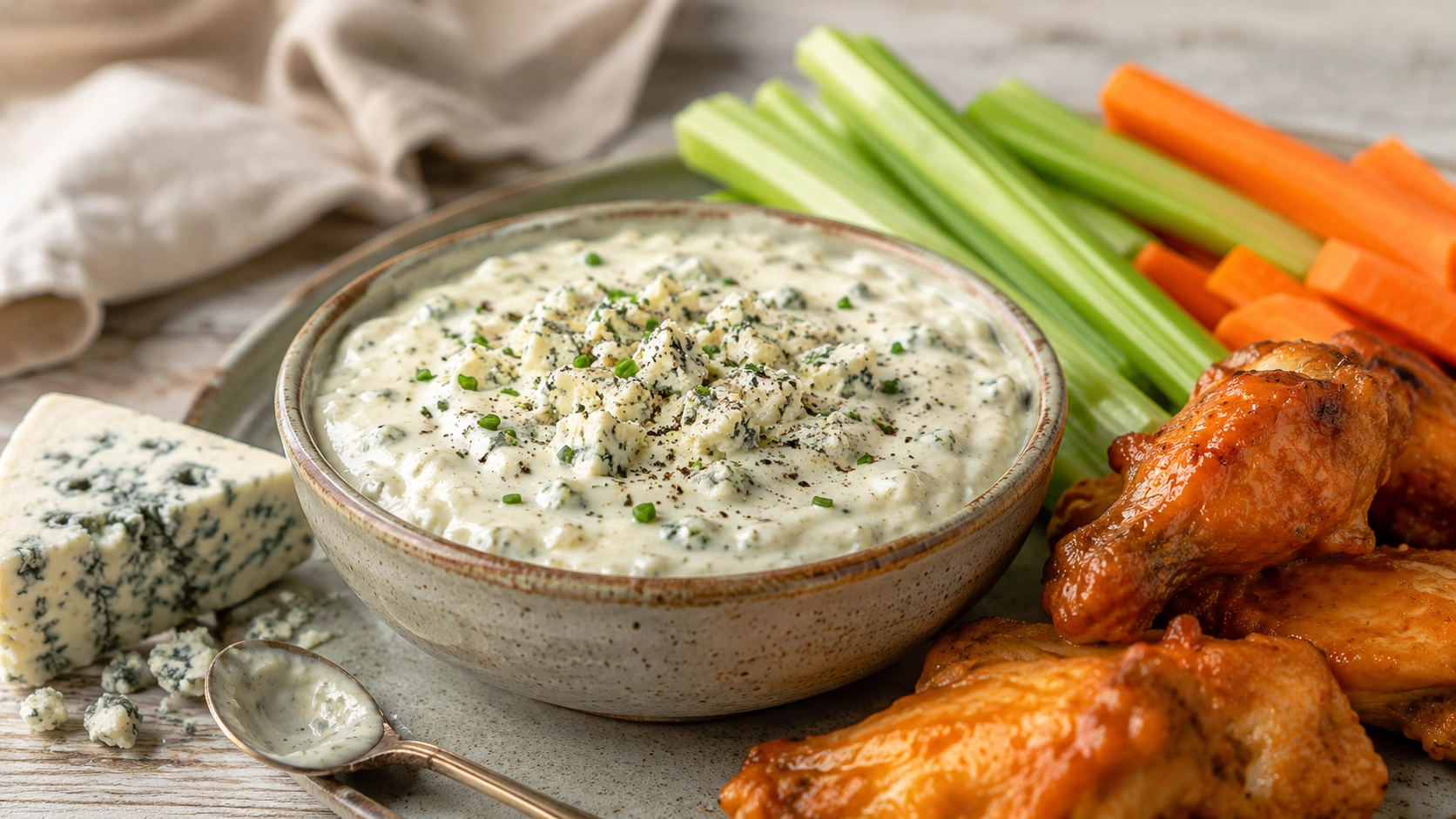
Homemade blue cheese dressing uses real blue cheese crumbles, a creamy dairy base, and a few everyday seasonings. The result has distinct pieces of cheese, a fresh tang, and a texture you can adjust from pourable dressing to thick dipping sauce.
Bottled dressings are designed for consistency and shelf stability. Making blue cheese dressing at home gives you control over the amount of cheese, the sharpness of the dressing, and the size of the crumbles. It works equally well on salads, beside buffalo wings, or spread over a burger.
Real-World Observation
Blue cheese dressing usually tastes more balanced after it rests in the refrigerator. During that time, the cheese softens slightly into the creamy base, while the garlic, black pepper, and Worcestershire become less separate and more cohesive.
The dressing also thickens as it chills. A batch that looks slightly loose when first mixed may become thick enough for dipping after 30 minutes in the refrigerator. It is better to adjust the final consistency after chilling rather than adding too much milk at the beginning.
The Real Food Upgrade
Bottled Blue Cheese Dressing
Bottled blue cheese dressing offers dependable texture, a long refrigerated shelf life, and the convenience of being ready to pour. Stabilizers and preservatives may be used to help the dressing remain consistent during storage.
The flavor and texture are also predetermined. The amount of cheese, thickness of the dressing, and balance of acidity cannot be changed once the bottle is opened.
Homemade Blue Cheese Dressing
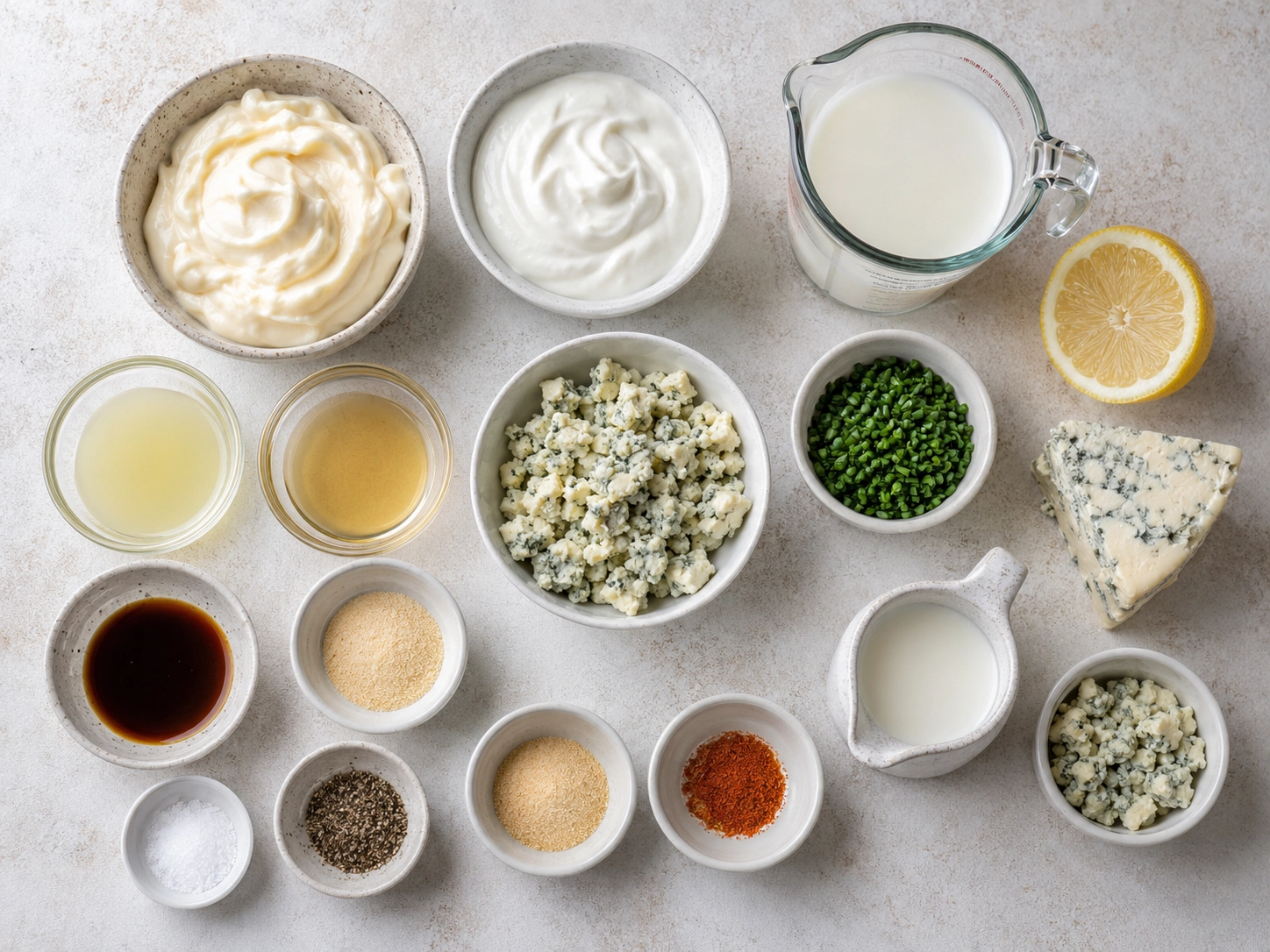
Homemade blue cheese dressing begins with familiar ingredients such as mayonnaise, sour cream, milk, lemon juice, seasonings, and real blue cheese.
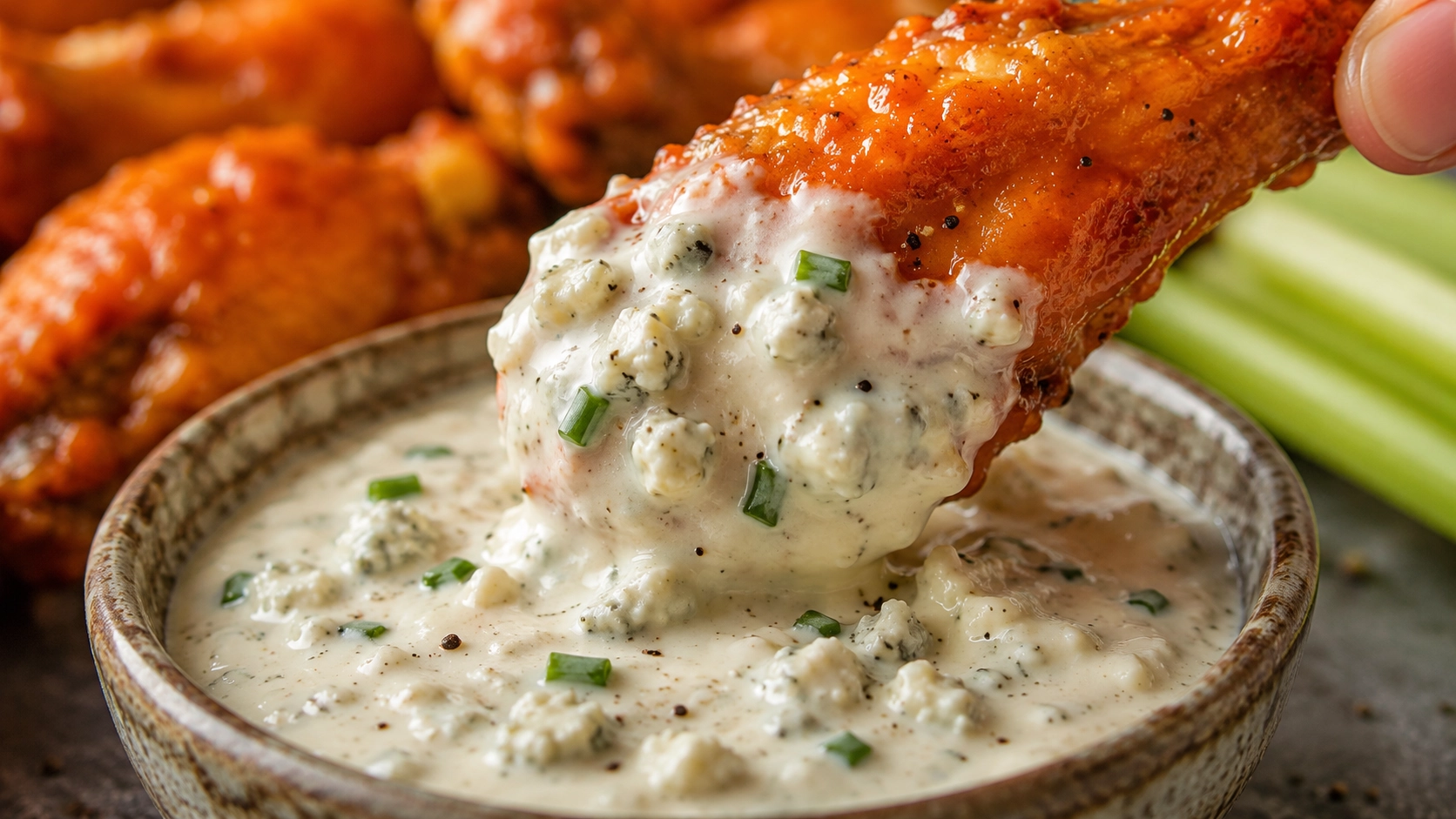
You can mash some of the cheese into the base for a smoother dressing while leaving the rest in larger pieces. You can also add milk for a thinner salad dressing or keep it thick for wings, vegetables, and burgers.
The practical upgrade is control. One basic mixture can become a smooth dressing, an extra-chunky dip, or something between the two.
Why This Recipe Works
Mayonnaise gives the dressing body and helps the ingredients blend into a smooth base. Using homemade mayonnaise can extend the same real-food approach, but regular mayonnaise also works.
Sour cream adds thickness and a clean dairy tang. It keeps the dressing creamy without requiring buttermilk, which makes the recipe practical when buttermilk is not already in the refrigerator.
Milk loosens the base without making it watery. Starting with a small amount allows you to control whether the finished dressing will be used for pouring or dipping.
Lemon juice and vinegar provide two slightly different types of acidity. Lemon tastes fresh and bright, while vinegar gives the dressing the familiar sharpness associated with blue cheese dressing.
Worcestershire sauce adds savory depth without making the dressing taste strongly of any one ingredient. Garlic powder and onion powder distribute evenly through the base and do not create raw pieces.
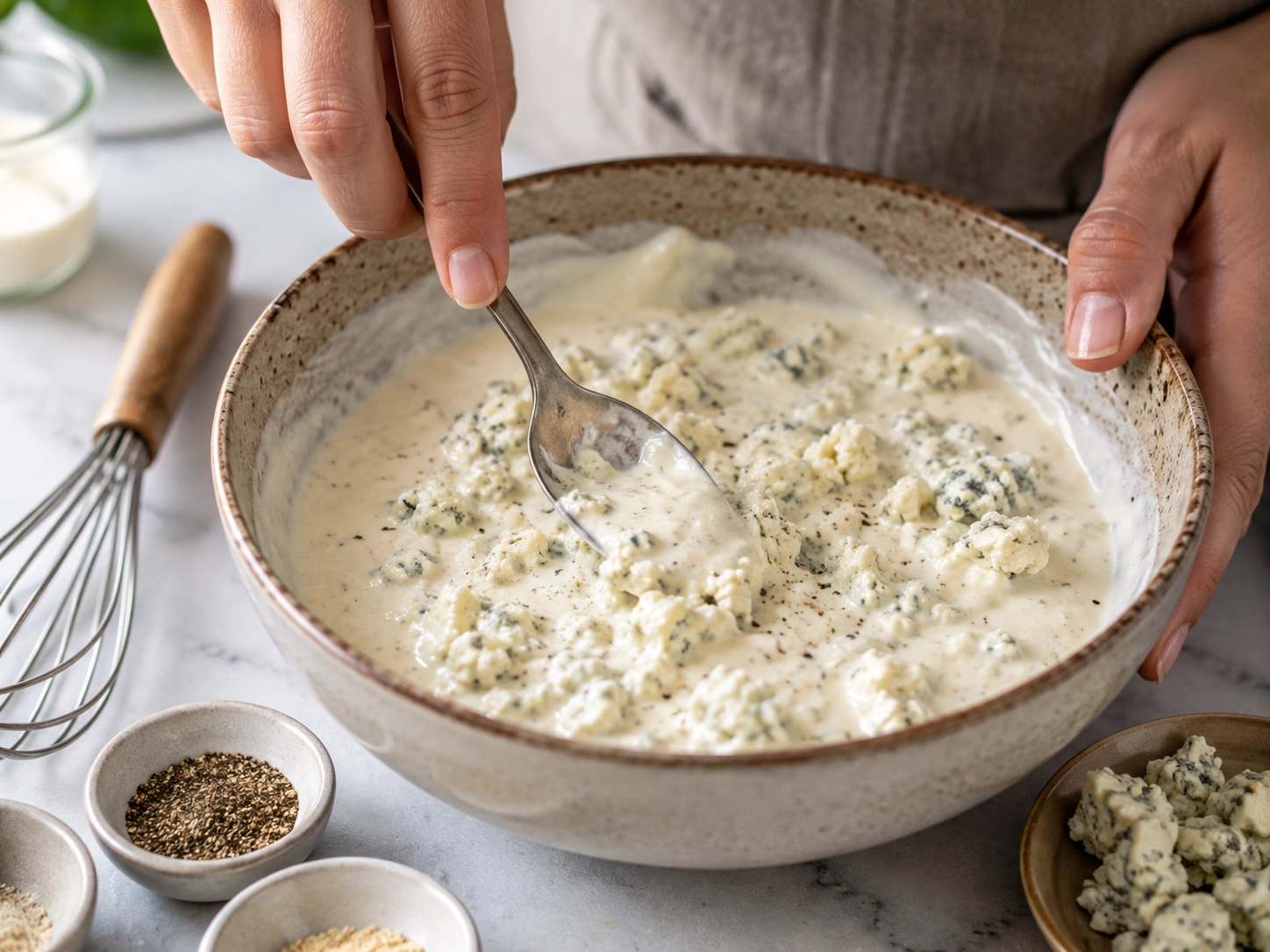
The blue cheese is divided. Part of it is mashed into the dressing to flavor the entire mixture, and the rest is folded in so that recognizable crumbles remain. This creates a more complete blue cheese flavor than simply stirring all the crumbles into the finished base.
Ingredients
Main Ingredients
Optional Additions
Instructions
1. Add the mayonnaise and sour cream to a medium bowl.
2. Whisk in the milk until the base is smooth.
3. Add the lemon juice, vinegar, Worcestershire sauce, garlic powder, onion powder, black pepper, and salt.
4. Mash half of the blue cheese into the creamy base with the back of a spoon.
5. Fold in the remaining blue cheese crumbles.
6. Add more milk, one tablespoon at a time, if you want a thinner consistency.
7. Cover the bowl and refrigerate the dressing for at least 30 minutes.
8. Stir before serving, then adjust the salt, pepper, acidity, or thickness as needed.
Flavor & Outcome
The finished dressing is creamy, tangy, and distinctly savory. Mashed blue cheese flavors the entire base, while the folded crumbles create softer pockets of stronger cheese flavor.
The Worcestershire sauce stays in the background, adding depth rather than a noticeable sauce flavor. Lemon and vinegar keep the rich dairy base from tasting flat or heavy.
After chilling, the dressing becomes slightly thicker. The blue cheese crumbles also soften around the edges, which helps them blend into the base while remaining visible.
For a smooth dressing, mash most of the cheese before chilling. For an extra-chunky version, mash only a small portion and fold larger crumbles into the finished mixture.
Blue Cheese Dressing vs. Ranch Dressing
Both blue cheese and homemade ranch dressing use creamy bases and work as salad dressings, vegetable dips, and sauces for wings.
Ranch gets most of its character from fresh herbs, garlic, and onion. Blue cheese dressing has a sharper, richer flavor from the cheese itself. Ranch is generally smoother, while blue cheese dressing can range from nearly smooth to noticeably chunky.
The better choice depends on the meal. Ranch works well when herbs should remain prominent. Blue cheese dressing is useful when a stronger savory contrast is needed, especially with spicy wings, grilled beef, or crisp lettuce.
Blue Cheese Dressing vs. Caesar Dressing
Blue cheese dressing is thicker and more dairy-forward than homemade Caesar dressing. Caesar dressing usually has a saltier, more concentrated flavor from Parmesan, garlic, lemon, and Worcestershire or anchovy.
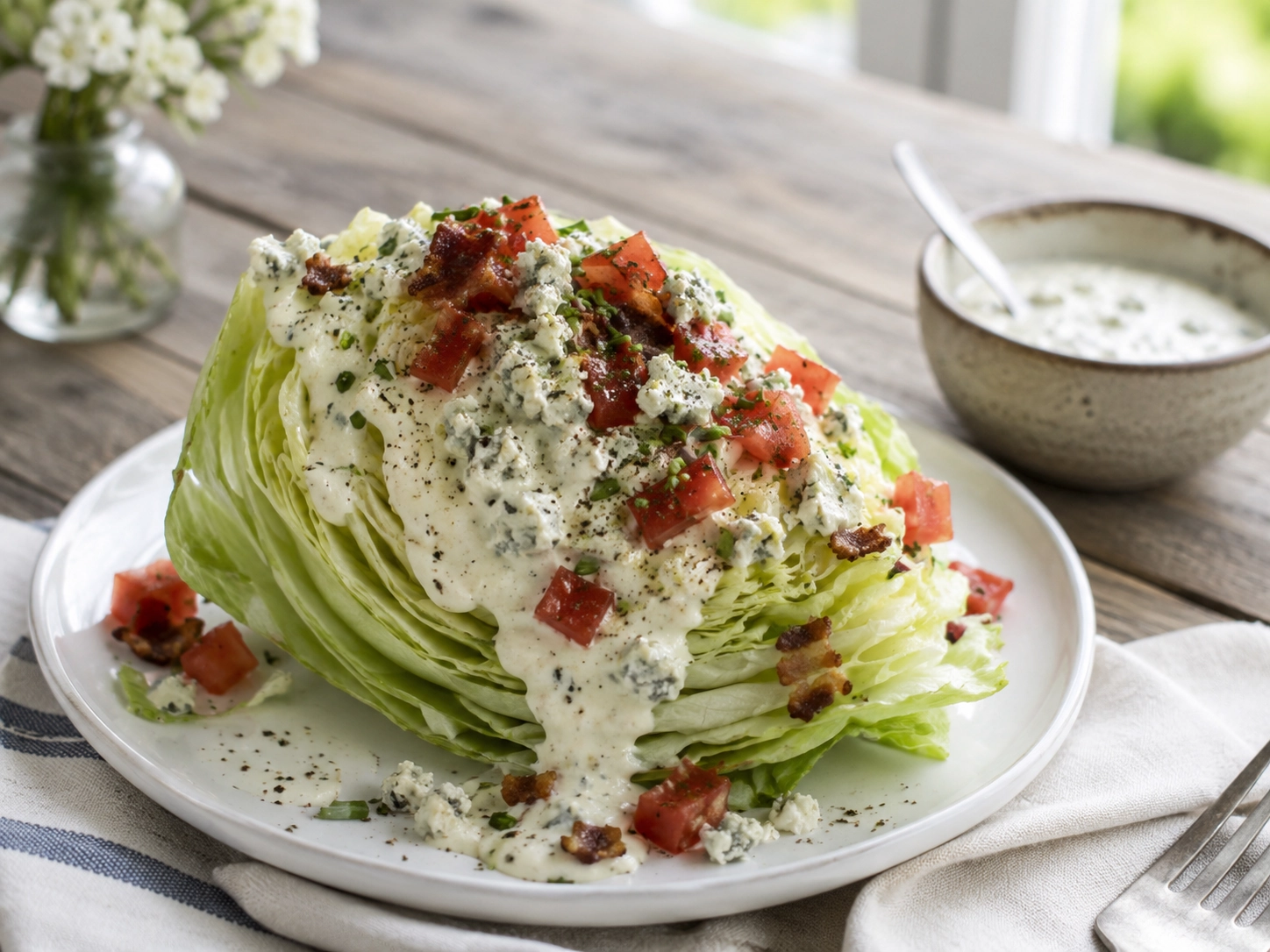
Both dressings work on sturdy salad greens, but they create different results. Blue cheese dressing is well suited to wedge salads and composed salads with tomatoes, bacon, or grilled meat. Caesar dressing coats romaine more evenly and supports croutons and Parmesan.
Serving Ideas
Use homemade blue cheese dressing with:
Storage & Make-Ahead Tips
Refrigerator Storage
Store homemade blue cheese dressing in a covered container in the refrigerator. Stir it before each use because a small amount of liquid may collect on the surface.
Freezer Suitability
Freezing is not recommended. Mayonnaise, sour cream, and milk can separate as they freeze and thaw, leaving the dressing grainy or watery.
Shelf Life
For the freshest texture and flavor, use the dressing within four days.
Make-Ahead Notes
Blue cheese dressing benefits from being prepared several hours before serving. The cheese, garlic, Worcestershire, and acidity become more evenly distributed as the dressing rests.
When making it ahead, leave the mixture slightly thicker than you think you need. Stir in additional milk shortly before serving if it has thickened too much.
Common Questions
What is blue cheese dressing made of?
Blue cheese dressing is commonly made with mayonnaise, sour cream or buttermilk, blue cheese crumbles, an acidic ingredient such as lemon juice or vinegar, and seasonings. This version uses sour cream and milk so buttermilk is not required.
Can I make blue cheese dressing without buttermilk?
Yes. Sour cream and milk create a creamy, tangy base without buttermilk. You can replace the milk with buttermilk when you have it, but the dressing does not depend on it.
What type of blue cheese works best?
Choose a blue cheese that you enjoy eating on its own. A mild, creamy blue cheese produces a softer flavor, while a firmer or more aged cheese creates a sharper dressing. Pre-crumbled cheese works, although cheese crumbled from a wedge often blends more smoothly.
How can I make the dressing more or less chunky?
For a smoother dressing, mash most of the blue cheese into the base. For a chunkier version, mash only half and fold the remaining crumbles in gently.
Is homemade blue cheese dressing good for dipping?
Yes. Keep the dressing thick by using less milk, then chill it before serving. The refrigerated mixture becomes firmer and holds well on wings, vegetables, crackers, and potato skins.
Next Real Food Upgrade
After making your own blue cheese dressing, try homemade ranch dressing. Both recipes replace bottled dressings with fresh, adjustable mixtures, but ranch uses herbs, garlic, and chives for a milder flavor that works with salads, vegetables, wraps, wings, and baked potatoes.