Why Homemade Cream of Chicken Soup Substitute Tastes Better Than Store-Bought
Quick Answer
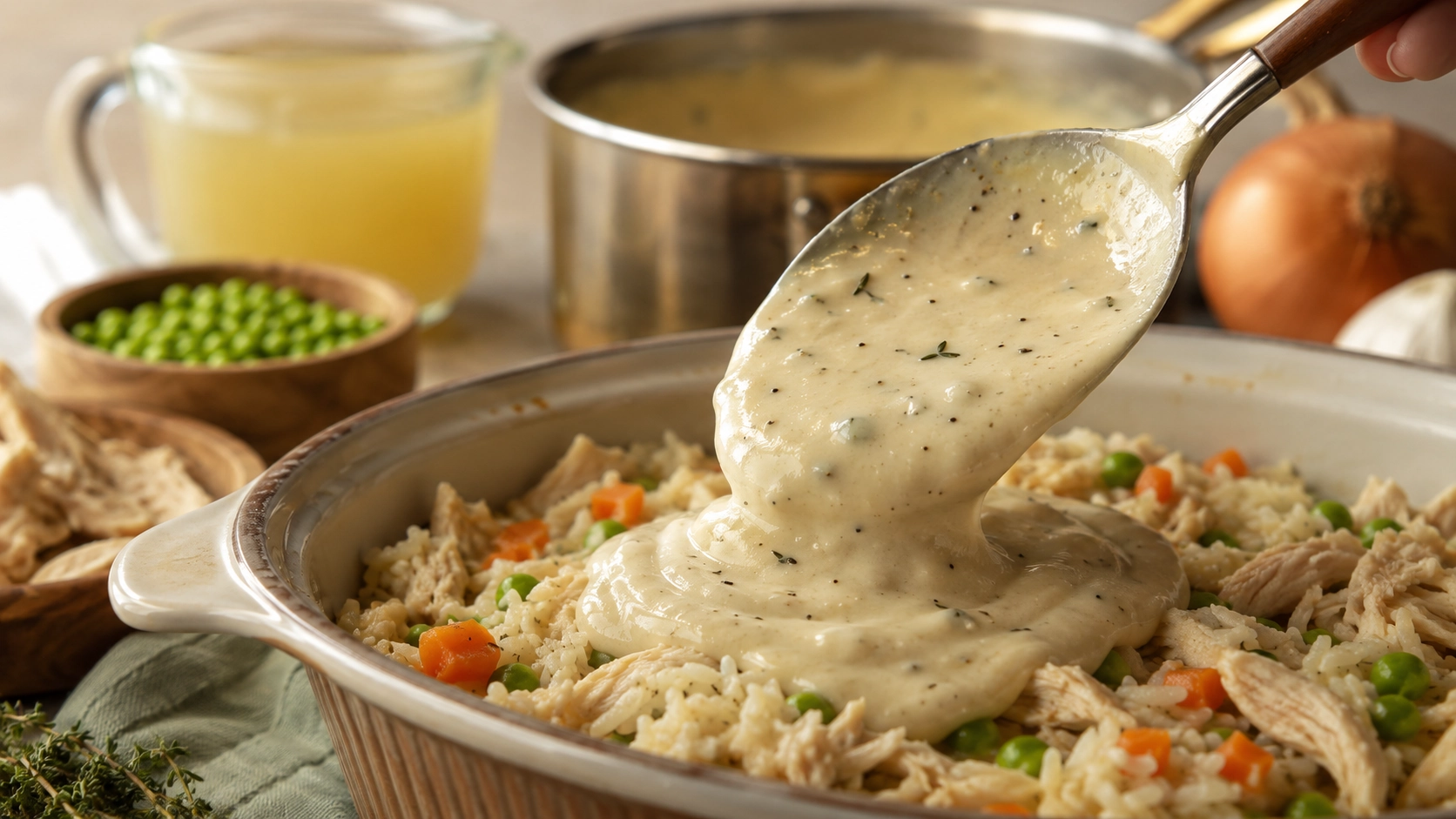
Homemade cream of chicken soup substitute combines butter, flour, chicken broth, milk, and simple seasonings into a thick cooking base for casseroles, slow cooker meals, pot pies, and chicken-and-rice dishes.
Unlike ordinary soup, this mixture is intentionally concentrated. One batch makes approximately 1 1/4 cups and replaces one standard 10.5-ounce can of condensed cream of chicken soup.
Canned condensed soup offers speed, consistency, and convenient pantry storage. Making the substitute at home gives you control over the broth, salt, seasoning, dairy, and final thickness while using familiar kitchen ingredients.
Real-World Observation
A cream of chicken soup substitute may look slightly loose while it is simmering, but it thickens noticeably as it cools. It should be thicker than gravy and much thicker than ready-to-eat soup.
When it is being added to a casserole or slow cooker recipe, the mixture does not need to look perfectly smooth and glossy in the saucepan. It will loosen again as it combines with meat, vegetables, rice, noodles, or other liquids in the finished dish.
The Real Food Upgrade
Canned Condensed Cream of Chicken Soup
Canned condensed soup is convenient, shelf-stable, and designed to produce consistent results in casseroles and slow cooker meals. Its concentrated texture allows it to bind ingredients together without making a recipe watery.
The broth flavor, salt level, dairy content, and seasoning are already determined. The texture also remains the same regardless of how the soup will be used.
Homemade Cream of Chicken Soup Substitute
The homemade version uses butter, flour, broth, milk, and seasonings to recreate the thick consistency needed for recipes that call for condensed soup.
You can choose a low-sodium broth, increase or reduce the herbs, use dairy or a dairy-free alternative, and adjust the thickness for the particular meal.
The practical upgrade is control. The mixture can remain very thick for casseroles, be loosened slightly for slow cooker meals, or be diluted further when it needs to become an actual bowl of soup.
Why This Recipe Works
Butter provides richness and coats the flour so it can cook into a smooth thickening base. Unsalted butter works well because chicken broth may already contain a noticeable amount of salt.
Flour thickens the broth and milk into a concentrated sauce. Cooking the flour briefly in the butter removes its raw taste before the liquids are added.
Chicken broth provides the main savory flavor. A lower-sodium broth makes it easier to control the finished seasoning, especially when the substitute will be combined with cheese, stuffing mix, seasoned meat, or other salty ingredients.
Milk softens the broth flavor and creates the creamy texture associated with condensed cream soup. Whole milk produces a fuller consistency, but lower-fat milk also works.
Onion powder and garlic powder add even flavor without leaving pieces in the mixture. Thyme supports the chicken flavor, while black pepper adds a mild background bite.
Actual pieces of chicken are not required. The broth supplies the chicken flavor, and leaving out cooked chicken makes the substitute more flexible for casseroles, sauces, and slow cooker meals.

Ingredients
Main Ingredients
Optional Additions
Instructions
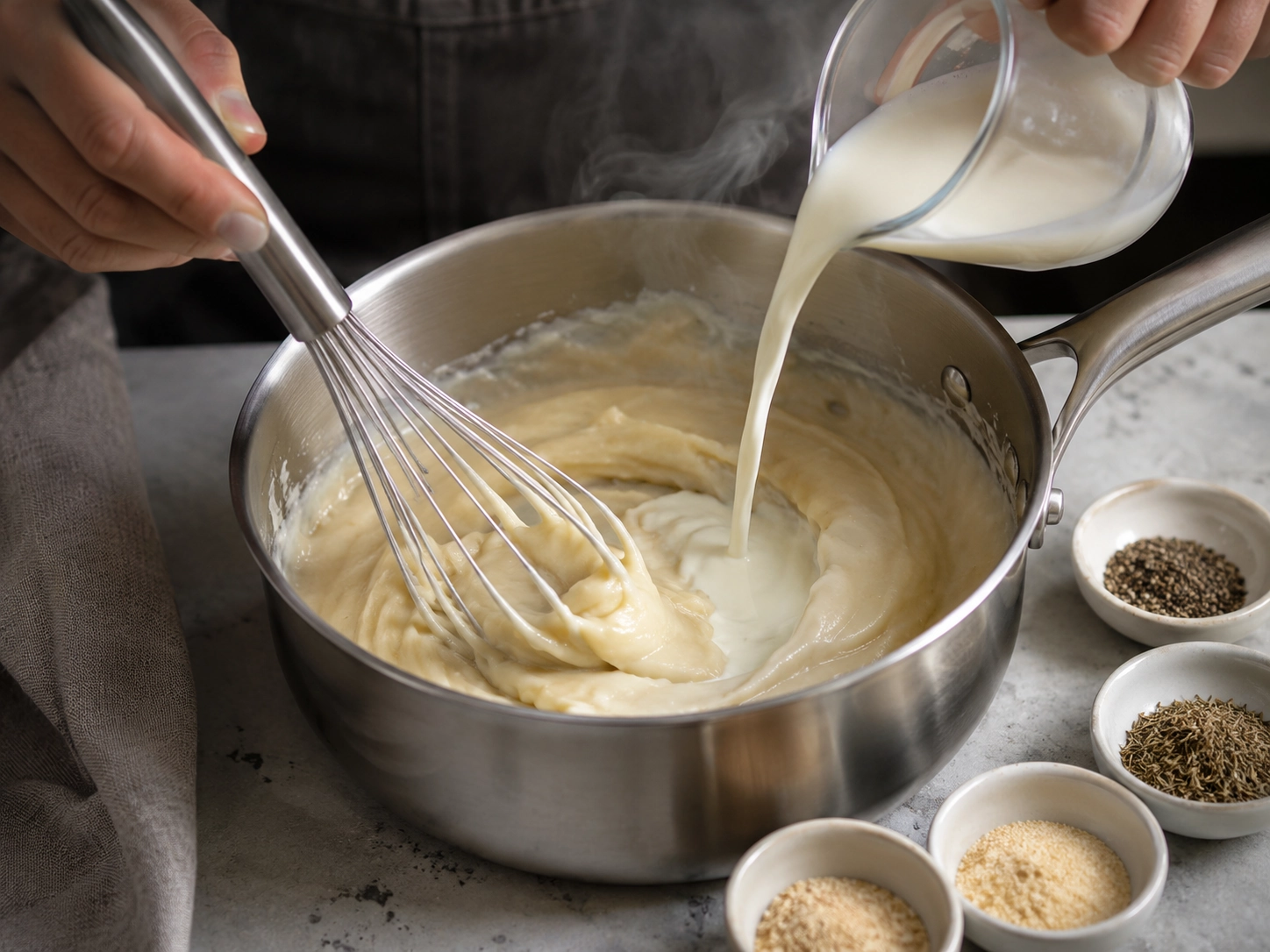
1. Melt the butter in a small saucepan over medium-low heat.
2. Add the flour to the melted butter.
3. Whisk continuously for about 1 minute.
4. Slowly pour in the chicken broth while whisking.
5. Add the milk gradually and continue whisking until smooth.
6. Stir in the onion powder, garlic powder, thyme, and black pepper.
7. Bring the mixture to a gentle simmer.
8. Cook for 3 to 5 minutes, whisking frequently, until very thick.
9. Remove the saucepan from the heat.
10. Taste the mixture and add salt only if needed.
11. Use immediately or allow it to cool before storing.
How Much Replaces One Can?
1. The full recipe makes approximately 1 1/4 cups.
2. Use the entire batch to replace one standard 10.5-ounce can of condensed cream of chicken soup.
3. Do not dilute the homemade mixture before adding it to a casserole, slow cooker meal, or other recipe unless the original instructions also call for water or milk to be added to the canned soup.
Flavor & Outcome
The finished mixture is thick, smooth, and lightly seasoned. It should hold its shape briefly when stirred rather than pour like ordinary soup.
Chicken broth remains the main flavor, while milk and butter soften its saltiness and give it a creamy finish. Onion, garlic, thyme, and pepper should support the broth without making the mixture taste heavily seasoned.
The substitute thickens further as it cools. When refrigerated, it may become firm enough to scoop with a spoon. This is expected and helps it perform like canned condensed soup in baked dishes.
Cream of Chicken Soup Substitute vs. Canned Condensed Soup
Both versions are designed to act as concentrated cooking ingredients.
Canned soup is ready to use directly from the pantry and offers a predictable flavor and texture. The homemade substitute requires a few minutes at the stove but allows the broth, salt, milk, herbs, and thickness to be adjusted.
The homemade version should not be made thin merely because it contains the word soup. Its concentrated consistency is what allows it to bind casseroles, coat chicken, and add creaminess without flooding the finished dish.
Cream of Chicken Soup Substitute vs. Chicken Gravy
Cream of chicken soup substitute contains milk and is made thicker than most gravy. It is intended to become part of casseroles, pot pies, slow cooker meals, and creamy sauces.
Chicken gravy is generally more pourable and is served over potatoes, biscuits, poultry, or stuffing. It may be made entirely with broth and pan drippings without milk.
Both use a thickener and chicken-flavored liquid, but their jobs are different. Gravy coats finished food, while condensed soup becomes part of the recipe itself.
Cream of Chicken vs. Cream of Mushroom Soup
Cream of chicken soup uses chicken broth as its savory base. Cream of mushroom soup gets its main flavor from mushrooms and usually includes small mushroom pieces.
The two can sometimes be exchanged in casseroles, but the flavor changes. Cream of chicken keeps poultry and rice dishes mild, while cream of mushroom adds an earthier flavor that is more noticeable in beef dishes, green bean casseroles, and vegetable bakes.
Condensed Soup vs. Ready-to-Eat Soup
Condensed soup contains less liquid and is intended to be diluted or incorporated into another recipe. Its texture is closer to a thick sauce than a finished bowl of soup.
Ready-to-eat soup already contains enough broth or milk for serving. Using it in place of condensed soup may add too much liquid to a casserole or slow cooker meal.
To turn this substitute into a bowl of creamy chicken soup, gradually add broth or milk until it reaches the desired consistency.

Serving Ideas
Use homemade cream of chicken soup substitute in:
Storage & Make-Ahead Tips
Refrigerator Storage
This cream of chicken soup substitute requires refrigeration because it contains milk, butter, and chicken broth. Let it cool slightly, transfer it to a covered container, and refrigerate it promptly. It is not suitable for pantry storage after preparation.
Freezer Suitability
Freeze the substitute in one-can portions for up to two months. The milk-based mixture may look slightly separated after thawing, but whisking it gently while reheating usually restores the texture.
Shelf Life
This cream of chicken soup substitute is not shelf-stable and should not be stored in the pantry after it is prepared. Transfer it to a covered container and refrigerate it within two hours. If the room temperature is above 90°F, refrigerate it within one hour.
Make-Ahead Notes
The substitute can be prepared a day or two before assembling a casserole. It will become thicker in the refrigerator.
Use it cold when it will be mixed into a casserole or slow cooker recipe. When a smoother, more pourable consistency is needed, warm it over low heat with a small splash of broth.
Common Questions
What is a cream of chicken soup substitute made from?
It is made from butter, flour, chicken broth, milk, and seasonings. These ingredients create a thick sauce that behaves like condensed soup in casseroles and slow cooker recipes.
Can I make it without milk?
Yes. Replace the milk with additional chicken broth for a broth-based version. The finished mixture will be less creamy but will still thicken and bind ingredients.
An unsweetened, unflavored dairy-free milk can also be used. Choose one that does not have a strong vanilla, coconut, or added-sugar flavor.
Can I make it without cooked chicken?
Yes. Cooked chicken is optional. Chicken broth provides enough flavor for the substitute to work in casseroles, pot pies, and slow cooker meals.
How do I prevent lumps?
Cook the flour in the melted butter before adding liquid. Pour in the broth gradually while whisking continuously, then add the milk.
Keeping the heat moderate gives the flour time to thicken evenly without forming cooked clumps around the edges of the saucepan.
Can I adjust the seasoning?
Yes. Add poultry seasoning, parsley, thyme, black pepper, or a small amount of onion seasoning to suit the finished dish.
Avoid adding much salt until you know what other ingredients the recipe contains. Broth, cheese, stuffing mix, and seasoned meat may already provide enough.
Next Real Food Upgrade
After making your own cream of chicken soup substitute, try homemade onion soup mix. Both are practical meal helpers that replace packaged ingredients, but onion soup mix provides a dry, concentrated onion base for roasts, casseroles, dips, and slow cooker meals.