Crispy Garlic Parmesan Chicken Tenders
Quick Answer
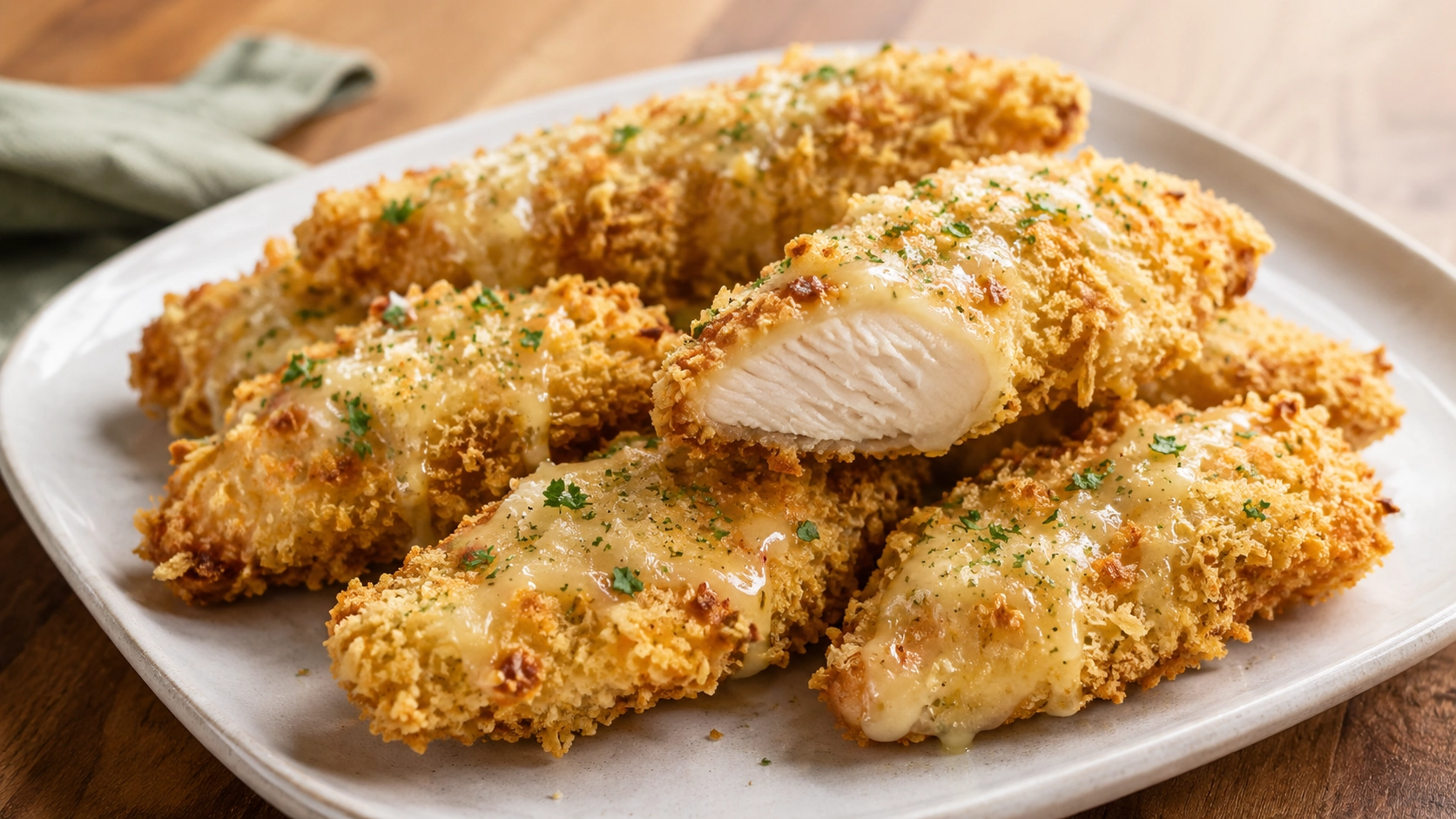
Crispy Garlic Parmesan Chicken Tenders turn simple chicken tenderloins and Homemade Garlic Parmesan Sauce into a complete meal with three distinct textures: a crisp panko coating, tender chicken in the center, and a buttery garlic-Parmesan finish.
The key is to cook the chicken completely before adding the sauce. A light brush or drizzle gives each tender garlic-Parmesan flavor without saturating the breading. Keep additional sauce on the side for dipping, and the crust stays noticeably crisper from the first bite to the last.
Real-World Observation
Breaded chicken is at its crispest shortly after it comes out of the oven, once some of the surface steam has escaped. Covering the tenders in sauce immediately and letting them sit works against that texture because the breading begins absorbing the moisture and fat.
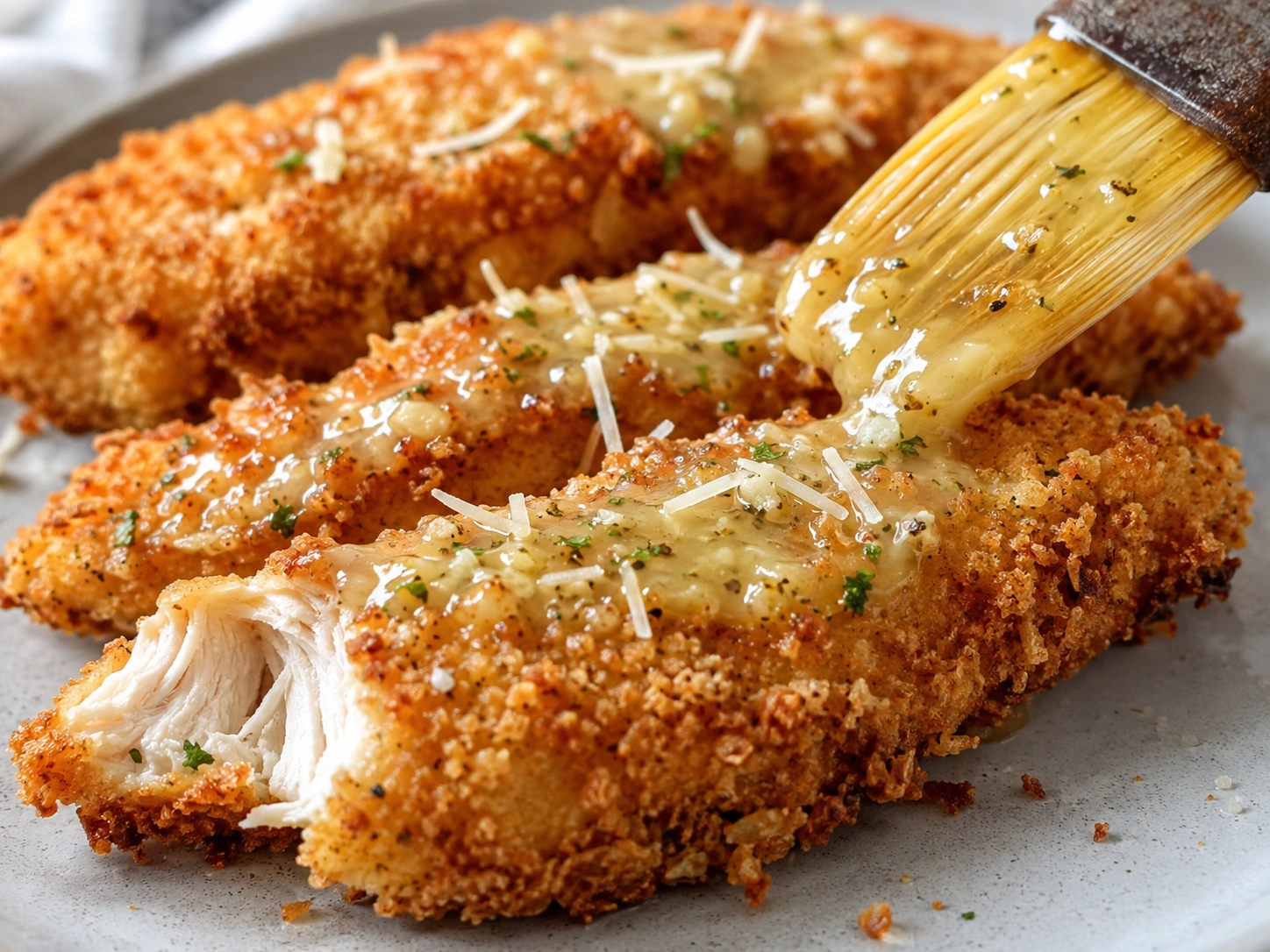
A lighter finish works better. Brush or drizzle a small amount of warm Garlic Parmesan Sauce over the cooked chicken immediately before serving, then add freshly grated Parmesan. You still get the buttery garlic coating, but the panko underneath keeps much more of its crunch.
The Real Food Upgrade
Prepared Garlic Parmesan Chicken
Restaurant, takeout, and frozen breaded chicken offer convenience and consistent results. The breading, seasoning, and amount of sauce are already decided, making them useful when speed matters.
That convenience also means there is less room to change the texture or flavor. If the chicken arrives heavily sauced, for example, the crust may soften before it reaches the plate.
Homemade Garlic Parmesan Chicken Tenders
Making the tenders at home gives you control over each layer.
Panko breadcrumbs create the crisp exterior. Parmesan adds a savory note directly to the coating. Chicken tenderloins cook quickly and stay tender when they are removed from the oven as soon as they are done.
Most importantly, Homemade Garlic Parmesan Sauce becomes part of the final cooking decision rather than simply something poured over the chicken. You decide whether the tenders get a light brush, a drizzle, or just enough sauce to coat the tops while keeping more on the side for dipping.
It turns one homemade condiment into the foundation of an actual dinner.
Why This Recipe Works
Panko gives the breading structure. Its larger, irregular crumbs create more surface texture than fine breadcrumbs, helping the coating stay crisp even after a small amount of sauce is added.
A little Parmesan goes into the crust. Finely grated Parmesan reinforces the final garlic-Parmesan flavor without making up so much of the coating that the cheese dominates the browning.
Flour helps the breading stay attached. The first light coating of flour gives the egg something to cling to. The egg then holds the panko mixture in place.
Olive oil helps the panko brown. Mixing the oil directly into the breadcrumb mixture distributes a small amount of fat throughout the coating instead of relying on a heavy layer of oil.
The sauce goes on last. Homemade Garlic Parmesan Sauce contains both fat and moisture. Adding it before baking would soften the breading. Finishing the cooked tenders with a controlled amount protects the contrast between crisp crust and rich sauce.
Ingredients
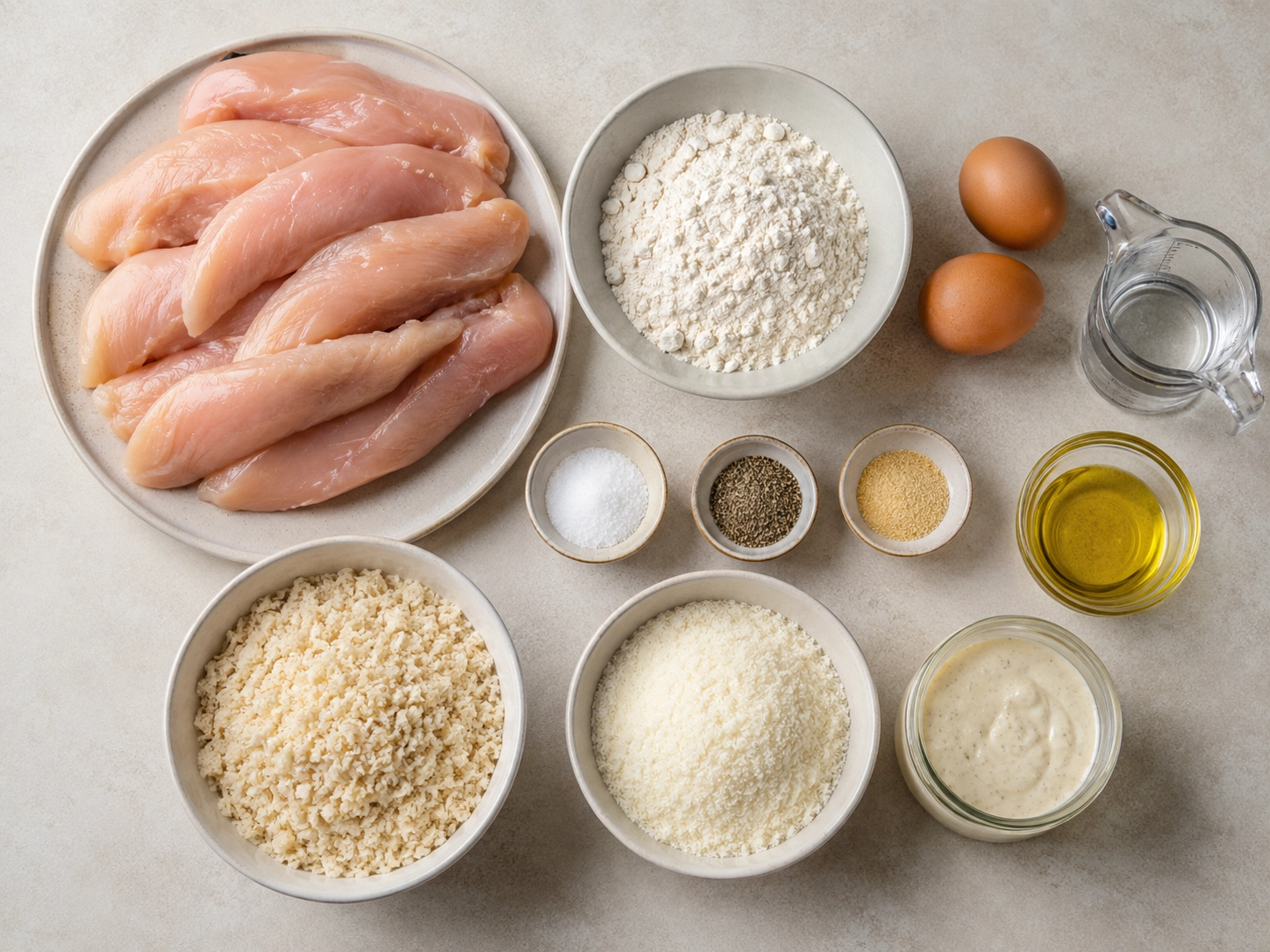
Main Ingredients
Optional Additions
Instructions
1. Preheat the oven to 425°F. Place a wire rack over a rimmed baking sheet.
2. Pat the chicken tenderloins dry with paper towels.
3. Add the flour, salt, black pepper, and garlic powder to a shallow bowl and stir to combine.
4. Whisk the eggs and water together in a second shallow bowl.
5. Combine the panko, 1/2 cup Parmesan, and olive oil in a third bowl, stirring until the crumbs are lightly coated with oil.
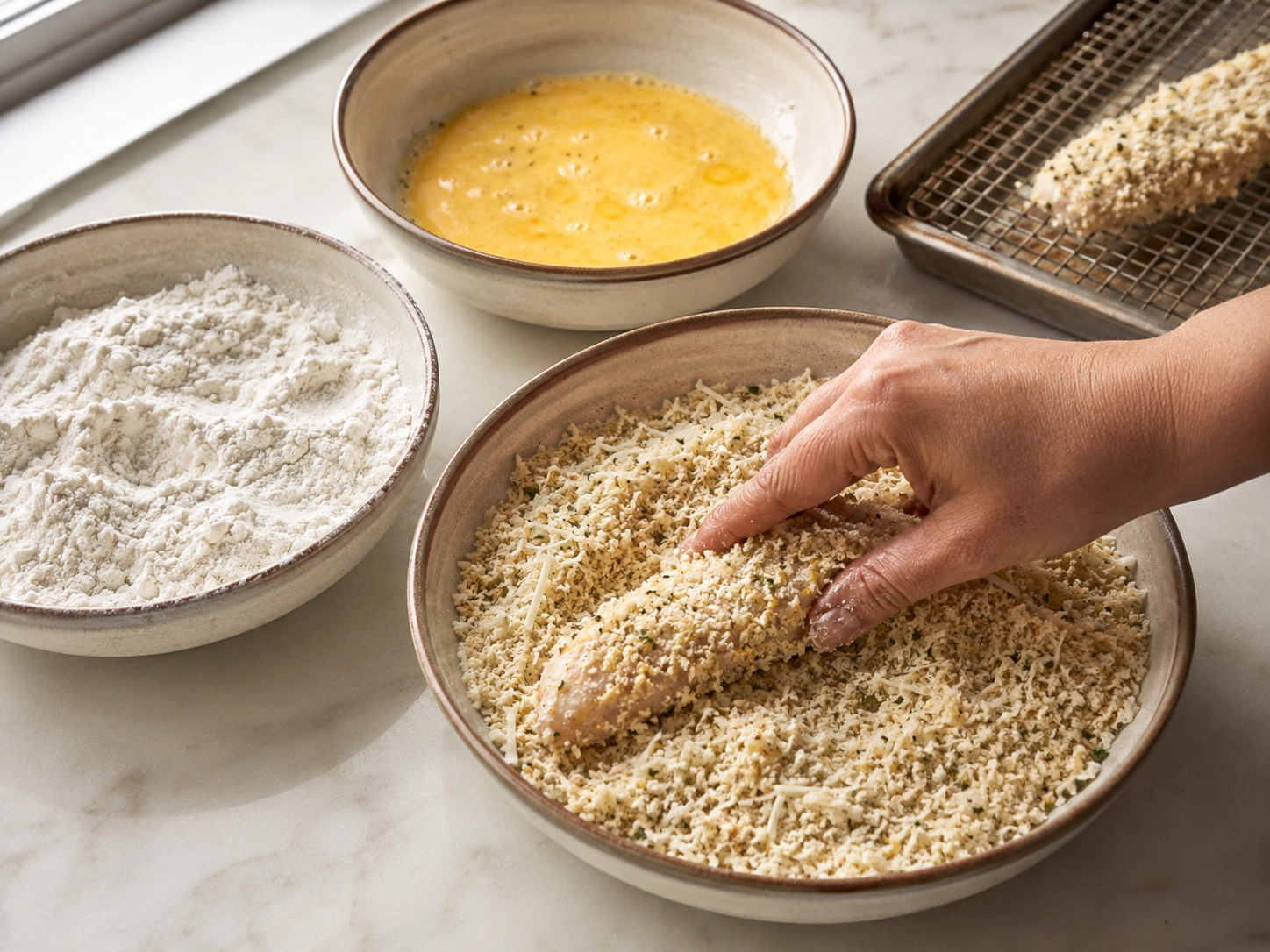
6. Coat each chicken tender lightly in the seasoned flour and shake off the excess.
7. Dip the floured chicken into the egg mixture and allow the excess egg to drip back into the bowl.
8. Press the chicken firmly into the panko-Parmesan mixture until completely coated.
9. Arrange the breaded tenders on the wire rack with space between each piece.
10. Bake for 15 to 18 minutes, beginning to check the chicken near the end of the cooking time. Cook until the thickest part of each tender reaches 165°F.
11. Remove the chicken from the oven and let it stand uncovered for about 2 minutes.
12. Warm 1/4 cup of the Homemade Garlic Parmesan Sauce until fluid enough to brush or drizzle.
13. Lightly brush or drizzle the warm sauce over the cooked tenders immediately before serving.
14. Finish with additional freshly grated Parmesan and parsley if desired. Serve the remaining 1/4 cup Garlic Parmesan Sauce alongside the tenders for dipping.
Flavor & Outcome
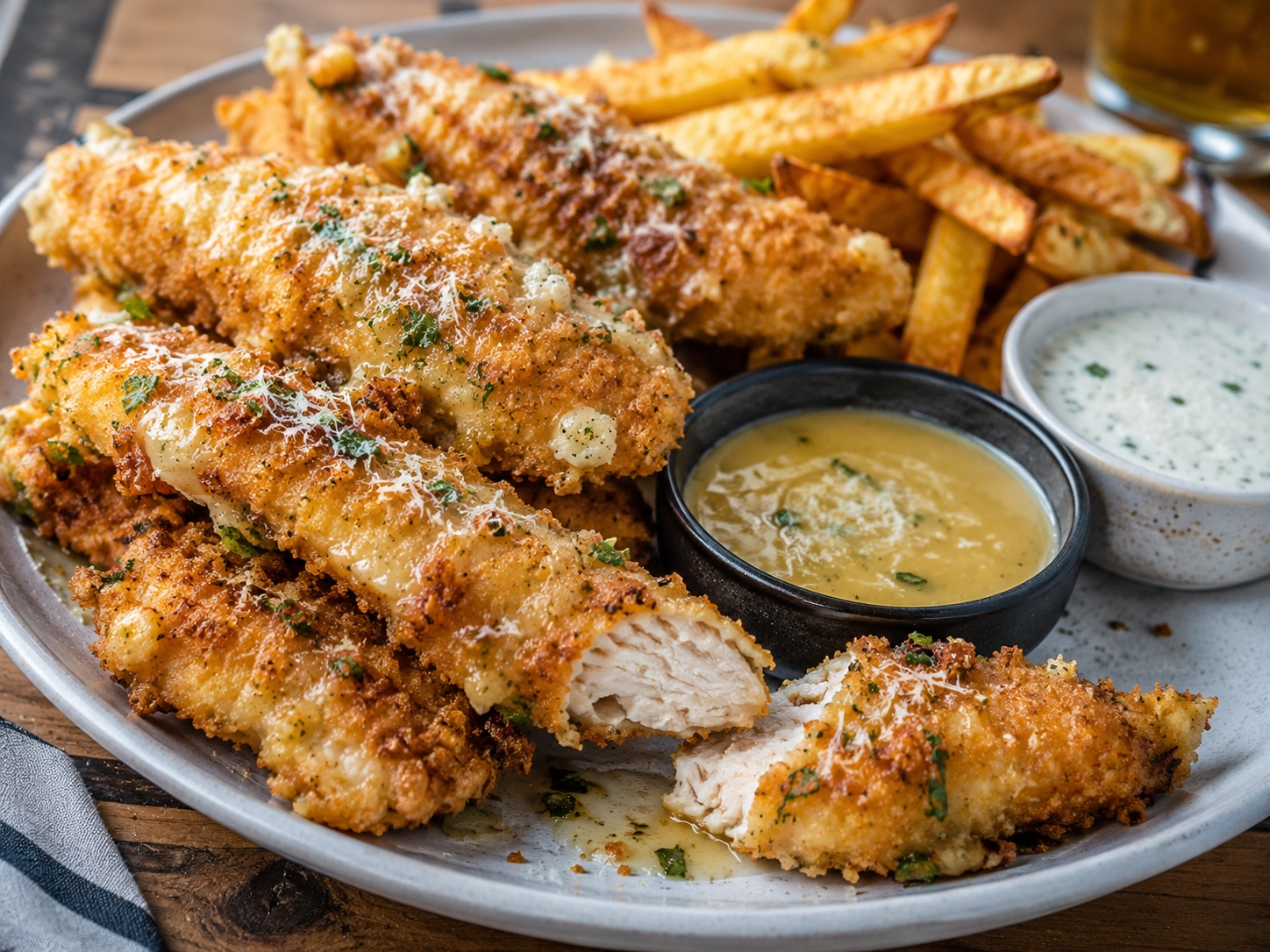
The finished tenders have a coarse, golden exterior from the panko with small pieces of Parmesan distributed throughout the crust.
Inside, the chicken should remain moist rather than stringy or dry. Garlic becomes more pronounced once the finishing sauce hits the hot breading, while Parmesan adds a salty, savory finish without covering the chicken completely.
The contrast changes as the tenders sit. Unsauced portions remain crisp longest, while areas covered in Garlic Parmesan Sauce gradually soften. That is why a light coating plus additional dipping sauce works better than thoroughly tossing the chicken in sauce.
Fresh Parmesan added at the end also strengthens the cheese flavor without introducing additional moisture.
Serving Ideas
Crispy Garlic Parmesan Chicken Tenders work well for dinner, appetizers, or game-day meals with sides and dipping sauces such as:
Storage & Make-Ahead Tips
Refrigerator Storage
Cool leftover chicken and refrigerate it in a covered container. For the best texture, store additional Garlic Parmesan Sauce separately rather than pouring it over the leftover tenders.
Cooked chicken can be refrigerated for 3 to 4 days.
Freezer Suitability
These tenders freeze better before they are coated with Garlic Parmesan Sauce.
Allow the cooked chicken to cool, freeze the tenders in a single layer until firm, and then transfer them to a freezer-safe container. Keep the sauce separate.
For the best breading texture, reheat the tenders in the oven or air fryer rather than the microwave.
Make-Ahead Notes
The chicken can be breaded several hours before cooking and kept covered in the refrigerator. Wait to bake it until closer to serving.
Garlic Parmesan Sauce can also be prepared separately ahead of time and gently warmed before the chicken reaches the table.
To reheat cooked tenders, place them in a 375°F oven or air fryer until heated through and the exterior begins to crisp again. Add Garlic Parmesan Sauce only after reheating.
Common Questions
How do you make chicken tenders crispy?
Use panko rather than fine breadcrumbs, avoid crowding the chicken, and bake the tenders on a wire rack so hot air can reach more of the breading. Patting the chicken dry before breading also helps the coating adhere properly.
Should Garlic Parmesan Sauce go on chicken before or after cooking?
Add it after cooking. Putting the sauce on before baking adds moisture to the breading and works against the crisp texture. Lightly brush or drizzle it over the finished chicken immediately before serving.
Can Garlic Parmesan Chicken Tenders be made in an air fryer?
Yes. Arrange the breaded tenders in a single layer and air fry at 400°F for approximately 9 to 12 minutes, turning halfway through if needed. Cooking time will vary with the size of the tenderloins and the air fryer, so use the internal temperature rather than the clock alone to determine doneness. The chicken should reach 165°F.
How do I keep the breading from falling off chicken tenders?
Use the three-step flour, egg, and breadcrumb method and shake off excess flour before adding the egg. Press the panko mixture firmly onto the chicken, then handle the breaded tenders gently as they go onto the baking rack.
How do I reheat chicken tenders so they stay crispy?
Keep leftover sauce separate and reheat the chicken with dry heat. An oven or air fryer allows moisture to escape and can restore some of the exterior crunch. Add warmed Garlic Parmesan Sauce only after the chicken is hot.
Next Real Food Upgrade
If these chicken tenders showed you how an existing homemade condiment can become the foundation of dinner, Homemade Ranch Dressing is the natural next upgrade. Its cool, creamy herb flavor makes a practical dipping sauce for the crisp Garlic Parmesan coating and gives you another homemade staple that can move between salads, wraps, vegetables, sandwiches, and chicken dinners.
From there, Homemade Buffalo Sauce or Homemade Hot Honey can use the same crisp chicken-tender base in completely different directions. Instead of learning a new chicken recipe each time, you can change the finished meal by changing the homemade sauce.