Teriyaki Chicken Rice Bowls
Quick Answer
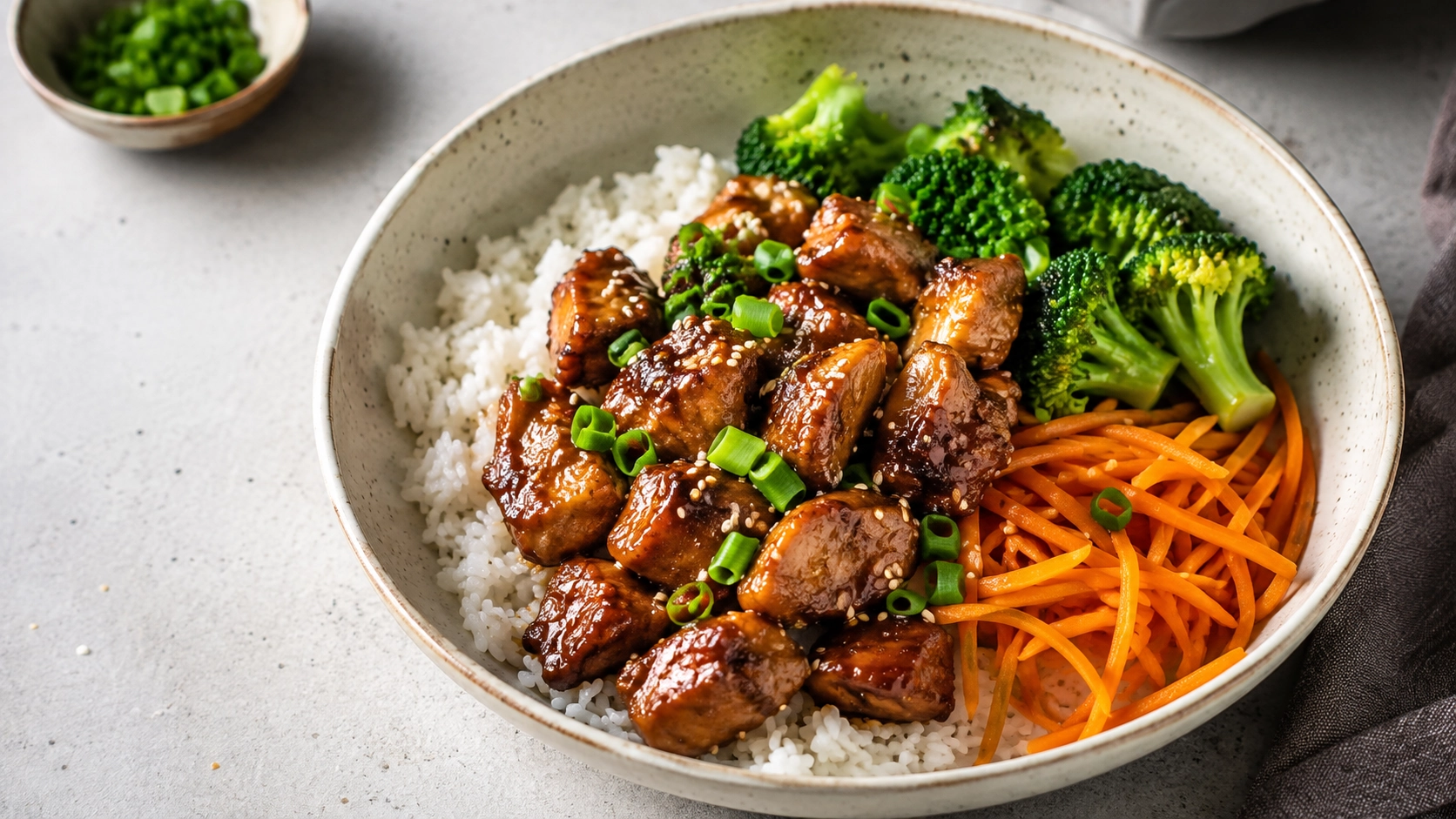
Teriyaki Chicken Rice Bowls turn Homemade Teriyaki Sauce into a complete weeknight dinner by pairing glossy glazed chicken with fluffy white rice, broccoli, and carrots.
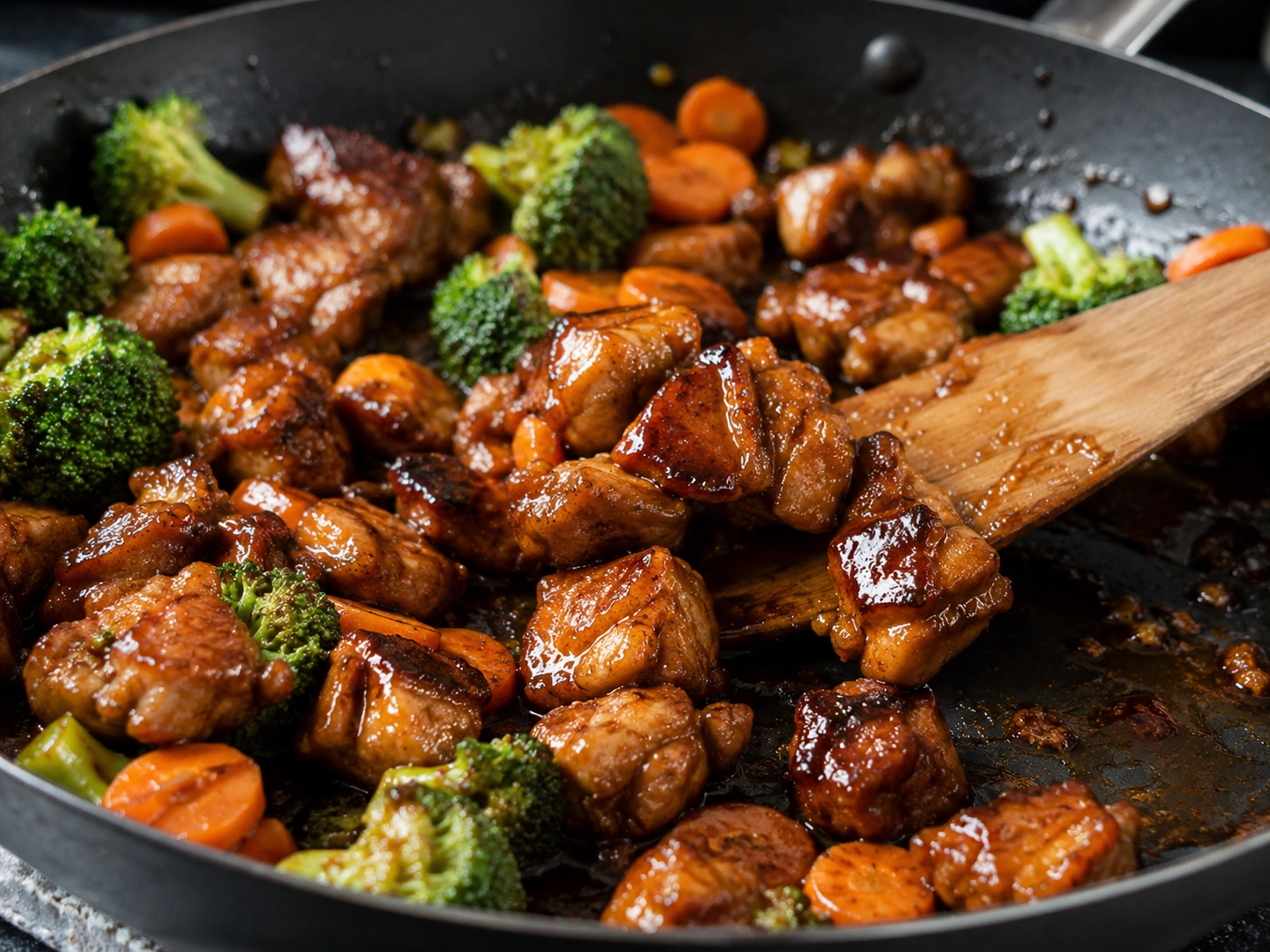
The key is to brown the chicken before adding the teriyaki sauce. Because the sauce contains sugar, adding it too early can make the skillet sticky before the chicken develops good color. Once the chicken and vegetables are nearly finished, the sauce needs only a few minutes to reduce into a shiny coating that clings to the meat.
The result follows a simple Real Food Upgrade progression:
Homemade Teriyaki Sauce → glazed chicken → rice + vegetables → complete bowl
Real-World Observation
Teriyaki chicken often needs less sauce than it appears to at first. When the sauce initially enters the skillet, it spreads into a relatively thin layer around the chicken. After a few minutes of simmering, some of that moisture evaporates and the sauce becomes noticeably thicker and glossier.
That reduction is important. The finished chicken should look coated rather than submerged, leaving the rice and vegetables relatively neutral so every part of the bowl does not taste equally sweet.
The Real Food Upgrade
Teriyaki Chicken Made With Bottled Sauce
Bottled teriyaki sauce provides a convenient combination of sweet, salty, and savory flavors in one ready-to-use ingredient. It makes quick chicken dinners especially straightforward because the sauce requires little additional preparation.
The flavor and consistency, however, are already established by the bottle.
Teriyaki Chicken Rice Bowls With Homemade Teriyaki Sauce
This recipe begins with Homemade Teriyaki Sauce already prepared and waiting in the refrigerator.
That homemade staple becomes the primary flavor ingredient instead of an optional substitution:
Homemade Teriyaki Sauce → chicken glaze
White rice → neutral bowl base
Broccoli + carrots → color and texture
Fresh toppings → optional contrast
The sauce does not need to season everything in the bowl. Concentrating it on the chicken gives each bite enough teriyaki flavor while letting the rice and vegetables balance the stronger glaze.
This is the next step after making the sauce: giving it a regular job at dinnertime.
Why This Recipe Works
Boneless skinless chicken thighs stay tender during skillet cooking. Their slightly higher fat content makes them well suited to bite-size pieces that need enough cooking time to brown before being glazed.
The chicken is browned before the sauce enters the skillet. Homemade Teriyaki Sauce contains sugar, so saving it for the end allows the chicken to develop color without requiring the sauce to withstand the highest heat.
One-half cup of sauce is enough for the chicken. The goal is a glaze that coats 1 1/4 pounds of chicken rather than enough liquid to soak the entire bowl.
Broccoli and carrots provide contrasting textures. Carrots bring mild sweetness and firmness, while broccoli adds a less sweet vegetable component that works well against the glazed chicken.
The vegetables stay lightly seasoned. They share the skillet with the chicken but are not covered in an additional layer of teriyaki sauce.
Plain white rice balances the glaze. Teriyaki chicken already carries concentrated sweet-savory flavor, so the rice does not need another heavy seasoning blend underneath it.
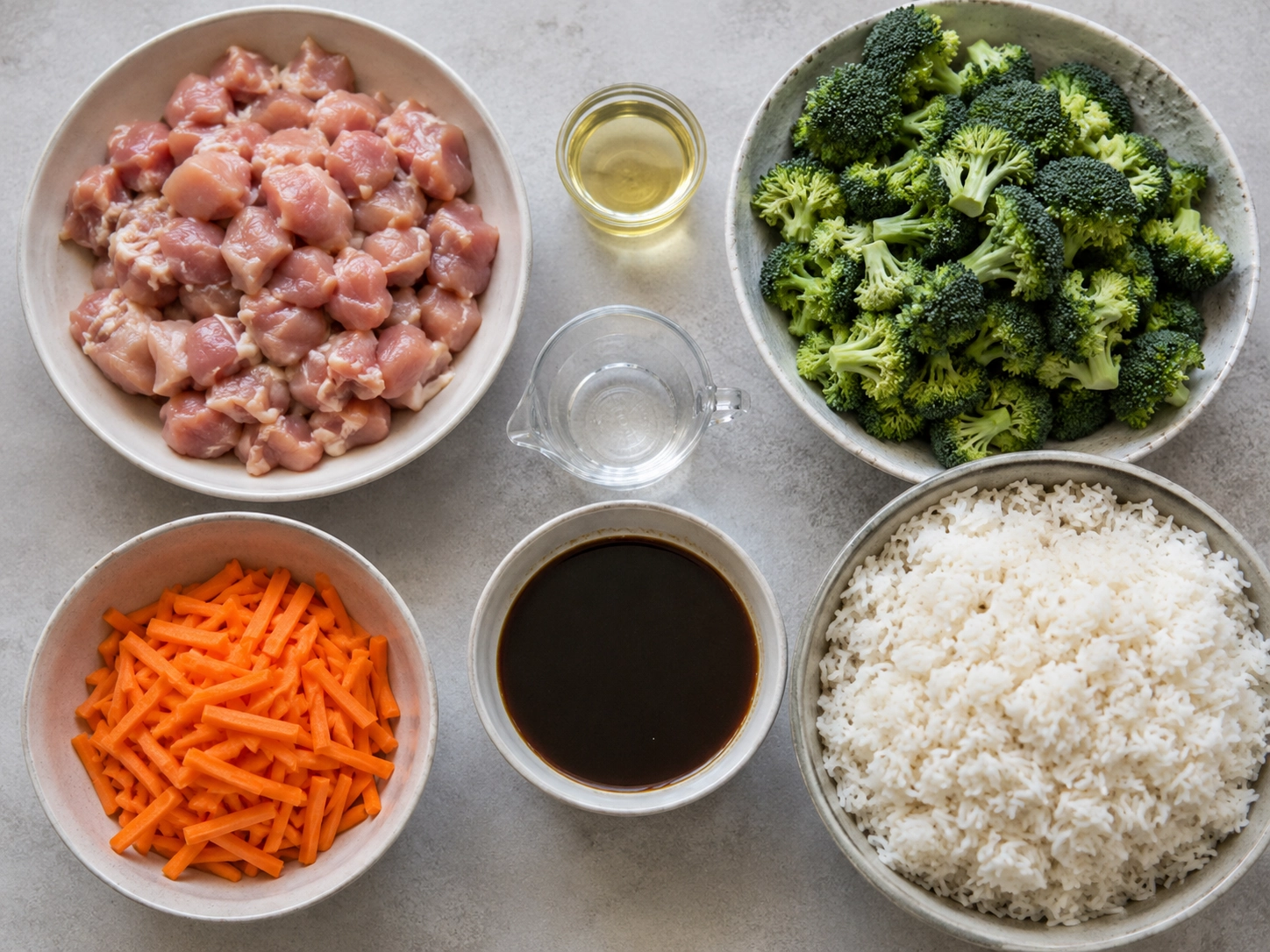
Ingredients
Main Ingredients
Optional Additions
Instructions
1. Prepare the rice according to your preferred method and keep it warm while you cook the chicken and vegetables.
2. Pat the chicken pieces dry with paper towels.
3. Heat a large skillet over medium-high heat.
4. Add the cooking oil.
5. Arrange the chicken in a single layer. Work in two batches if necessary rather than crowding the skillet.
6. Cook the chicken for about 3 minutes without stirring so the first side has time to brown.
7. Turn the chicken pieces and continue cooking for another 3 to 4 minutes, stirring occasionally, until browned and nearly cooked through.
8. Add the broccoli and carrots to the skillet.
9. Pour in 2 tablespoons water and cover the skillet.
10. Cook for 2 to 3 minutes, until the broccoli turns bright green and the vegetables begin to soften while retaining some texture.
11. Remove the lid and allow any remaining water to evaporate.
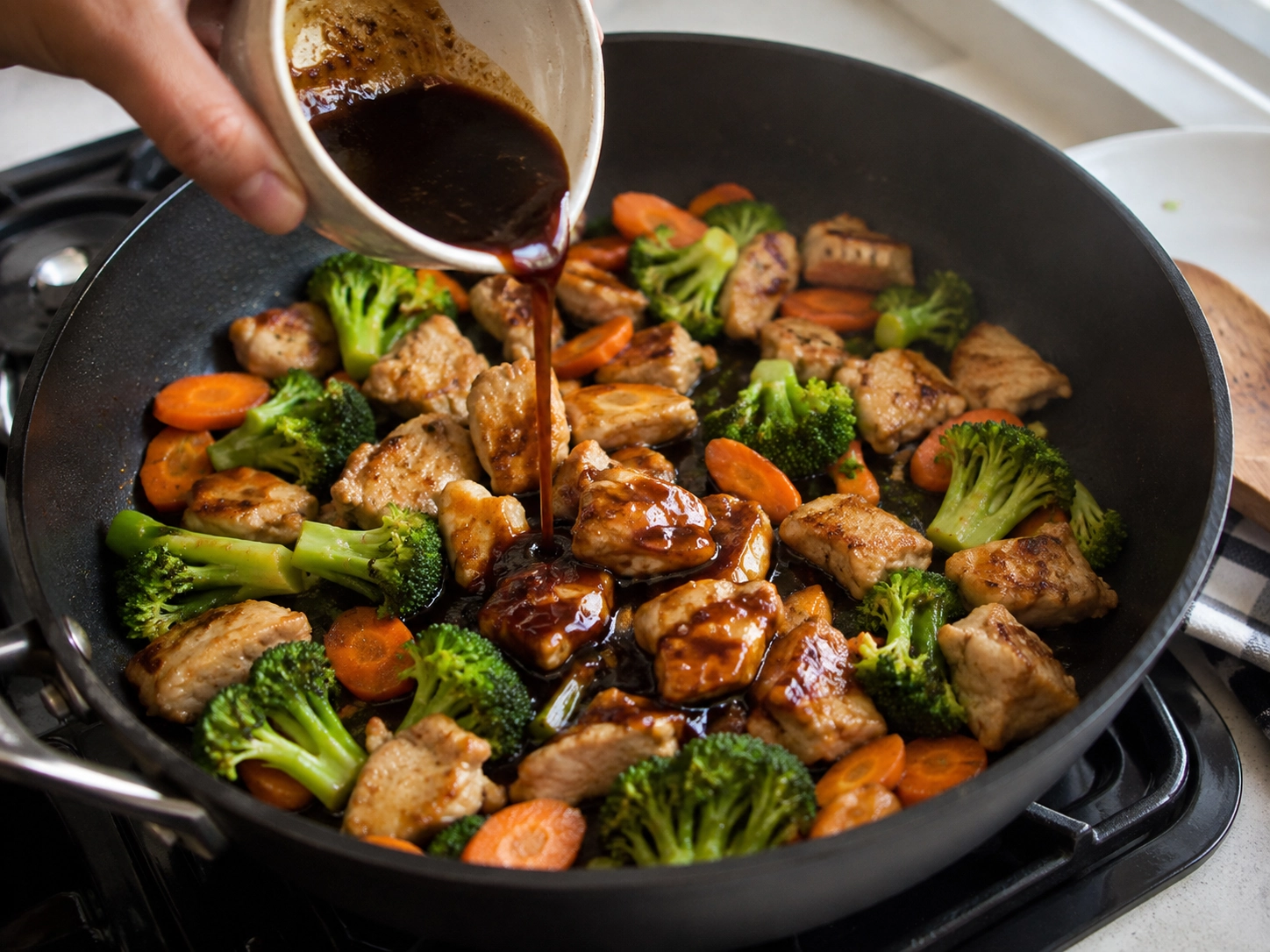
12. Pour 1/2 cup Homemade Teriyaki Sauce over the chicken.
13. Stir until the chicken is evenly coated.
14. Reduce the heat to medium and simmer for 2 to 4 minutes, stirring frequently, until the sauce becomes glossy and clings to the chicken rather than collecting as a thin puddle in the skillet.
15. Check one of the larger chicken pieces with an instant-read thermometer. Chicken should reach a safe internal temperature of 165°F.
16. Remove the skillet from the heat.
17. Divide the cooked rice among four bowls, using approximately 1 cup per bowl.
18. Divide the vegetables and glazed chicken evenly among the bowls.
19. Spoon any small amount of remaining glaze from the skillet over the chicken rather than pouring it across the entire bowl.
20. Add green onions, sesame seeds, or other optional toppings immediately before serving.
Flavor & Outcome
The chicken should have browned edges underneath a thin, glossy teriyaki coating. The sauce should cling to the pieces rather than run freely across the bottom of the bowl.
Chicken thighs remain tender inside while the reduced sauce delivers the strongest sweet-savory flavor in the meal.
The rice provides a softer, neutral base that picks up small amounts of sauce as the bowl is eaten without becoming saturated from the beginning.
Broccoli should remain slightly firm rather than soft enough to collapse into the rice. The carrots soften during cooking but retain enough texture to distinguish them from the chicken and rice.
If the skillet contains a noticeable pool of thin sauce after the chicken is cooked, continue simmering briefly before assembling the bowls. If the glaze becomes thicker than you prefer, stir in a tablespoon of water.
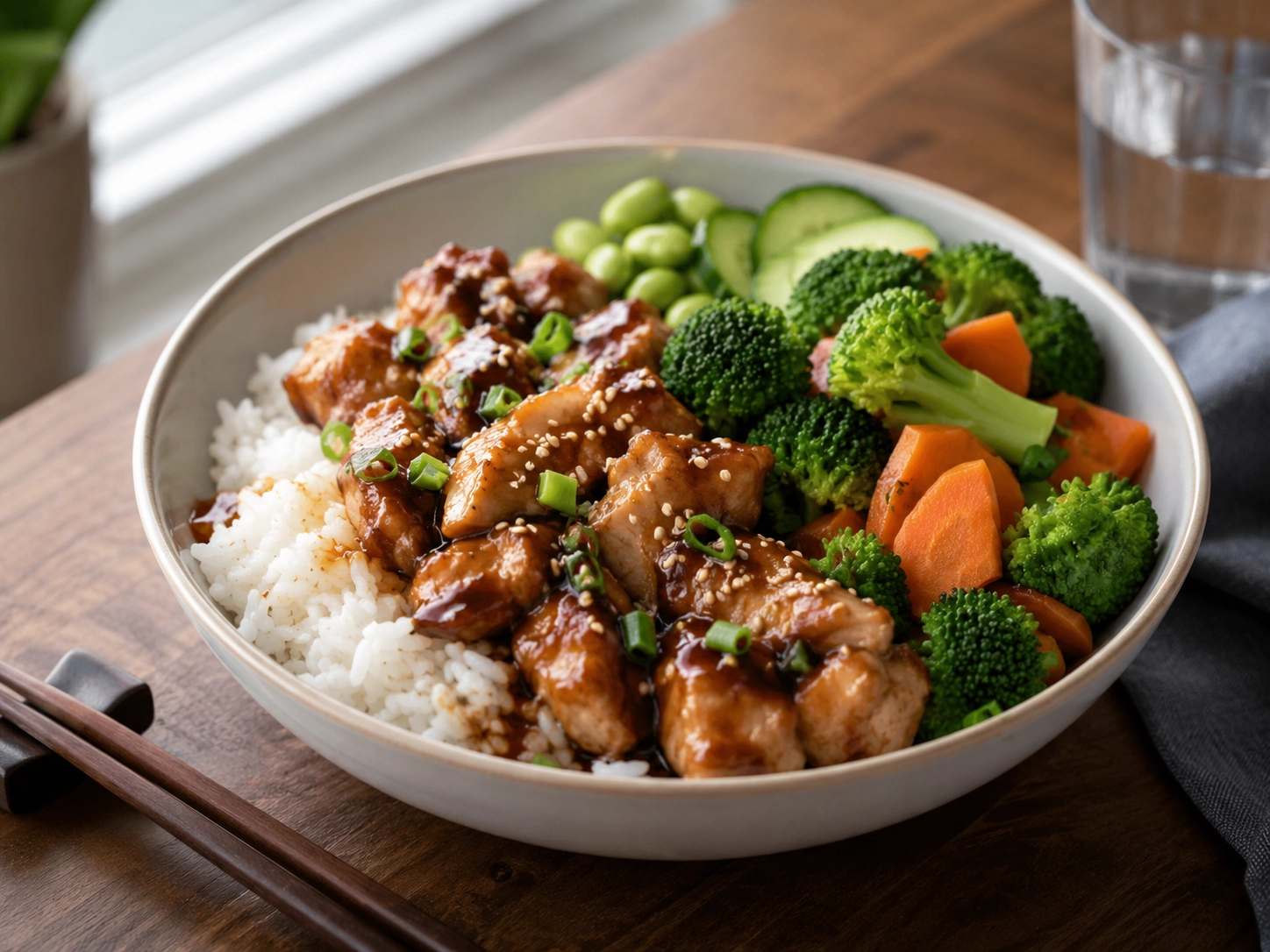
Serving Ideas
Teriyaki Chicken Rice Bowls can be served with simple toppings, vegetables, and sides such as:
Storage & Make-Ahead Tips
Refrigerator Storage
Store the cooked chicken, vegetables, and rice in covered containers in the refrigerator.
For meal-prep bowls, the components can be portioned together once cooled, although keeping fresh toppings such as cucumber and green onions separate preserves their texture.
Use cooked leftovers within 3 to 4 days. Federal food-safety guidance recommends refrigerating cooked leftovers for no more than 3 to 4 days.
Freezer Suitability
The teriyaki chicken freezes well.
For the best vegetable texture, freeze the chicken and rice separately from fresh or lightly cooked toppings. Broccoli and carrots can be frozen with the meal, but they will become softer after thawing and reheating.
Pineapple, cucumber, green onions, and other fresh toppings are better added after reheating.
Reheating
When reheating, add a teaspoon or two of water to the rice if it has become dry. Reheat leftovers thoroughly to 165°F.
Make-Ahead Notes
Homemade Teriyaki Sauce can be prepared ahead and refrigerated until needed.
The rice can also be cooked in advance for meal prep. Chicken and vegetables can be cooked and portioned into individual containers for quick lunches or dinners.
Common Questions
What kind of chicken is best for Teriyaki Chicken Rice Bowls?
Boneless skinless chicken thighs are the primary choice for this recipe because they stay tender during high-heat skillet cooking and work particularly well with a sticky glaze.
Boneless skinless chicken breast can also be used. Cut it into similarly sized pieces and watch the cooking time closely because lean breast meat can dry out more quickly.
When should I add teriyaki sauce to the chicken?
Add Homemade Teriyaki Sauce near the end of cooking.
Brown the chicken first, cook the vegetables, and then add the sauce. Simmer everything together only long enough for the sauce to reduce and coat the meat.
What vegetables go well in Teriyaki Chicken Rice Bowls?
Broccoli and carrots are used in the primary recipe, but other practical options include: Snap peas, Bell peppers, Green beans, Edamame, Shredded cabbage or Zucchini.
Can Teriyaki Chicken Rice Bowls be made ahead?
Yes. The chicken, rice, and cooked vegetables work well for meal preparation.
Divide the cooked components among individual containers and refrigerate them. Keep fresh garnishes separate and add them after reheating.
Can I add pineapple to teriyaki chicken bowls?
Yes. Fresh or canned pineapple can be added as a topping or variation.
Pineapple brings additional sweetness, so it is intentionally optional rather than part of the primary recipe. For the most contrast, add a small amount to individual bowls instead of cooking a large quantity directly into the teriyaki glaze.
Next Real Food Upgrade
If you enjoyed turning Homemade Teriyaki Sauce into a complete chicken-and-rice dinner, Homemade Sweet Chili Sauce is the natural next upgrade. It can take the same basic combination of chicken, rice, and vegetables in a different direction, adding sweet heat instead of the deeper soy-based flavor of teriyaki.
From there, Homemade Seasoned Rice Mix gives you another pantry shortcut for meals where the rice itself should carry more of the seasoning, while Homemade Hot Honey offers an easy way to build future sweet-spicy chicken bowls, roasted vegetables, sandwiches, and skillet dinners.