Garlic Herb Butter Steak Bites and Potatoes
Quick Answer
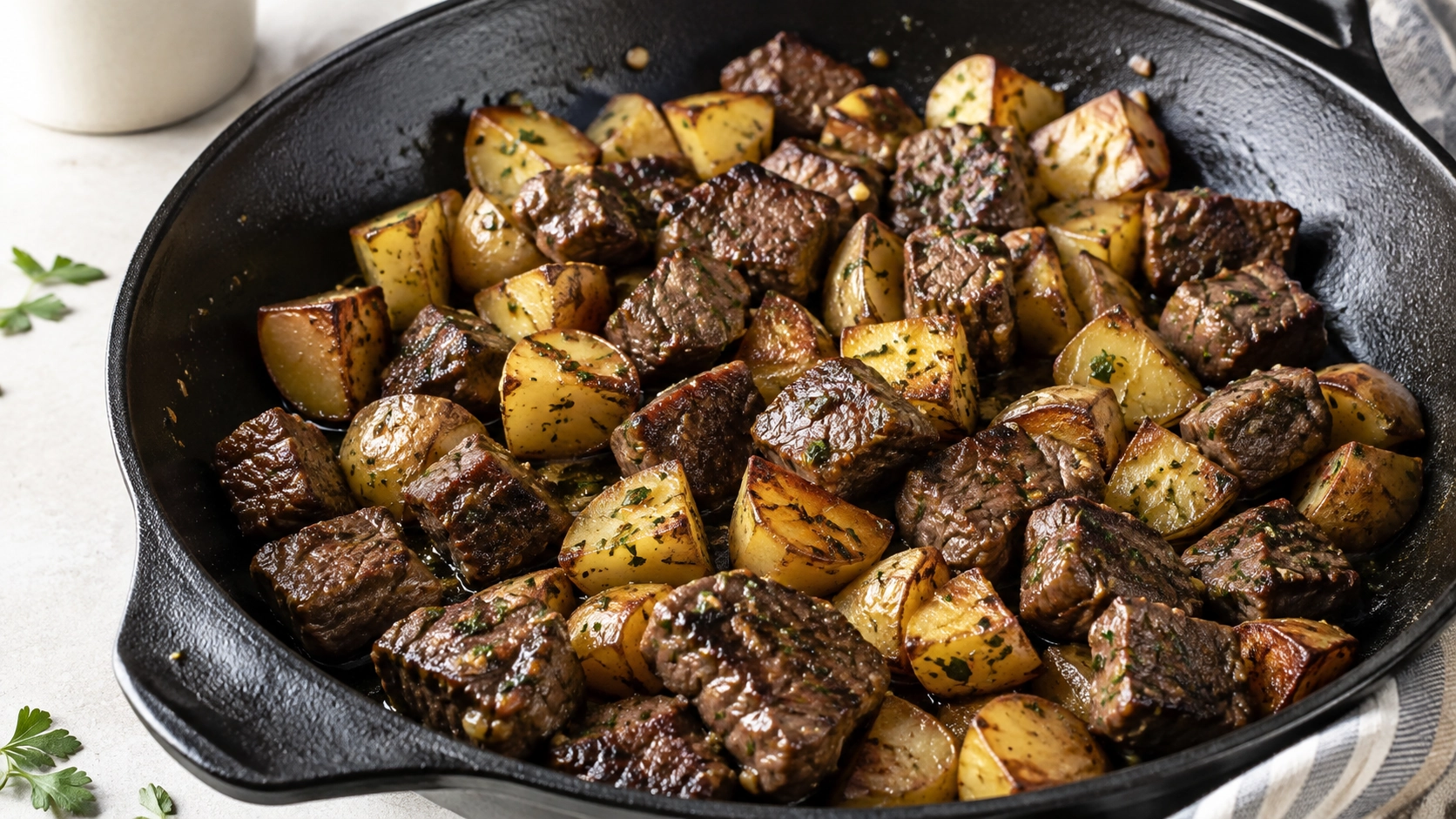
Garlic Herb Butter Steak Bites and Potatoes turn Homemade Garlic Herb Butter into a complete skillet dinner with golden potatoes, browned sirloin, and a glossy garlic-herb butter finish.
The cooking order is what makes the recipe work. The potatoes get a head start so they are tender before the steak enters the skillet. The steak is then seared quickly over high heat, and the Garlic Herb Butter is added only at the end. That keeps the garlic and herbs from scorching while preserving the browned edges on the beef and potatoes.
Real-World Observation
Steak bites cook much faster than potatoes. Putting both into the skillet raw at the same time usually forces a compromise: either the potatoes remain firm or the steak stays in the pan long enough to become overcooked.
Giving the potatoes a brief microwave head start solves that timing problem. Once their centers are nearly tender, the skillet only needs to brown their surfaces. The steak can then have the high heat to itself before everything comes back together under melted Garlic Herb Butter.
The Real Food Upgrade
Steak and Potatoes Cooked With Butter From the Beginning
Butter can certainly be used for steak and potatoes, but it behaves differently from a neutral high-heat cooking oil. When garlic, fresh herbs, and milk solids are exposed to aggressive searing temperatures for too long, they can darken before the steak develops the crust you want.
That becomes especially important with Garlic Herb Butter because the flavor ingredients are already built into it.
Steak Bites and Potatoes Finished With Homemade Garlic Herb Butter
This recipe separates the cooking jobs.
Neutral oil handles the high-temperature browning. Homemade Steak Seasoning seasons the beef before it enters the skillet. The potatoes cook separately until golden and tender.
Then Homemade Garlic Herb Butter comes in after the hard cooking is finished.
The progression is simple:
potatoes first → steak second → Garlic Herb Butter last
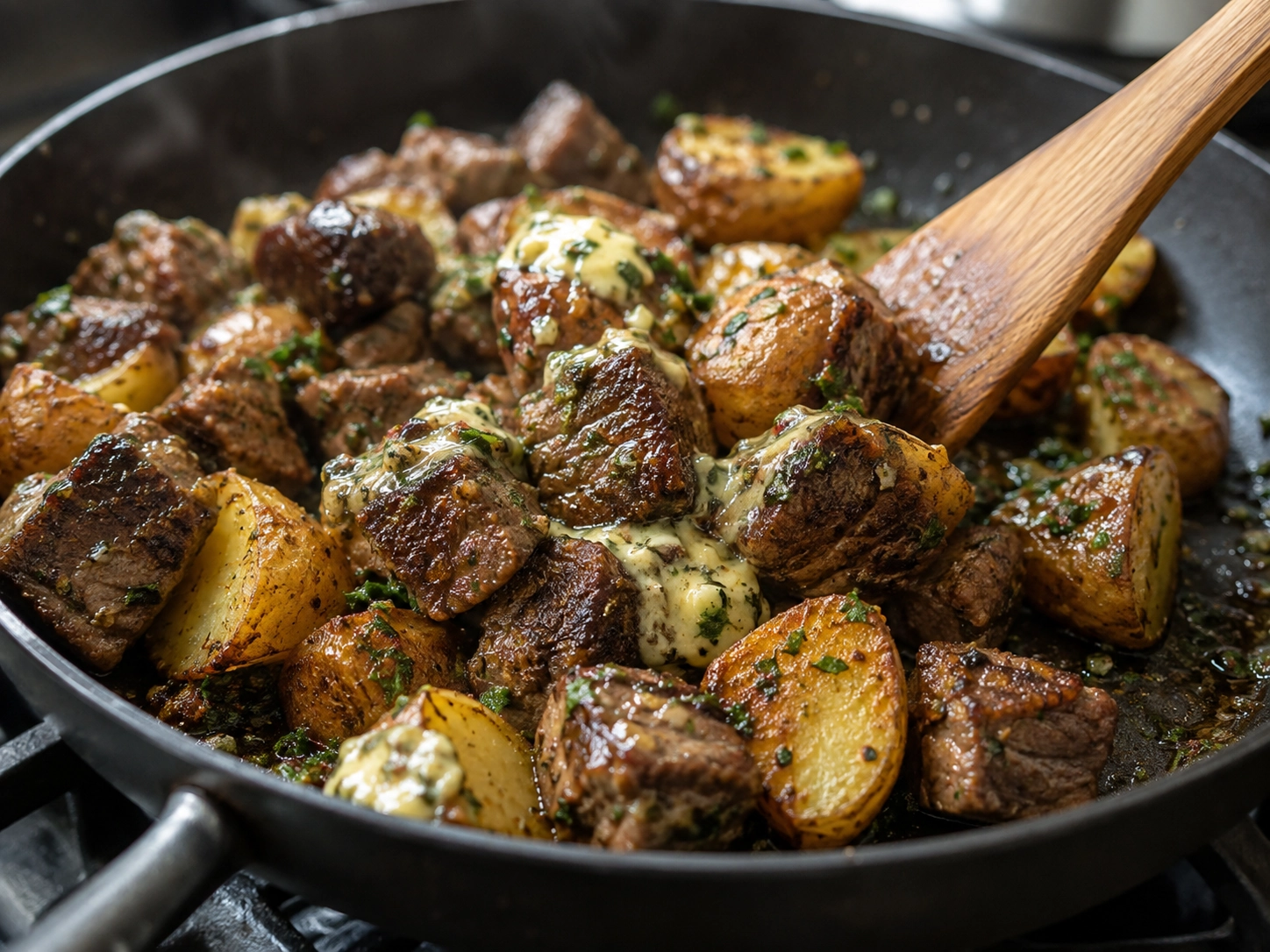
The warm skillet melts the butter just enough to coat the steak and potatoes, carrying garlic and herbs across the entire dish without asking those ingredients to survive several minutes of intense searing heat.
Why This Recipe Works
Sirloin works well for steak bites. It has enough beef flavor for a quick skillet dinner while cutting cleanly into bite-size pieces. Keeping the cubes close to the same size helps them finish cooking at approximately the same time.
Baby gold potatoes hold their shape well. Their creamy centers contrast with the browned surfaces created in the skillet, and their smaller size makes them easy to cut into evenly sized pieces.
Microwaving gives the potatoes a head start. The brief precooking period gets the centers nearly tender before browning begins, so the skillet does not have to perform two jobs at once.
Dry surfaces brown better. Draining and drying the potatoes after microwaving helps them develop golden edges. Patting the steak dry is equally important because excess surface moisture encourages steaming instead of browning.
The steak gets its own space. Crowding a skillet quickly lowers its temperature. Cooking the steak in a single layer, in batches if necessary, gives moisture somewhere to escape and helps the beef develop a darker crust.
Oil sears; Garlic Herb Butter finishes. Neutral oil handles the initial high heat. The flavored butter is added after the temperature is lowered, protecting the garlic and herbs while still coating every bite.
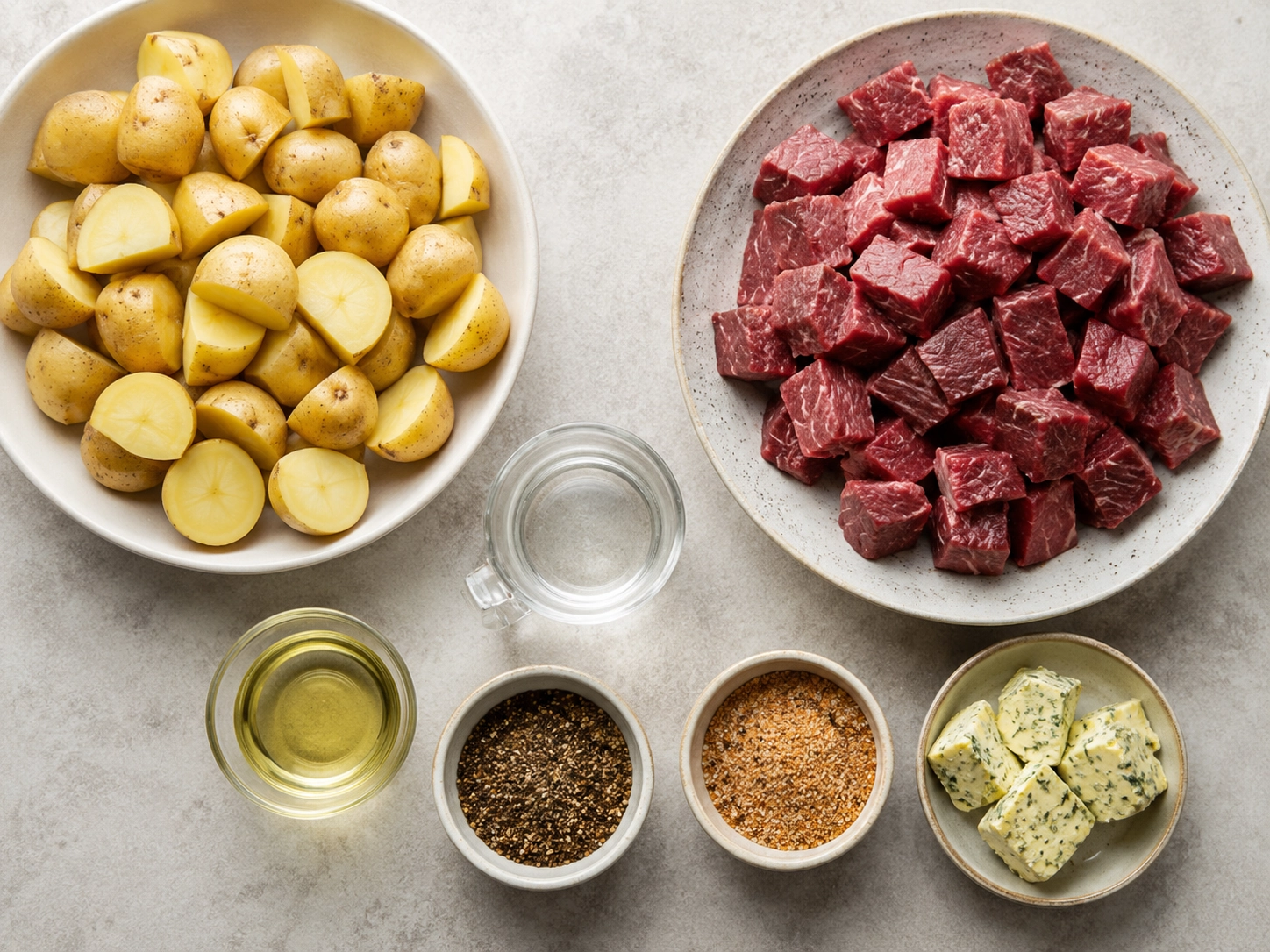
Ingredients
Main Ingredients
Optional Additions
Instructions
1. Place the potatoes in a microwave-safe bowl with 2 tablespoons water.
2. Cover loosely and microwave for 5 to 7 minutes, stirring once, until the potatoes are nearly fork-tender but still hold their shape.
3. Drain the potatoes thoroughly and pat the surfaces dry.
4. Pat the sirloin cubes dry with paper towels.
5. Season the steak evenly with Homemade Steak Seasoning.
6. Heat a large 12-inch skillet over medium-high heat.
7. Add 1 tablespoon of the cooking oil.
8. Add the potatoes and sprinkle them with Homemade Seasoned Salt.
9. Cook the potatoes for 8 to 10 minutes, turning occasionally, until they are tender inside with browned, crisp edges.
10. Transfer the potatoes to a plate and keep them uncovered.
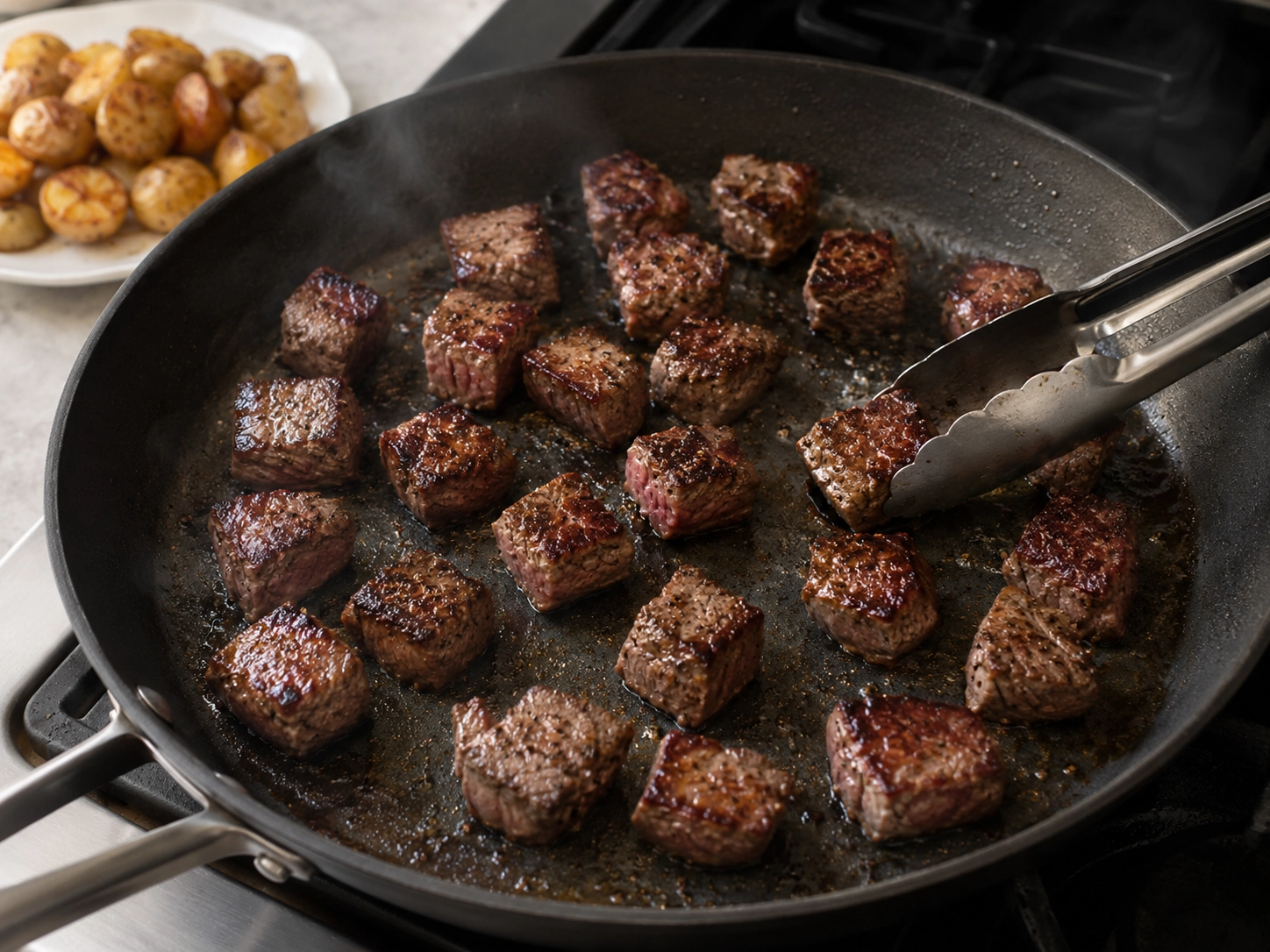
11. Increase the skillet heat to high and add the remaining tablespoon of cooking oil.
12. Add the steak in a single layer, working in two batches if necessary so the skillet is not crowded.
13. Let the steak sear undisturbed for about 1 1/2 to 2 minutes before turning the pieces.
14. Continue cooking for another 1 to 3 minutes, turning as needed, until the surfaces are deeply browned and the beef has reached the desired safe doneness. USDA recommends cooking beef steaks to a minimum internal temperature of 145°F followed by at least a 3-minute rest.
15. Reduce the heat to low.
16. Return all of the browned potatoes and steak to the skillet.
17. Add the Homemade Garlic Herb Butter.
18. Toss the steak and potatoes gently for 30 to 60 seconds, just until the butter melts and coats everything.
19. Remove the skillet from the heat before the garlic and herbs begin to brown.
20. Let the steak rest for at least 3 minutes before serving.
Flavor & Outcome
The potatoes should have tender, creamy centers with noticeably browned edges. They should hold their shape when tossed rather than breaking down into the butter.
The steak should develop a dark exterior while remaining tender inside. Because the pieces are small, their doneness can change quickly once they hit the hot skillet, making an instant-read thermometer more reliable than judging by cooking time alone.
The Garlic Herb Butter creates a thin, glossy coating rather than a pool of sauce. Garlic becomes fragrant as the butter melts against the warm skillet, while the herbs remain more distinct than they would if they had been exposed to high heat from the beginning.
As the dish sits, the potatoes absorb some of the melted butter. Serving shortly after the final toss preserves the strongest contrast between browned steak, crisp-edged potatoes, and the buttery finish.
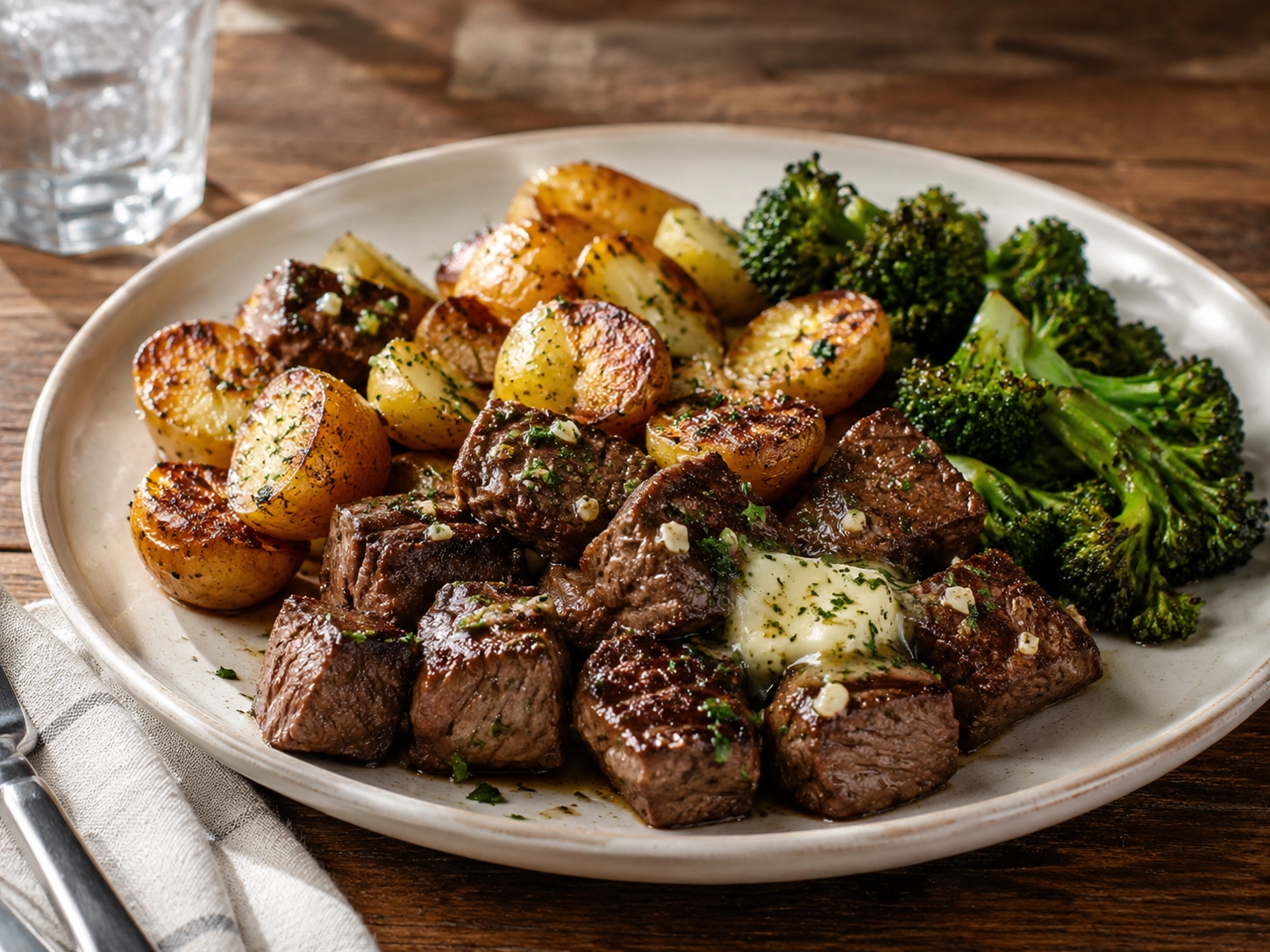
Serving Ideas
Garlic Herb Butter Steak Bites and Potatoes pair naturally with simple vegetables, salads, and sauces, including:
Storage & Make-Ahead Tips
Refrigerator Storage
Cool leftover steak and potatoes and transfer them to a covered container.
Refrigerate leftovers for 3 to 4 days. Federal food-safety guidance recommends refrigerating cooked leftovers for no more than 3 to 4 days.
Freezer Suitability
The steak and potatoes can be frozen, but the potato texture will be softer after thawing and reheating.
For the best results, cool the leftovers completely and freeze them in individual portions. Thaw overnight in the refrigerator before reheating.
If preparing specifically for the freezer, use a slightly lighter amount of Garlic Herb Butter before freezing and add a small amount of fresh butter after reheating to restore the garlic-herb finish.
Reheating
To reheat leftovers, use a skillet over medium heat with a small amount of oil until the potatoes regain some surface browning and the steak is heated through. Add a small piece of Garlic Herb Butter at the end rather than reheating everything in a large amount of butter. Leftovers should be reheated to 165°F.
Make-Ahead Notes
The potatoes can be microwaved ahead of time, cooled, and refrigerated until you are ready to brown them.
Homemade Garlic Herb Butter can also be prepared ahead and kept ready in the refrigerator.
For the best steak texture, cut and cook the sirloin closer to serving time rather than cooking the entire dish well in advance.
Common Questions
What cut of steak is best for steak bites?
Sirloin is a dependable choice because it cuts easily into uniform pieces, cooks quickly, and provides plenty of beef flavor without relying on a heavily marbled steak.
Ribeye can also be used, but its additional fat makes it richer and can create more rendered fat in the skillet.
How do I get the potatoes crispy without overcooking the steak?
Cook the potatoes before the steak.
Briefly microwaving the potatoes gets their centers nearly tender. They can then be browned in the skillet and removed before the steak is seared.
Once the steak is finished, everything goes back into the pan for the Garlic Herb Butter.
When should I add Garlic Herb Butter to steak bites?
Add it at the very end.
Sear the steak with neutral oil first, reduce the heat, return the potatoes, and then add the Homemade Garlic Herb Butter. Toss everything only until the butter melts and coats the food.
Adding it too early exposes the garlic, herbs, and butter solids to more heat than they need.
How do I know when steak bites are done?
Steak bites cook quickly, so check one of the larger pieces with an instant-read thermometer rather than relying entirely on cooking time or exterior color.
For food safety, USDA recommends beef steaks reach at least 145°F followed by a 3-minute rest.
Can Garlic Herb Butter Steak Bites and Potatoes be made ahead?
Several components can.
The potatoes can be partially cooked ahead, and Homemade Garlic Herb Butter can already be waiting in the refrigerator.
For the strongest contrast between browned exterior and tender steak, sear the beef shortly before serving and combine everything with the butter at the end.
Next Real Food Upgrade
If you enjoyed turning Homemade Garlic Herb Butter into a complete steak-and-potatoes dinner, Homemade Steak Seasoning is the natural next upgrade. The two staples have separate jobs in this recipe: Steak Seasoning builds flavor on the beef before it hits the skillet, while Garlic Herb Butter finishes the meat and potatoes after the browning is complete.
From there, Homemade Seasoned Salt is a useful companion for potatoes and vegetables, while Homemade Garlic Parmesan Sauce can take future steak, chicken, potato, and vegetable dinners in a creamier direction. Each staple handles a different part of the meal, giving you more ways to build dinner from ingredients already prepared and waiting in the kitchen.