Why Homemade Stuffing Mix Tastes Better Than Boxed Stuffing Mix
Quick Answer
Homemade stuffing mix gives you the same convenience as a boxed mix while letting you choose the bread, herbs, and seasonings that fit your family’s taste. By drying bread cubes ahead of time and seasoning them with pantry staples, you have a shelf-stable mix that’s ready whenever you need a quick side dish.
Unlike a boxed stuffing mix, the homemade version lets you adjust the salt, broth, butter, and texture without changing the entire recipe. Whether you prefer soft, spoonable stuffing or crisp, golden edges from the oven, you stay in control from start to finish.
Real-World Observation
One of the first things home cooks notice is that bread type makes a difference. Rustic white bread creates a hearty stuffing with distinct cubes, while sandwich bread produces a softer, more traditional texture. Neither is wrong. The choice simply changes the finished dish.
Another common observation is that broth absorption varies slightly from batch to batch. Even when the bread is measured carefully, some loaves dry more thoroughly than others. Adding the broth gradually instead of all at once helps prevent soggy stuffing and produces more consistent results.
The Real Food Upgrade
Boxed stuffing mix is designed for convenience. The bread is already dried, seasoned, and measured, making it easy to prepare with just butter and broth.
Homemade stuffing mix offers that same convenience after a little advance preparation. Once assembled, it becomes a pantry shortcut that’s ready whenever you need it. You also have the flexibility to:
1. Choose your favorite bread.
2. Adjust the salt level.
3. Use homemade or store-bought broth.
4. Add extra herbs if desired.
5. Customize the final texture by cooking it on the stovetop or baking it in the oven.
The biggest difference is transparency. You know exactly what’s in the mix because you assembled it yourself using familiar ingredients.
Why This Recipe Works
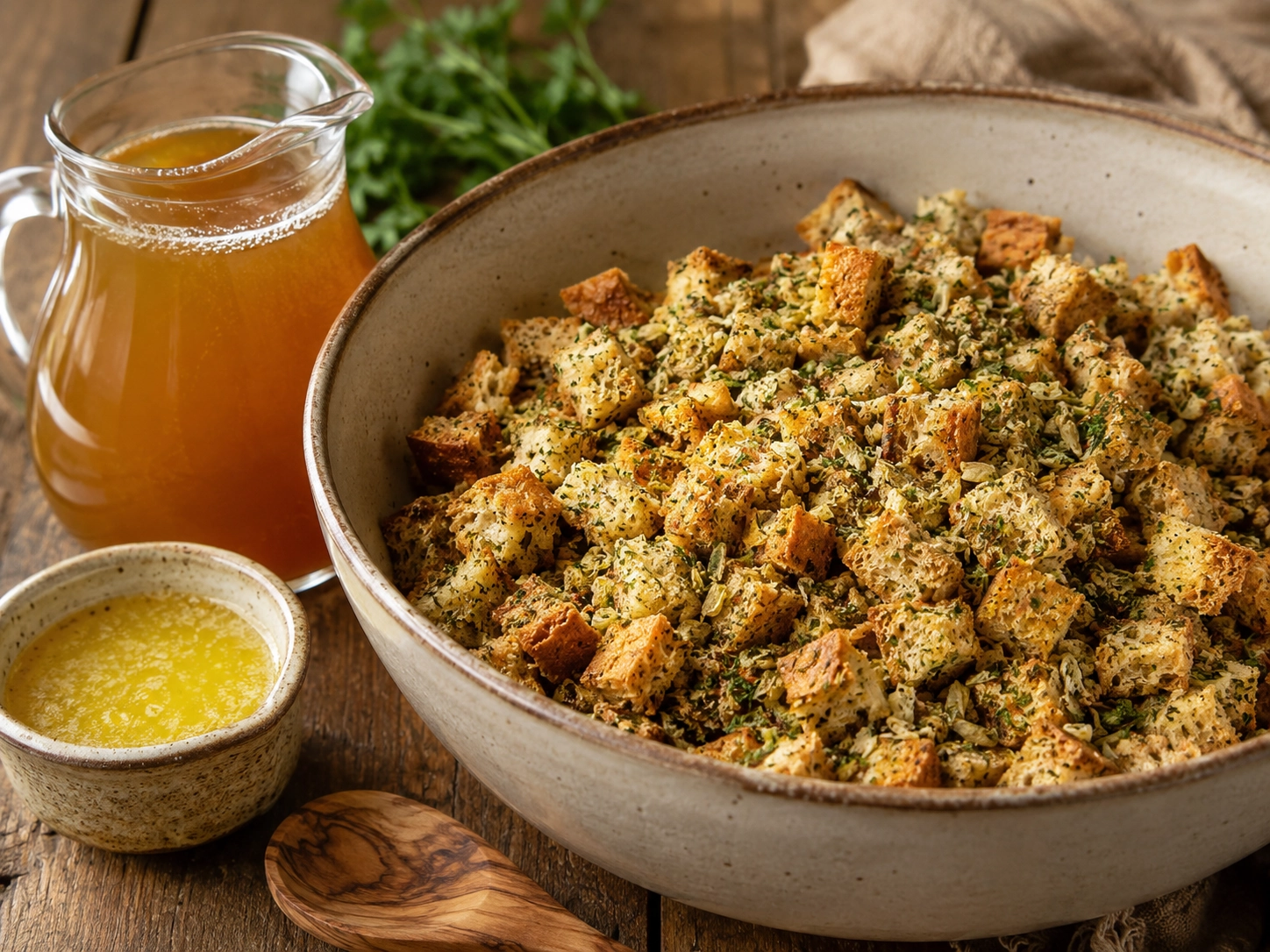
This stuffing mix is built around thoroughly dried bread cubes, which absorb broth evenly without falling apart.
Traditional poultry seasoning provides the classic savory flavor people expect in holiday stuffing, while dried onion, celery, garlic, and black pepper round out the seasoning without adding moisture that could shorten storage life.
The seasoning is intentionally balanced rather than overpowering. Since broth and butter are added during cooking, the mix remains versatile enough to pair with chicken, turkey, pork, casseroles, and everyday comfort-food meals.
Because everything is measured ahead of time, preparing stuffing later takes only a few minutes.
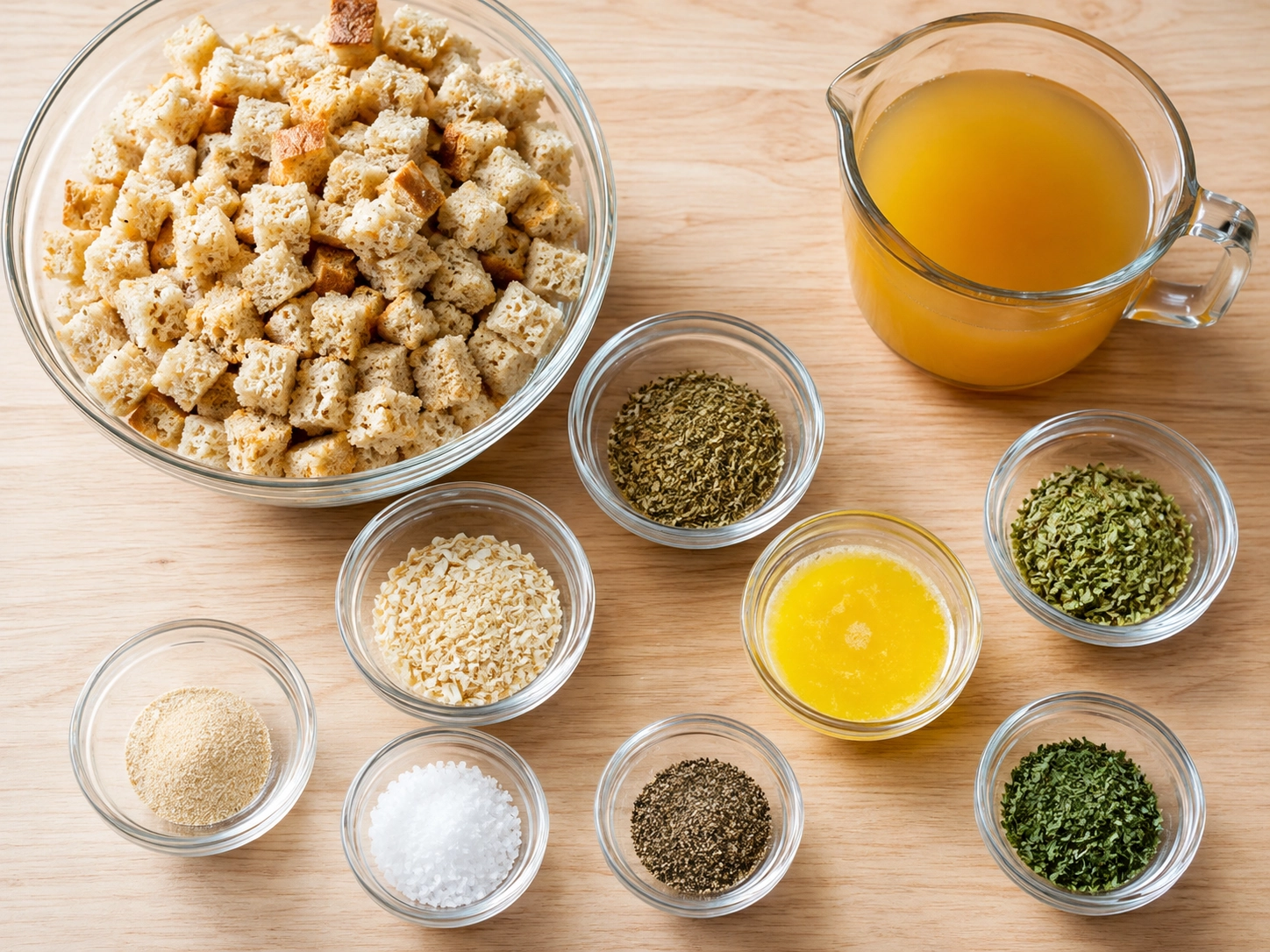
Ingredients
Main Ingredients
Optional Additions
Ingredients to Prepare the Stuffing
You will need:
Instructions to Make the Stuffing Mix
1. Cut bread into ½-inch cubes.
2. Spread the cubes in a single layer on baking sheets.
3. Dry the bread in a 250°F oven for 45 to 60 minutes, stirring every 15 minutes, until the cubes feel completely dry and crisp all the way through.
4. Allow the bread cubes to cool completely.
5. Combine the dried bread cubes with the poultry seasoning, dried onion, celery flakes, garlic powder, salt, pepper, and parsley.
6. Transfer the mixture to an airtight container or large zip-top storage bag.
Instructions to Prepare the Stuffing
1. Place the stuffing mix into a large bowl.
2. Drizzle the melted butter over the bread cubes and toss gently.
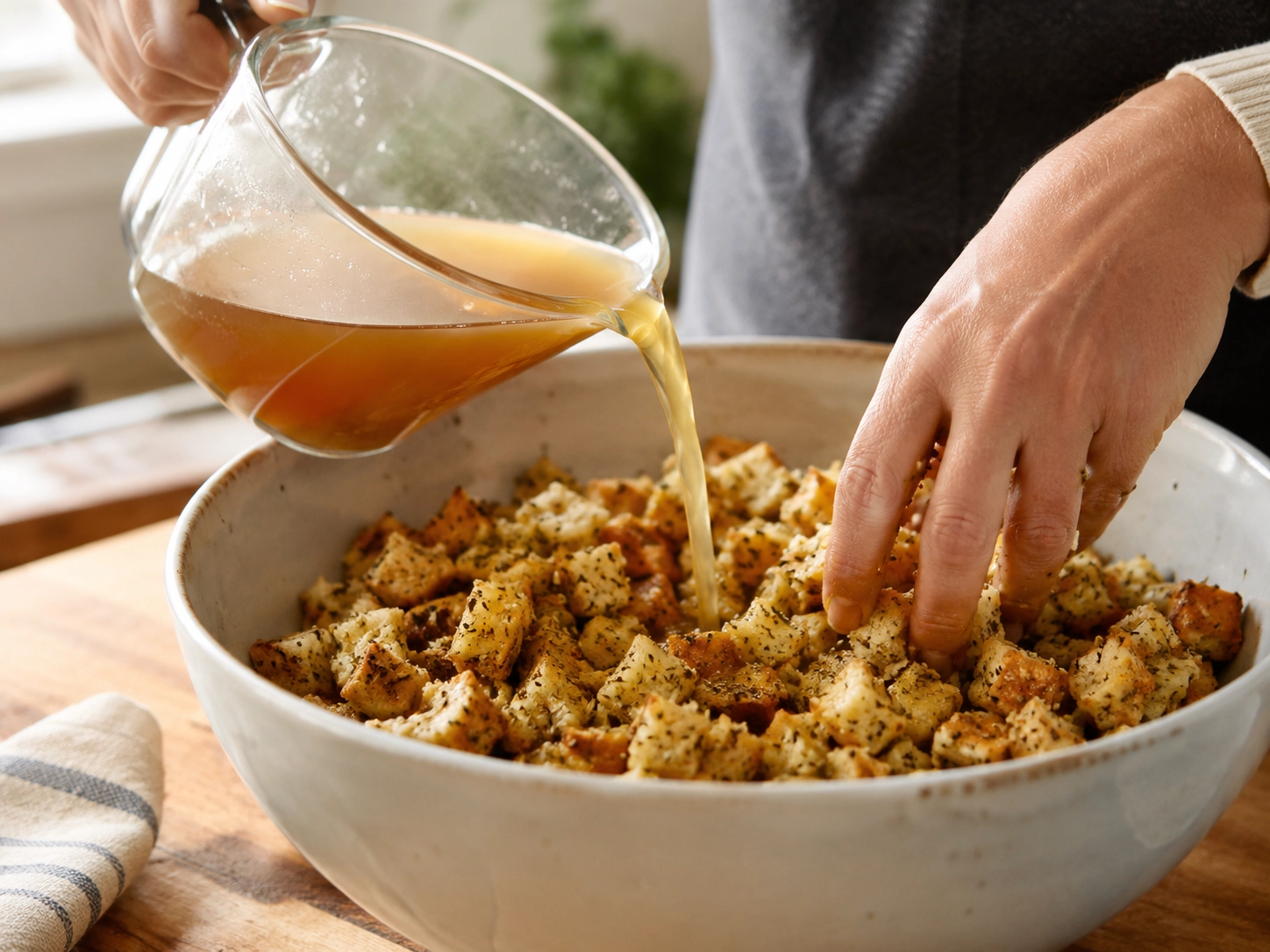
3. Add about 2 cups of the warm broth and stir.
4. Continue adding broth a little at a time until the bread is evenly moistened but not wet. Most batches use about 2½ cups, though very dry bread may need slightly more.
5. For stovetop stuffing, cover and let stand for 10 minutes before serving.
6. For baked stuffing, transfer to a buttered baking dish, cover with foil, and bake at 350°F for 25 minutes. Remove the foil and bake another 15 to 20 minutes for crisp, browned edges.
Flavor & Outcome
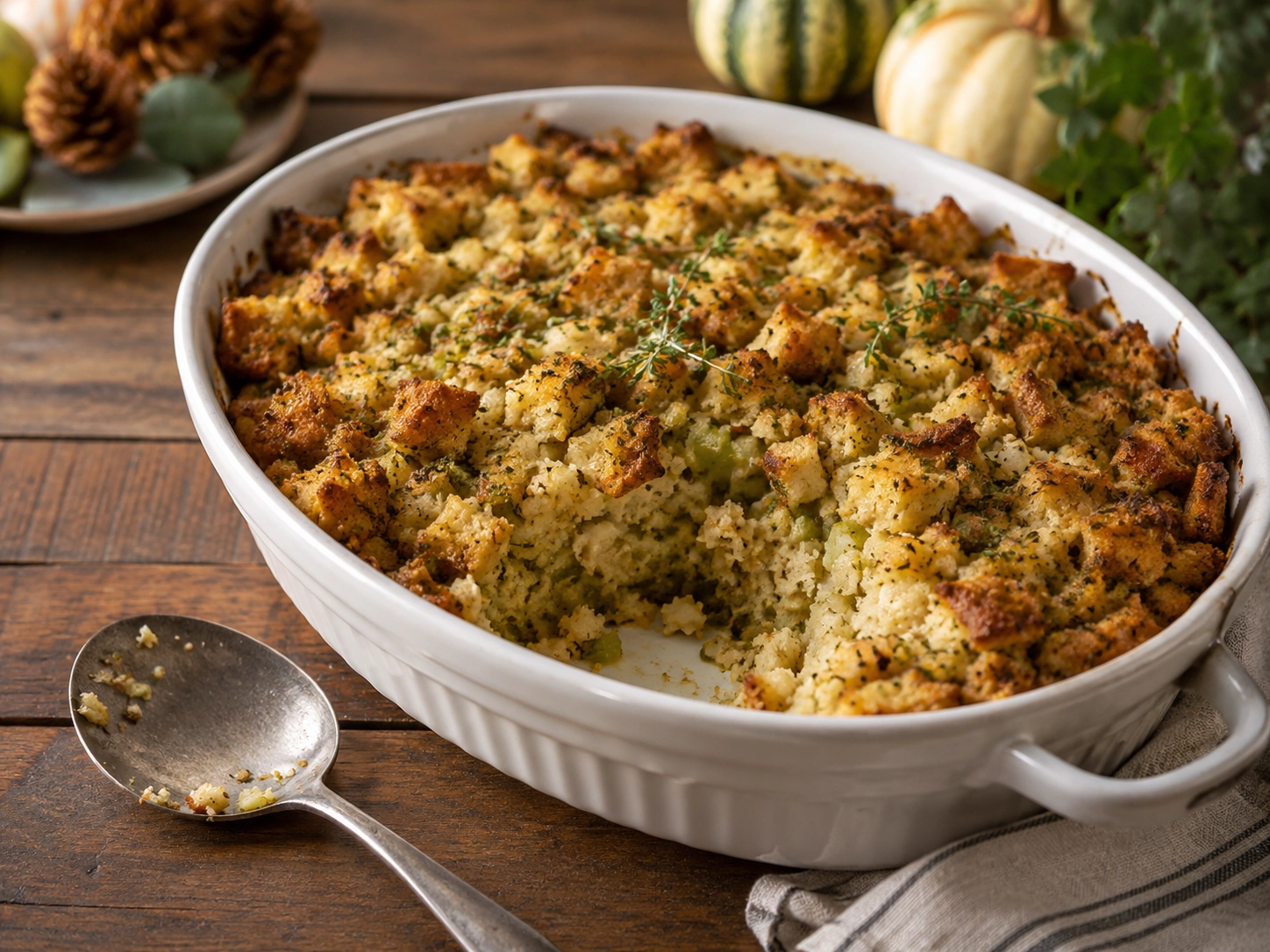
The finished stuffing has a familiar savory flavor led by poultry seasoning, onion, celery, and gentle herbs. The dried bread absorbs the broth without becoming mushy when the liquid is added gradually.
Stovetop preparation produces a soft, moist stuffing that’s easy to spoon. Baking creates a tender center with lightly crisped edges and browned bits across the top.
The aroma becomes more pronounced as the butter and herbs warm together, making the stuffing an excellent companion to roasted meats and comfort-food casseroles.
Serving Ideas
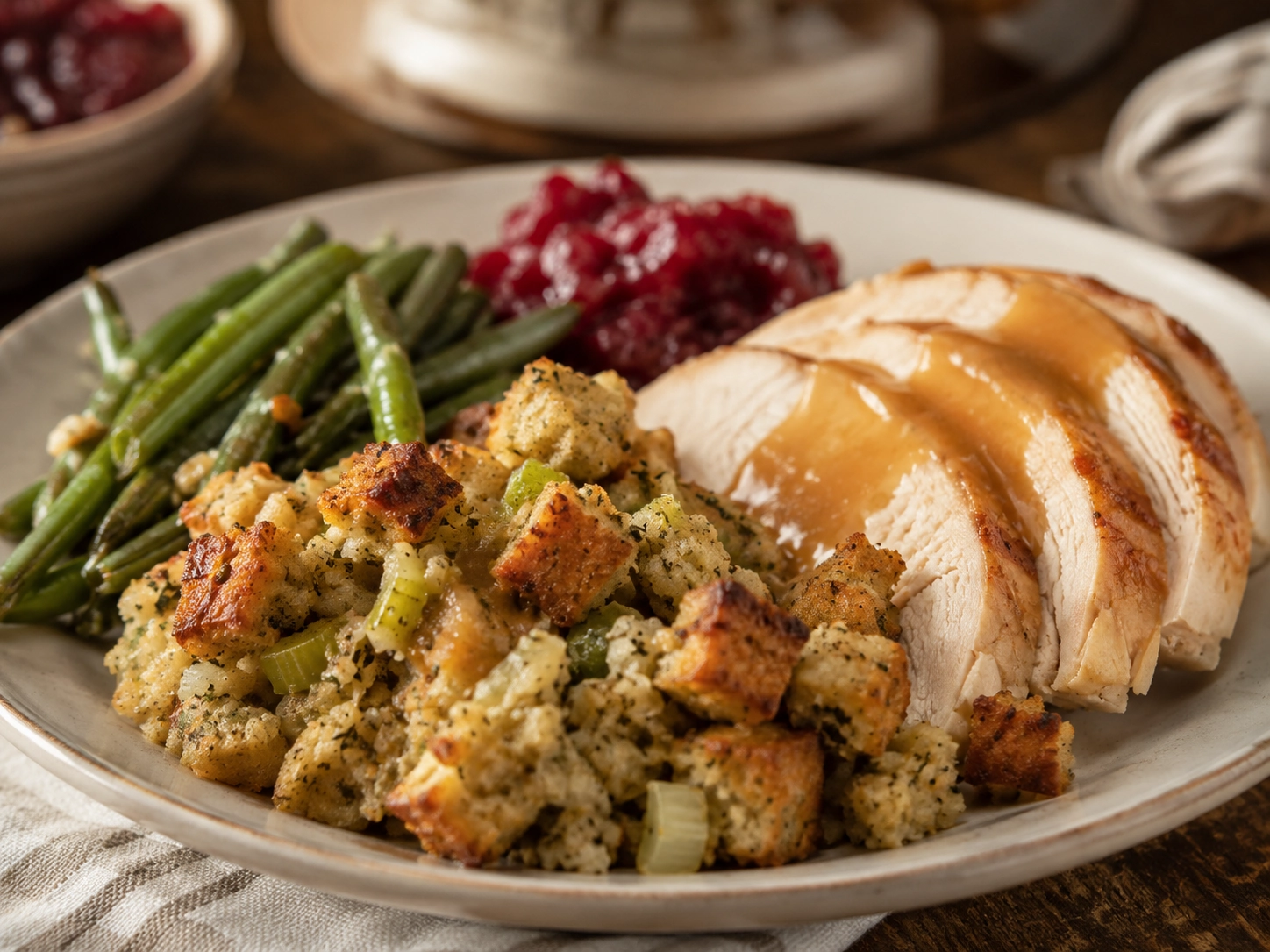
Homemade stuffing pairs well with:
Storage & Make-Ahead Tips
Refrigerator Storage
Prepared stuffing should be refrigerated in an airtight container for up to 4 days.
Freezer Suitability
Cooked stuffing freezes well for up to 3 months. Thaw overnight in the refrigerator before reheating.
Pantry Storage
Store the completely dry stuffing mix in an airtight container in a cool, dry pantry for up to 3 months.
Make-Ahead Notes
The bread must be completely dry and fully cooled before sealing it in a container. Any remaining moisture can shorten shelf life and may lead to spoilage. Do not add fresh onion, celery, butter, or broth until you’re ready to prepare the stuffing.
Common Questions
What is homemade stuffing mix made of?
Homemade stuffing mix combines dried bread cubes with pantry seasonings such as poultry seasoning, dried onion, dried celery, garlic powder, salt, pepper, and herbs. Butter and broth are added later when cooking.
How much broth should I add to stuffing mix?
Start with about 2 cups of warm broth, then add more gradually. Most batches need around 2½ cups, but the exact amount depends on how dry the bread is and the texture you prefer.
What kind of bread works best for homemade stuffing?
White sandwich bread, French bread, Italian bread, and hearty bakery loaves all work well. Whatever bread you choose, dry it completely before storing the mix.
Can homemade stuffing mix be prepared ahead?
Yes. That’s one of its biggest advantages. Once the bread is thoroughly dried and mixed with the seasonings, it can be stored in the pantry for up to three months.
Is stuffing mix the same as poultry seasoning?
No. Poultry seasoning is simply an herb blend. Stuffing mix is a complete pantry product made with dried bread cubes and seasonings that becomes stuffing after broth and butter are added.
Next Real Food Upgrade
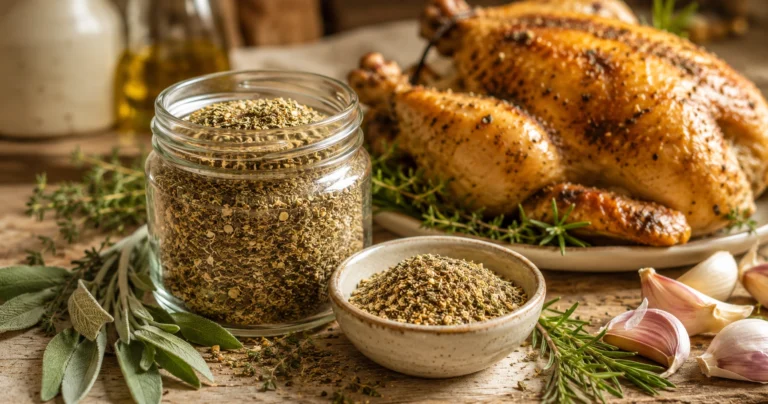
If you enjoyed making your own stuffing mix, Homemade Poultry Seasoning is the natural next upgrade. It forms the classic herb foundation of this recipe and lets you customize the balance of sage, thyme, rosemary, and other herbs for stuffing, roasted poultry, soups, and casseroles.