Why Homemade Seasoned Rice Mix Tastes Better Than Boxed Rice Mix
Quick Answer
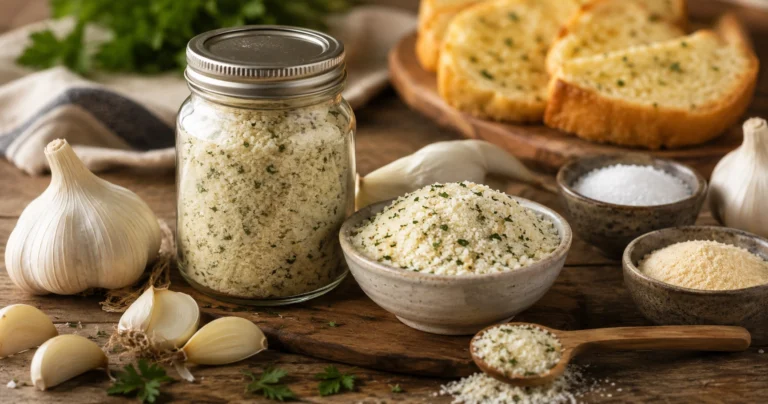
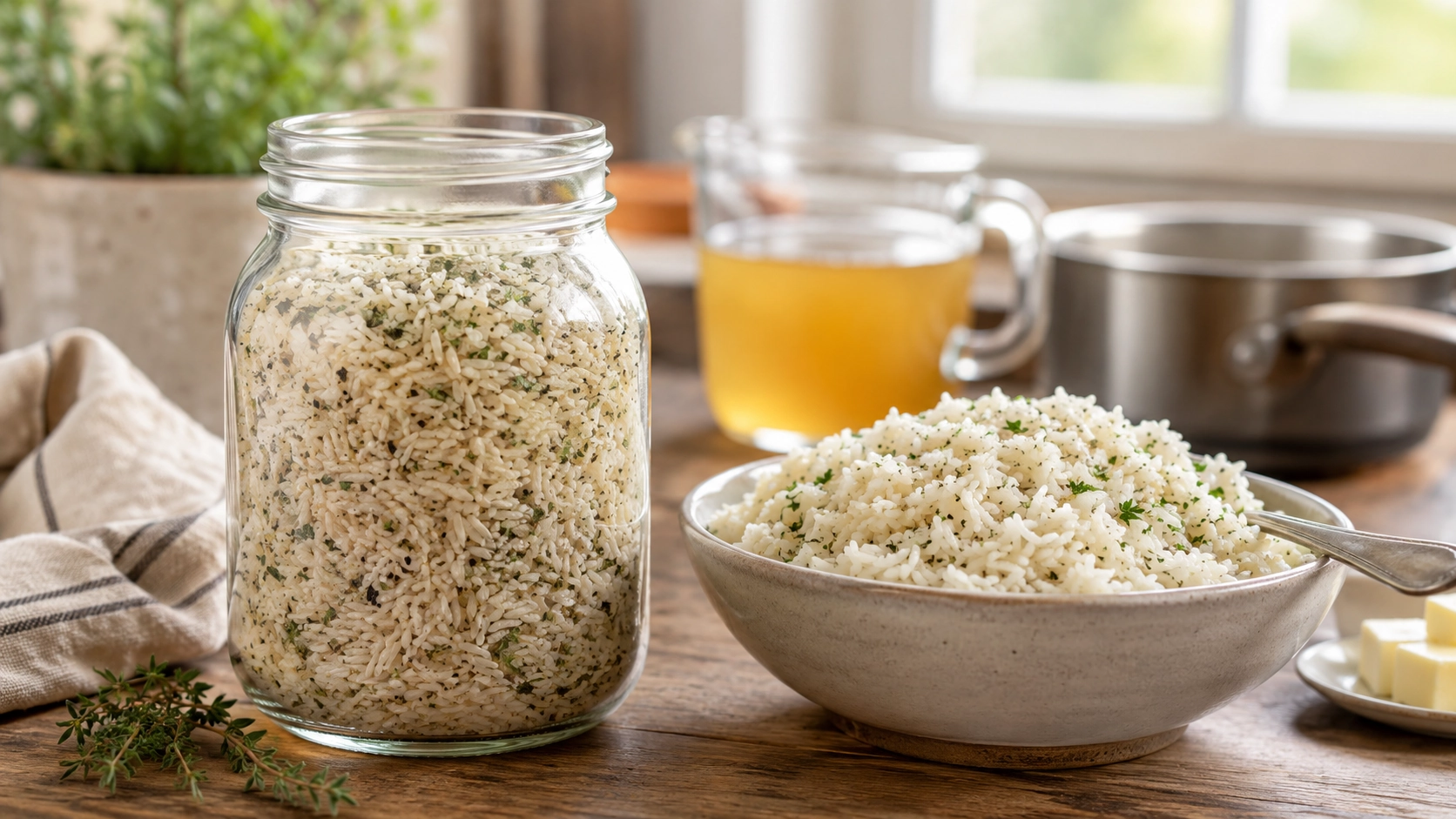
Homemade seasoned rice mix combines long-grain white rice with onion, garlic, parsley, thyme, salt, and black pepper so the entire side dish can be prepared ahead in one container. When it is time to cook, add the mix to broth with butter or oil and let it simmer until the rice is tender.
One batch contains 1 cup of uncooked rice and makes approximately 3 cups of cooked seasoned rice. It is mild enough to serve with chicken, pork, beef, fish, vegetables, casseroles, and gravy-based meals without competing with the main dish.
The upgrade is the same convenience offered by a boxed seasoned rice mix, but with control over the rice, salt, herbs, cooking liquid, and fat.
Real-World Observation
Seasoned rice usually looks slightly wetter when the burner is first turned off than it does on the plate. Leaving the pan covered for 10 minutes allows the remaining steam to finish hydrating the rice and helps the grains firm enough to fluff apart.
Stirring also matters. Once the broth comes to a simmer and the lid goes on, the rice needs very little attention. Repeated stirring releases more starch and can turn an otherwise fluffy side dish soft or gummy.
The Real Food Upgrade
Boxed Seasoned Rice Mix
Boxed rice mixes are convenient because the rice and seasonings are already measured. Add water and fat, follow the cooking directions, and the side dish is largely handled.
That consistency can be useful, but the salt level, seasoning blend, rice, and flavor profile have already been selected.
Homemade Seasoned Rice Mix
Homemade seasoned rice mix keeps the same pantry-to-stovetop convenience while using a short list of familiar ingredients.
Long-grain rice provides the base, while onion, garlic, parsley, thyme, salt, and pepper create a mild savory flavor. Butter or oil and broth are added during cooking rather than stored in the dry mixture.
Because the seasoning remains intentionally simple, the finished rice can move easily between roasted chicken, pork chops, beef and gravy, fish, vegetables, and casserole meals.
Why This Recipe Works
Long-grain white rice cooks into separate, fluffy grains when the liquid ratio and cooking time are controlled. It also has a mild flavor that takes on broth and seasonings easily.
Onion powder provides the main savory foundation. It dissolves into the cooking liquid and flavors the rice evenly without adding pieces of onion.
Garlic powder adds another layer of savory flavor but remains restrained enough for the rice to pair with many different meals.
Dried parsley provides mild herbal flavor and visible flecks of green without turning the rice into a strongly herbed pilaf.
Dried thyme adds a gentle background note that works especially well with chicken, pork, vegetables, and gravy.
Salt is kept moderate because broth already contributes sodium. Using low-sodium broth gives the most control over the finished flavor.
Black pepper adds a small amount of warmth without making the rice peppery.
Butter adds richness and a more noticeable savory aroma. Neutral oil can be used instead when a lighter flavor is preferred.
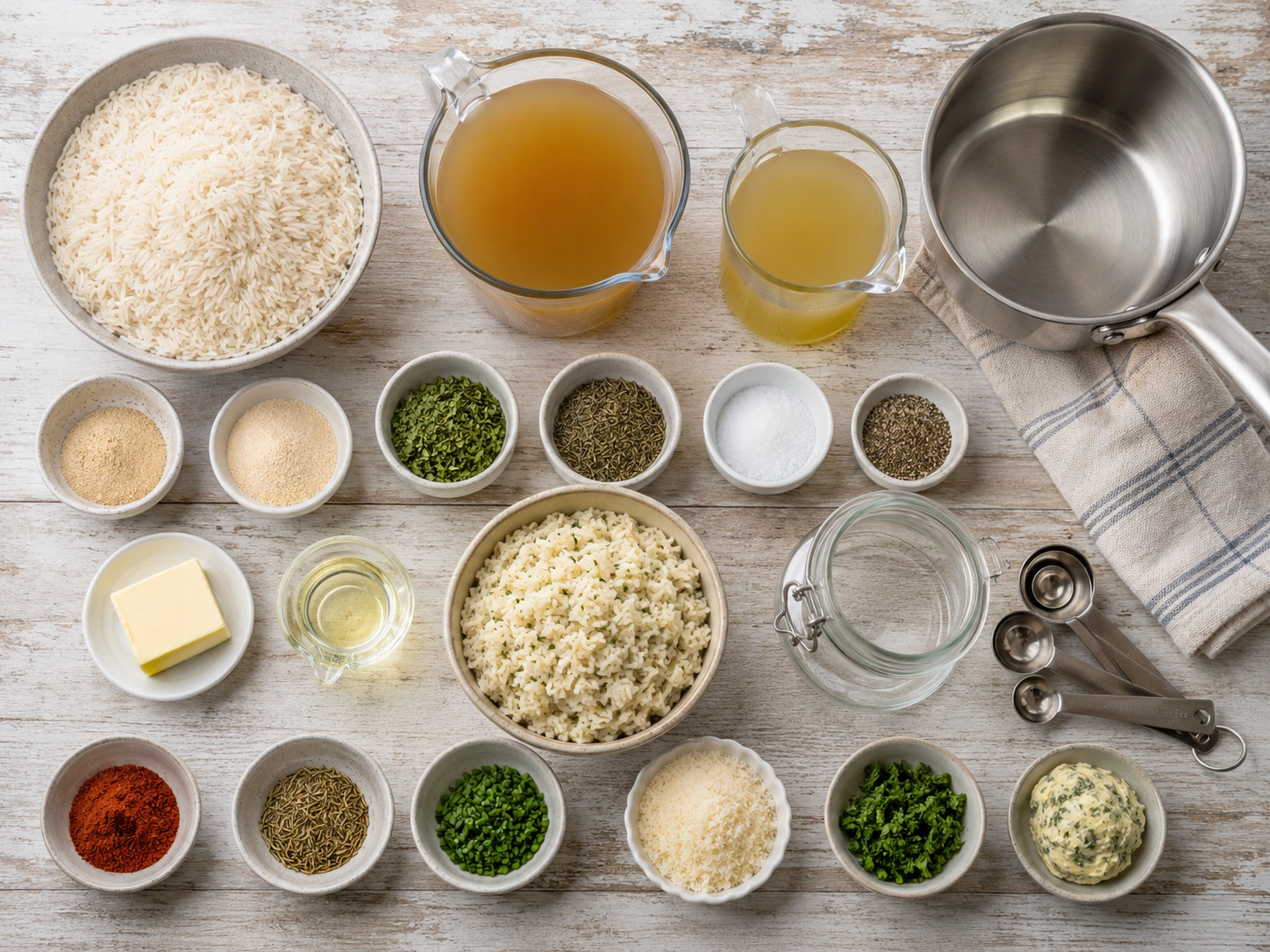
Ingredients
Main Ingredients For One Jar of Seasoned Rice Mix
Optional Additions
Ingredients To Cook One Batch
You will need
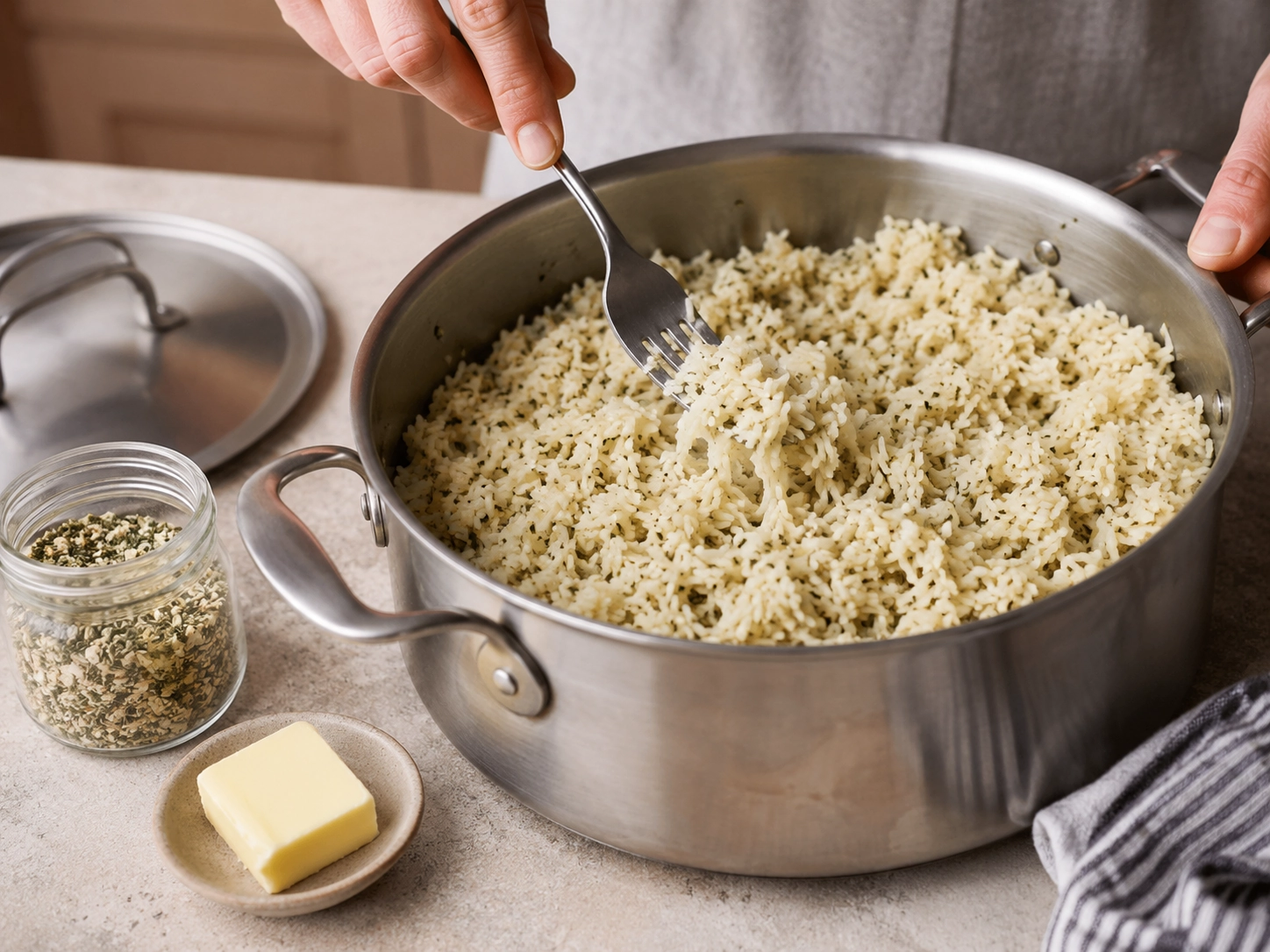
Instructions to Prepare the Rice Mix
1. Add the rice, onion powder, garlic powder, parsley, thyme, salt, and black pepper to a bowl.
2. Stir until the seasonings are evenly distributed through the rice.
3. Transfer the entire mixture to an airtight jar or container.
4. Label the container with the preparation date and cooking directions.
Instructions to Cook the Seasoned Rice
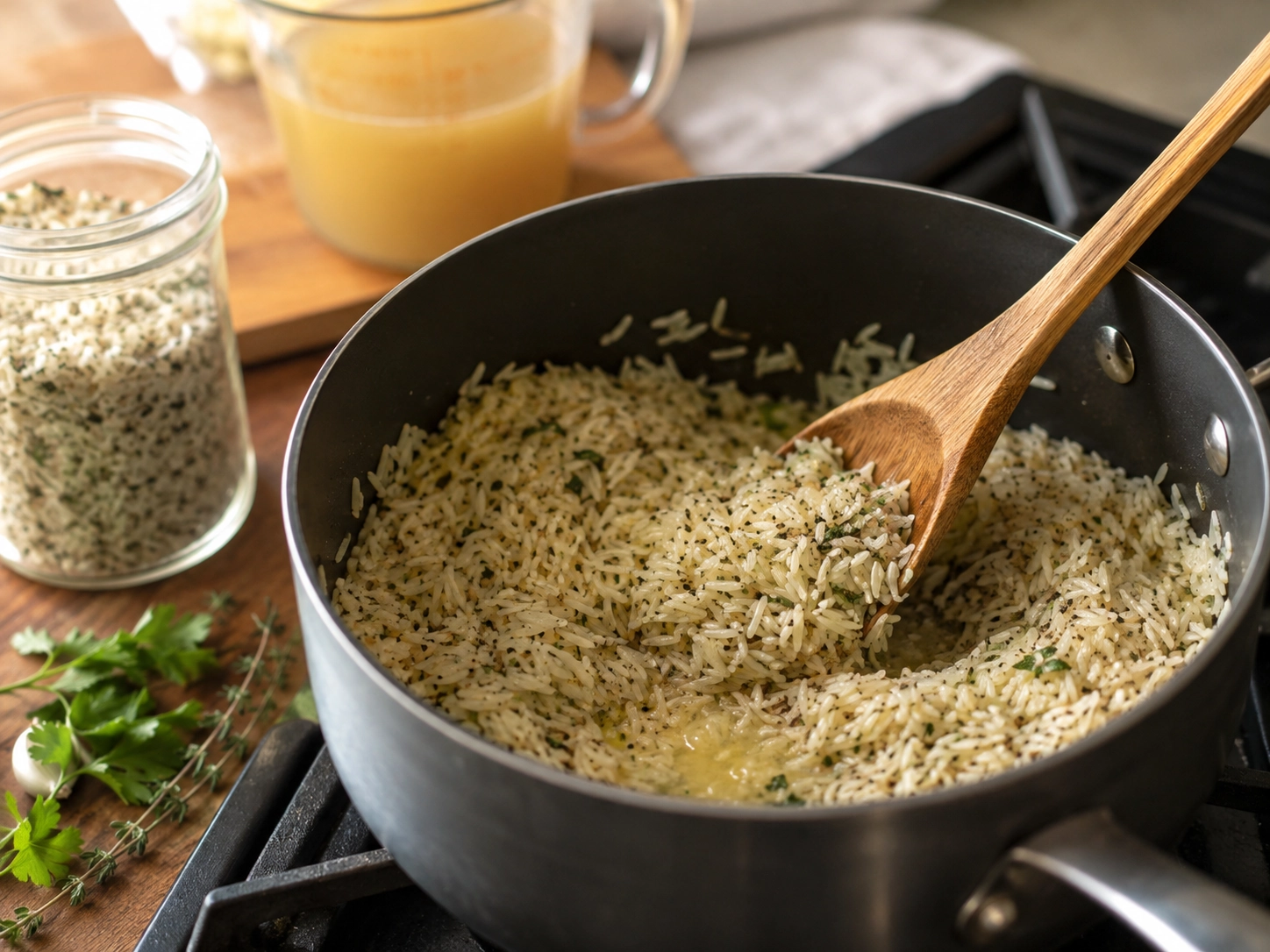
1. Melt the butter in a medium saucepan over medium heat.
2. Add the entire jar of Seasoned Rice Mix.
3. Stir for 1 to 2 minutes, until the rice is lightly coated with the butter and begins to smell toasted.
4. Pour in the broth.
5. Stir once to loosen any seasonings from the bottom of the pan.
6. Bring the liquid to a gentle boil.
7. Reduce the heat to low and cover the saucepan with a tight-fitting lid.
8. Cook for 17 to 20 minutes without lifting the lid.
9. Remove the saucepan from the heat.
10. Let the rice rest, covered, for 10 minutes.
11. Fluff gently with a fork.
12. Taste and adjust the salt only after the rice is fully cooked.
How Much Liquid Do I Use?
Use 1¾ cups low-sodium broth for every one jar of mix containing 1 cup of long-grain white rice.
That ratio provides enough moisture to cook the rice without leaving excessive liquid in the pan.
Add these directions to the storage label:
Add 1 jar mix, 1¾ cups low-sodium broth, and 1 tablespoon butter or oil. Cover and cook on low for 17 to 20 minutes. Rest covered for 10 minutes, then fluff.
Broth vs Water
Low-sodium chicken or vegetable broth produces the most savory flavor and is the preferred cooking liquid for this mix.
Water also works, but the finished rice will taste milder because it does not provide the additional savory flavor found in broth.
When using water, taste the finished rice and add an additional pinch of salt or a little butter if needed.
Avoid using highly salted broth unless the salt in the dry mix is reduced first.
Seasoned Rice Mix vs Taco Rice Seasoning
Homemade Seasoned Rice Mix is mild, savory, and designed to work beside many different main dishes. Onion, garlic, parsley, thyme, salt, and pepper provide the primary flavor.
Homemade Taco Rice Seasoning uses chili powder, cumin, paprika, oregano, and tomato paste to create a distinctly taco-night flavor.
The two recipes have different jobs. Seasoned rice is an everyday side dish, while taco rice is built specifically for burritos, tacos, enchiladas, bowls, and Mexican-inspired meals.
Butter vs Oil
Butter gives the rice a richer aroma and slightly fuller flavor. It works particularly well when the rice is served with roasted chicken, pork, vegetables, or gravy.
Neutral cooking oil keeps the flavor lighter and allows the broth and herbs to remain more noticeable.
Either can be used in the same amount.
For an additional savory variation, replace the plain butter with Homemade Garlic Herb Butter after cooking.
Long-Grain White Rice vs Brown Rice
Long-grain white rice is the primary choice for this mix because it cooks relatively quickly and produces fluffy, separate grains.
Brown rice requires more liquid and substantially more cooking time. Rather than using the white-rice directions, follow the liquid ratio and cooking time recommended for the specific brown rice being used.
The same seasoning blend can be added to brown rice, but the cooking formula should not remain the same.
Flavor & Outcome
The finished rice has a mild onion and garlic flavor with subtle parsley and thyme in the background.
The grains should be tender and separate rather than creamy or sticky. Butter gives the rice a slightly richer finish, while broth carries the savory seasonings throughout the pot.
The herbs remain deliberately mild. The rice should support the main dish rather than becoming the strongest flavor on the plate.
After cooling, the grains become slightly firmer, which makes leftover seasoned rice useful for casseroles, stuffed peppers, and meal prep.
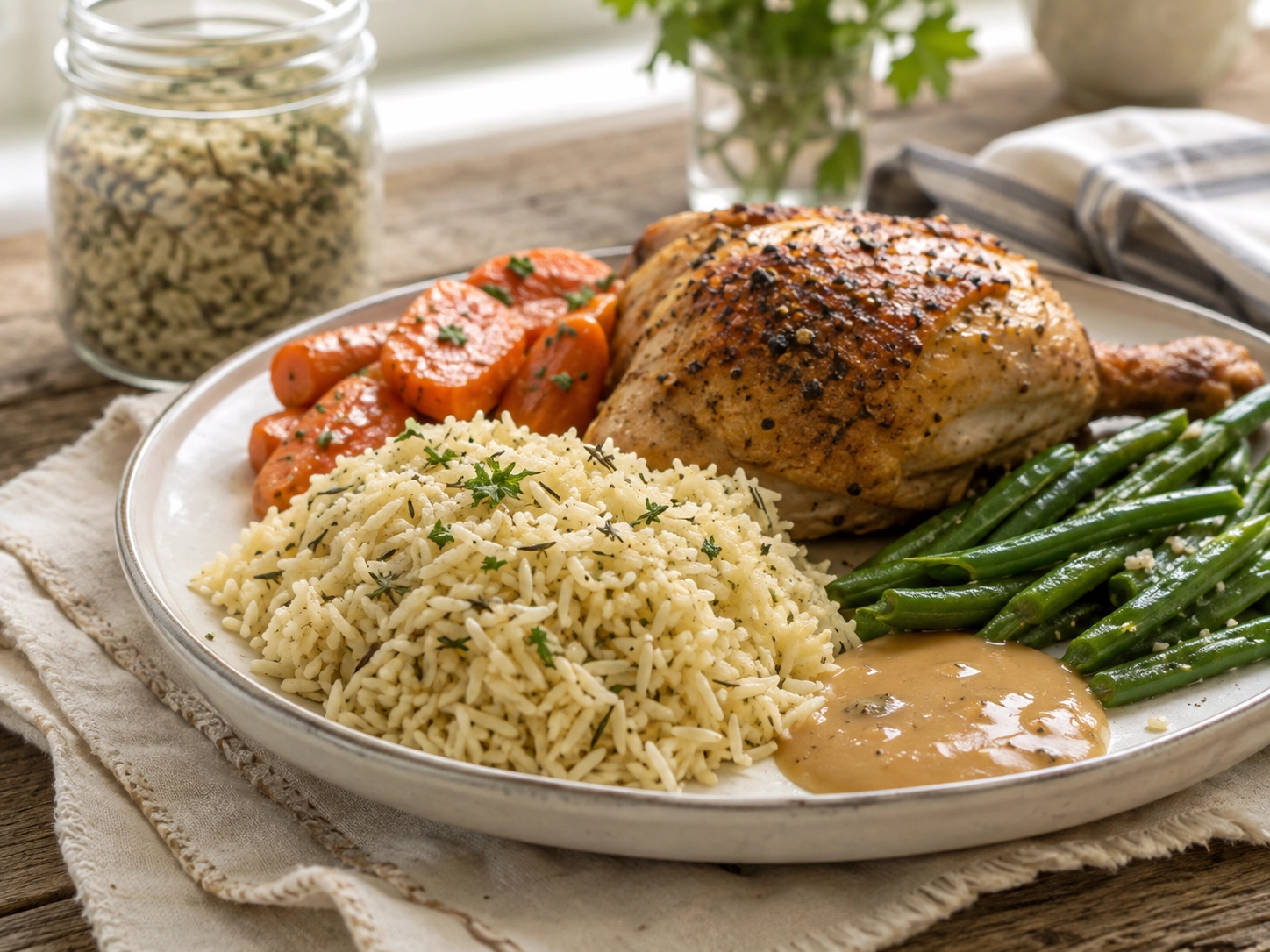
Serving Ideas
Serve Homemade Seasoned Rice with:
Storage & Make-Ahead Tips
Pantry Storage
Store the uncooked Seasoned Rice Mix in an airtight container in a cool, dry pantry.
Keep the mix away from moisture, steam, direct sunlight, and heat. Make sure the rice and seasonings are completely dry before the container is sealed.
Freezer Suitability
The dry mix does not need to be frozen.
Cooked seasoned rice can be frozen for up to two months. Cool it promptly, portion it into airtight freezer-safe containers, and reheat with a small splash of broth or water when needed.
Shelf Life
For the strongest seasoning flavor, use the dry mix within six months.
The rice itself stores longer under proper conditions, but onion powder, garlic powder, parsley, thyme, and black pepper gradually lose aroma during storage.
Make-Ahead Notes
Prepare several individual jars at once so the rice and seasonings are already measured for future meals.
Cooked seasoned rice can also be prepared ahead and refrigerated in an airtight container for up to four days. Reheat it covered with a tablespoon or two of broth or water to restore moisture.
Common Questions
What is seasoned rice mix made of?
This homemade mix contains long-grain white rice, onion powder, garlic powder, dried parsley, thyme, salt, and black pepper.
Broth and butter or oil are added when the rice is cooked.
Can I use broth instead of water?
Yes. Low-sodium broth is the preferred cooking liquid because it adds savory flavor without requiring more seasoning.
Water can also be used when broth is unavailable.
Can homemade seasoned rice mix be prepared ahead?
Yes. The rice and dry seasonings can be combined in advance and stored in an airtight pantry container.
Preparing individual jars makes the mix especially convenient because each container already contains the correct amount for one batch.
Why did my rice turn out mushy?
Too much liquid, excessive stirring, or cooking the rice too long can make it soft or gummy.
Use 1¾ cups liquid for 1 cup long-grain white rice, keep the pan covered during cooking, and allow the rice to rest before fluffing.
Can I double the recipe?
Yes. Double the rice, seasonings, butter, and broth.
Use a saucepan large enough to allow the rice to expand, and expect the cooking time to remain similar once the liquid reaches a simmer.
Next Real Food Upgrade
After making your own Homemade Seasoned Rice Mix, try Homemade Taco Rice Seasoning. Both turn plain rice into a dependable pantry-based side dish, but taco rice seasoning adds chili, cumin, paprika, and tomato flavor for tacos, burritos, bowls, enchiladas, and other taco-night meals.