Why Homemade Cornbread Mix Tastes Better Than Boxed Mix
Quick Answer
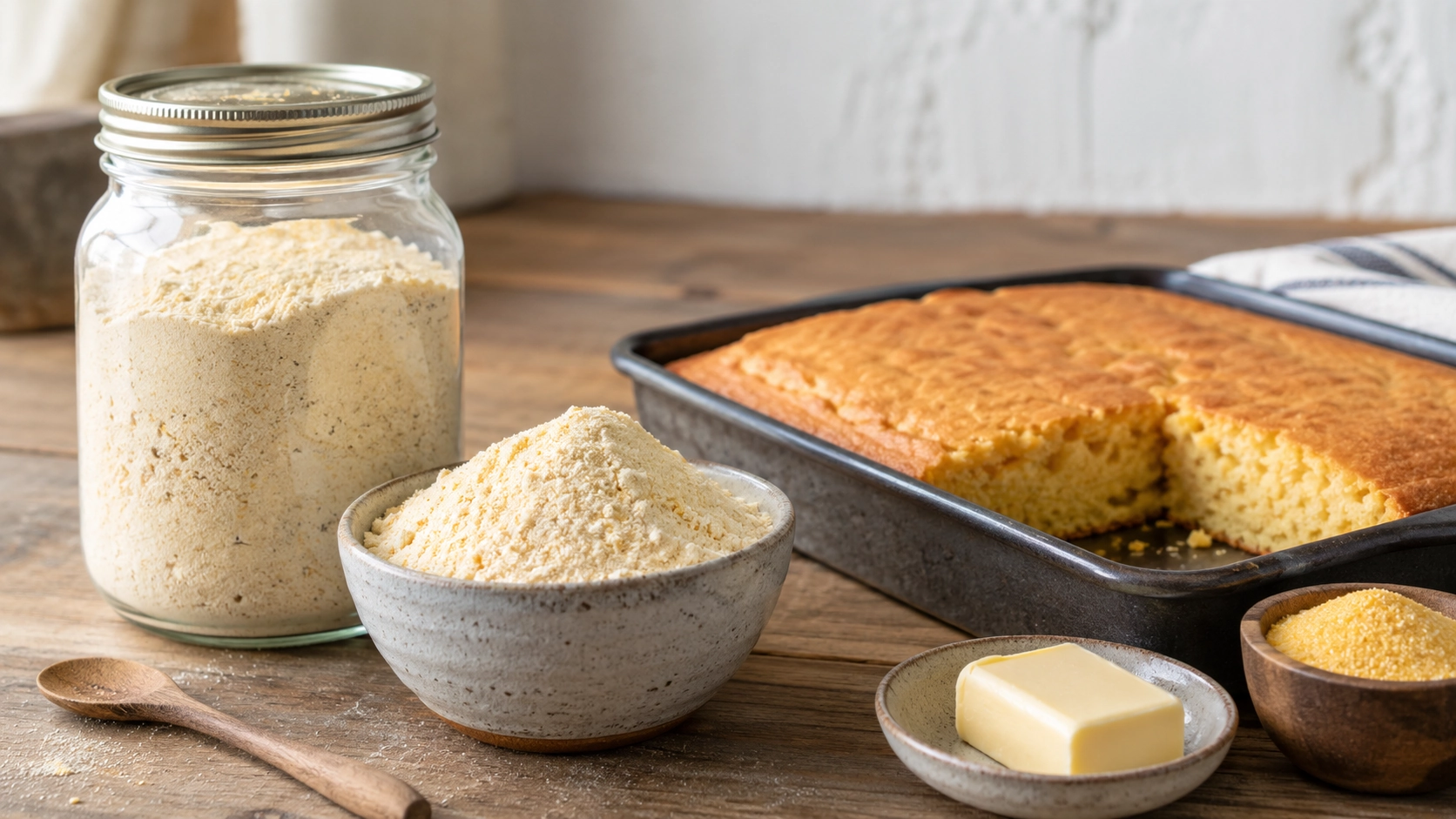
Homemade cornbread mix provides the same practical shortcut as a boxed mix, but it lets you choose the cornmeal, adjust the sweetness, and control the amount of salt. The dry ingredients can be measured ahead of time and stored until you are ready to add milk, egg, and melted butter or oil.
One batch of this homemade cornbread mix is designed to replace a small 8- to 9-ounce box of cornbread or corn muffin mix. It can be baked in a square pan, portioned into muffins, or used as a topping for casseroles.
The upgrade is not about making cornbread more complicated. It is about preparing your own dependable baking shortcut from familiar pantry ingredients.
Real-World Observation
Homemade cornbread mix becomes especially useful after the first few batches. Once the dry ingredients are already measured, making cornbread feels much like opening a boxed mix: add the wet ingredients, stir the batter, and bake. Preparing individual batches also avoids measuring cornmeal, flour, salt, and baking powder every time cornbread is served with chili, soup, or barbecue.
The cornmeal grind noticeably affects the finished bread. Fine cornmeal creates a softer, more uniform crumb, while medium-ground cornmeal gives the cornbread a slightly more distinct texture. The bread may also seem very soft when it first leaves the oven, but the crumb becomes more stable after resting for 10 to 15 minutes, making it easier to slice cleanly.
The Real Food Upgrade
Boxed Cornbread Mix
Boxed cornbread mixes are convenient, consistent, and ready to use. They are especially helpful when a recipe calls for a small box and precise measuring is not practical.
Depending on the product, the mix may already contain sugar, shortening, flavoring, or other ingredients intended to create a particular texture. That consistency is useful, but it also means the sweetness, salt level, and cornmeal texture have already been decided.
Homemade Cornbread Mix
Homemade cornbread mix keeps the convenient part of the boxed version: the dry ingredients are already measured and ready for baking.
The difference is flexibility. You can use yellow or white cornmeal, select a fine or medium grind, reduce or omit the sugar, and adjust the salt. You also decide whether to bake the mix with butter for a richer flavor or neutral oil for a softer crumb.
Preparing several batches at once creates a practical pantry supply for cornbread, muffins, casserole toppings, chili dinners, barbecue meals, and holiday cooking.
Why This Recipe Works
Cornmeal provides the characteristic corn flavor and slightly textured crumb. Yellow cornmeal gives the bread a golden color, while white cornmeal produces a paler loaf with a similarly recognizable corn flavor.
All-purpose flour gives the cornbread enough structure to hold together. A mix made entirely from cornmeal can be more fragile and crumbly, especially when baked without specialized techniques.
Baking powder supplies the lift. Because this recipe uses regular milk rather than depending on an acidic ingredient such as buttermilk, baking powder provides more dependable leavening than baking soda alone.
Salt keeps the bread from tasting flat and balances both sweet and savory versions.
Sugar is adjustable. Two tablespoons give the cornbread a lightly sweet background without making it cake-like. It can be omitted for a more savory, corn-forward result or increased for sweeter corn muffins.
When the mix is baked, egg provides structure, milk hydrates the cornmeal and flour, and melted butter or oil keeps the crumb tender.
Ingredients
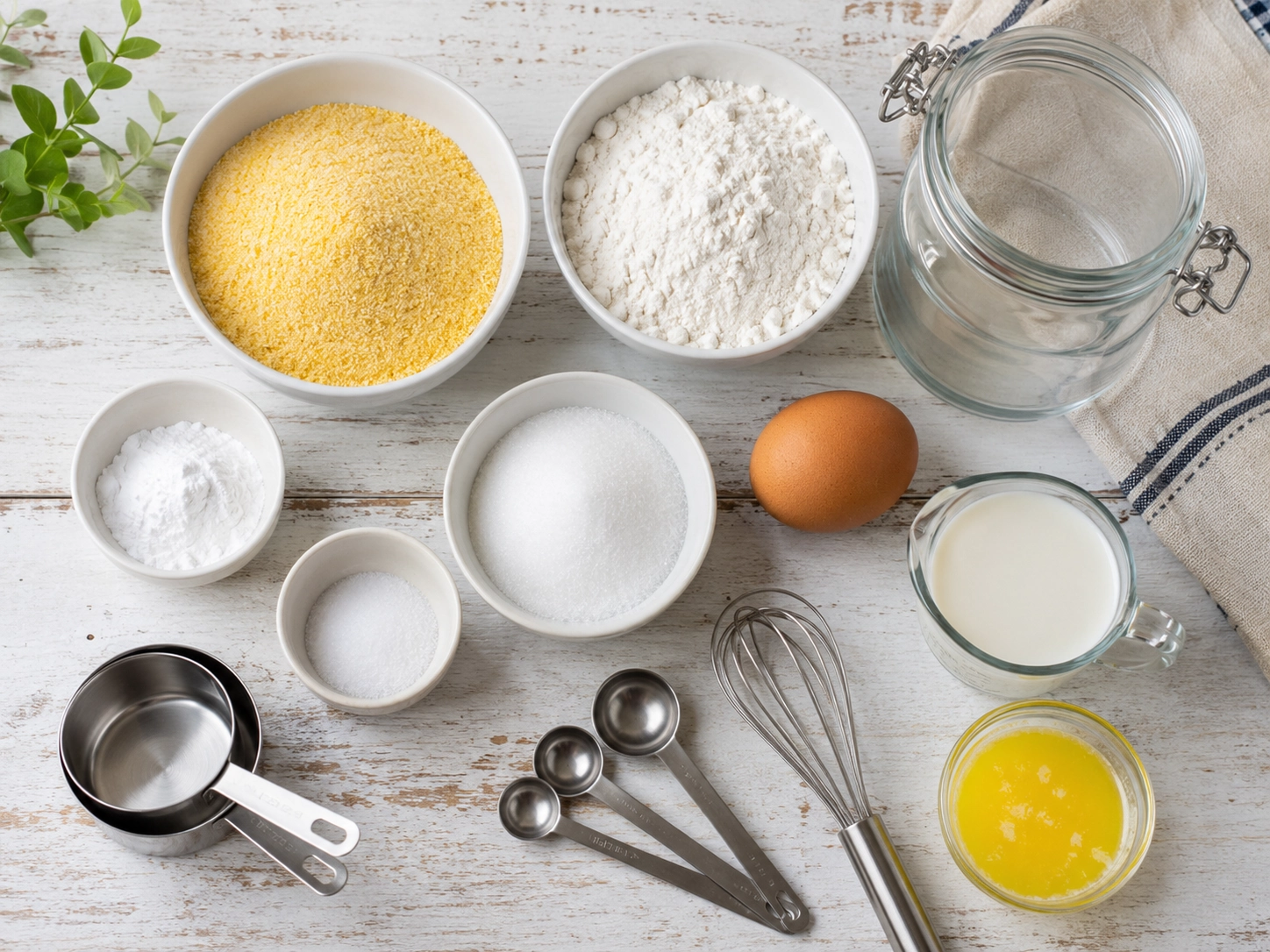
Main Ingredients
Optional Additions
Instructions for Preparing Dry Mix
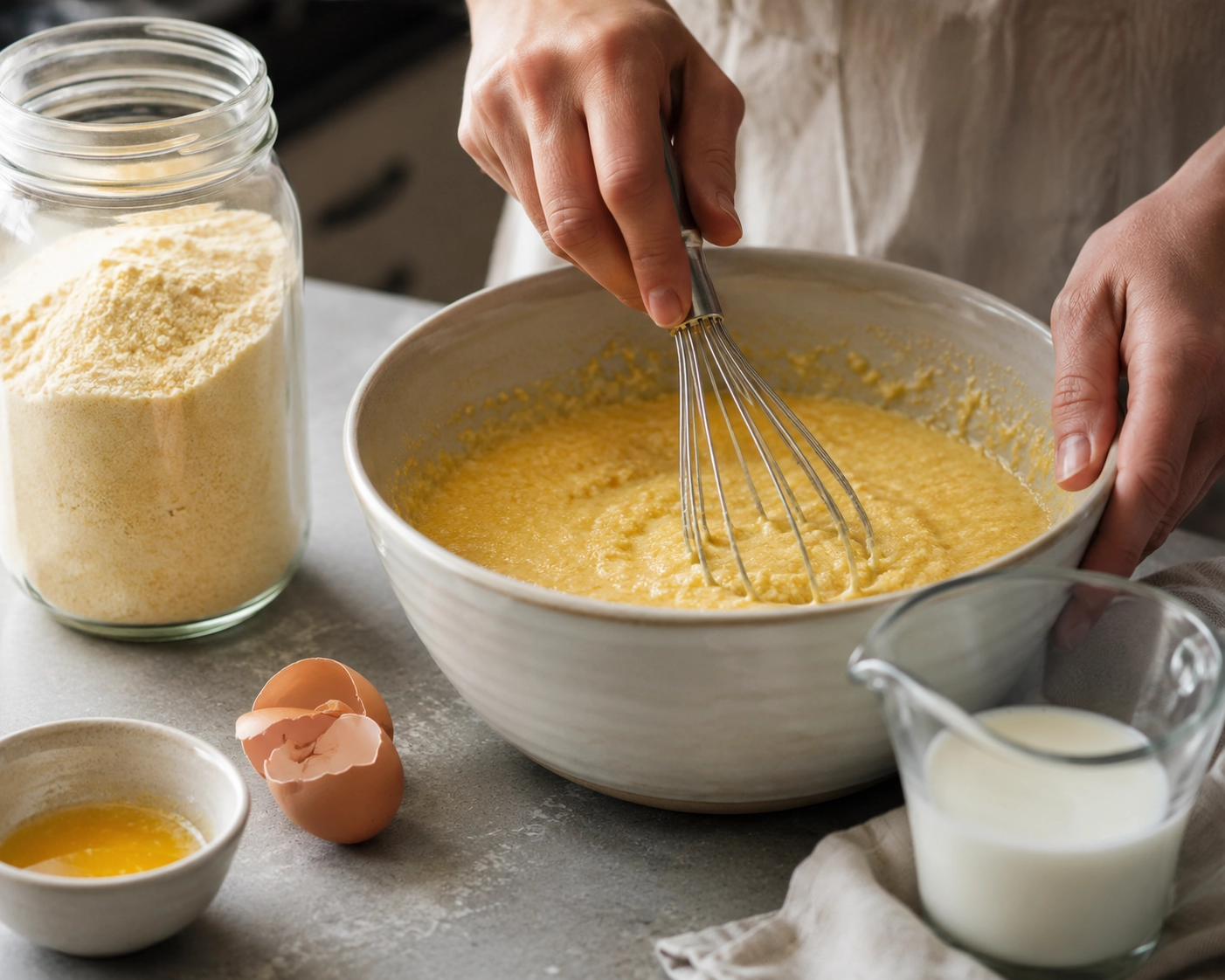
1. Add the cornmeal, flour, baking powder, salt, and optional sugar to a medium bowl.
2. Whisk until the baking powder and salt are evenly distributed.
3. Transfer the mixture to an airtight jar or container.
4. Label the container with the name, preparation date, and wet ingredients needed for baking.
Instructions
1. Heat the oven to 400°F.
2. Grease an 8-inch square baking pan or a 9-inch round pan.
3. Place one batch of cornbread mix in a medium bowl.
4. Whisk the egg, milk, and melted butter or oil in a separate bowl.
5. Pour the wet ingredients into the dry mix.
6. Stir just until no dry flour remains. A few small lumps are fine.
7. Let the batter rest for 5 minutes so the cornmeal can begin absorbing the liquid.
8. Spread the batter evenly in the prepared pan.
9. Bake for 18 to 22 minutes, until the top is set and a toothpick inserted near the center comes out without wet batter.
10. Cool for 10 to 15 minutes before slicing.
11. For Cornbread Muffins – Divide the batter among 10 to 12 greased or lined muffin cups. Bake at 400°F for approximately 14 to 17 minutes.
How Much Homemade Mix Replaces One Box?
One complete batch of this recipe replaces one small 8- to 9-ounce box of cornbread or corn muffin mix.
The unsweetened dry ingredients measure approximately 1 1/2 cups. Adding sugar increases the volume slightly, so the most dependable approach is to treat the entire recipe as one box-equivalent batch rather than measuring it from a large mixed jar by volume.
For bulk preparation, multiply every ingredient by three or four and divide the finished mix into separate containers. Label each container as one batch. This prevents small variations in the distribution of flour, cornmeal, and baking powder.
Sweet Cornbread or Savory Cornbread
For savory cornbread, omit the sugar or use only 1 tablespoon. This allows the cornmeal flavor to remain prominent and works particularly well with beans, chili, soup, greens, and barbecue.
For a lightly sweet version, use the listed 2 tablespoons of sugar.
For sweeter, softer corn muffins, use 1/4 cup sugar per batch. Honey can also be added with the wet ingredients, although the extra liquid may make the batter slightly softer.
The amount of sugar does more than change sweetness. Additional sugar helps retain moisture and produces a softer crumb, while unsweetened cornbread generally tastes more corn-forward and may feel slightly more crumbly.
Flavor & Outcome
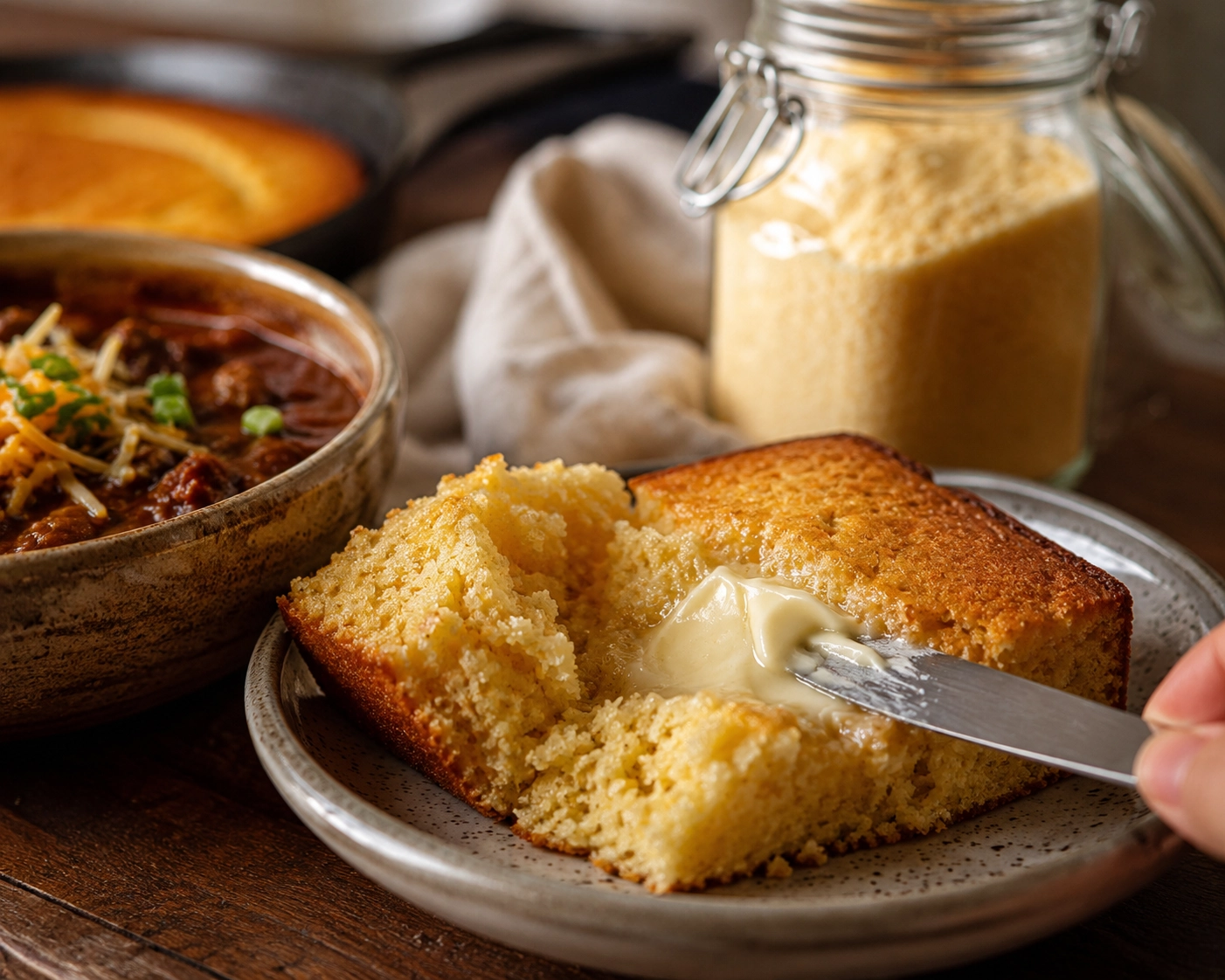
The finished cornbread has a golden surface, a tender center, and enough structure to cut into squares without becoming cake-like.
Butter gives the bread a richer aroma and more noticeable browned edges. Oil has a neutral flavor and usually keeps the crumb softer after the cornbread has cooled.
Fine cornmeal creates a smoother crumb. Medium-ground cornmeal remains slightly more distinct after baking and gives the cornbread a rustic texture.
The corn flavor becomes easier to notice as the bread cools. After refrigeration, the crumb will become firmer, but gentle reheating restores much of its softness.
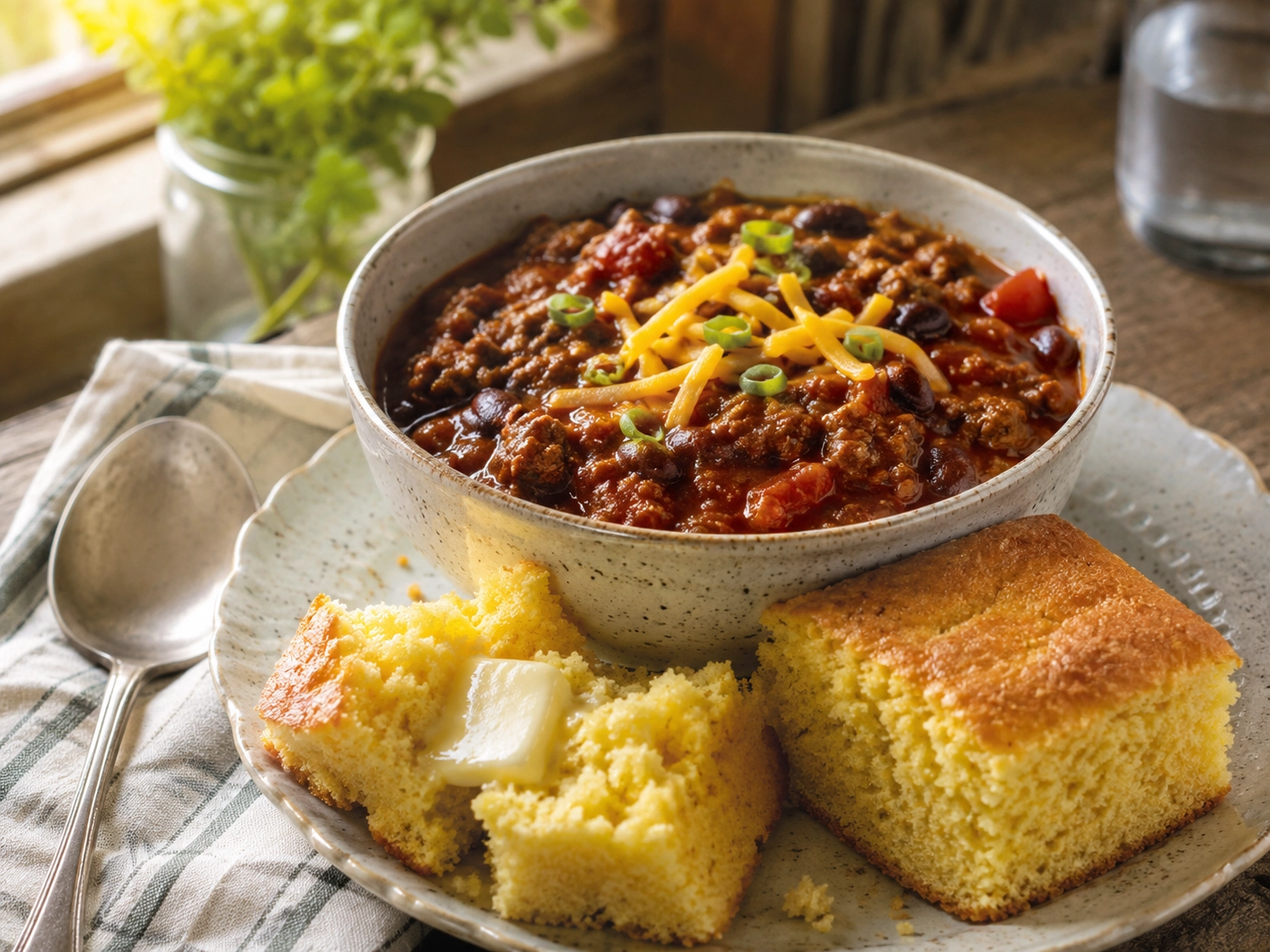
Serving Ideas
Use homemade cornbread mix for:
Storage & Make-Ahead Tips
Refrigerator Storage
The dry mix does not require refrigeration when kept in a cool, dry pantry. Refrigeration may be useful in a particularly warm or humid kitchen, but the container must remain tightly sealed to prevent the mix from absorbing moisture or refrigerator odors.
Baked cornbread can be refrigerated in an airtight container for up to four days.
Freezer Suitability
The dry mix can be frozen, although this is usually unnecessary. When freezing it, use a moisture-resistant airtight container and let the sealed container return to room temperature before opening. This helps prevent condensation from forming inside.
Baked cornbread freezes well for approximately two to three months. Wrap individual pieces so they can be reheated as needed.
Shelf Life
For the most dependable rise, use the homemade cornbread mix within three months. It may remain usable longer when the ingredients were fresh and the container was stored properly, but baking powder gradually loses strength after opening and mixing.
Discard the mix if it develops moisture, clumps that do not break apart, insects, or an unusual odor.
Make-Ahead Notes
Prepare several batches during one measuring session and store each batch in a separate labeled container. Include the baking instructions directly on the label:
Add 1 egg, 2/3 cup milk, and 1/4 cup melted butter or oil. Bake at 400°F for 18 to 22 minutes.
Keeping the batches separate makes the box-equivalent measurement clear and ensures each batch contains the correct amount of leavening.
Common Questions
Can I make homemade cornbread mix without sugar?
Yes. Omit the sugar for a savory cornbread with a more noticeable corn flavor. The bread may be slightly more crumbly, but the remaining ingredient measurements do not need to change.
What is the difference between cornbread mix and corn muffin mix?
The basic ingredients are often similar. A corn muffin mix is commonly sweeter and may be formulated for a softer, more cake-like texture. This homemade mix can be used for either form by adjusting the sugar and baking it in a pan or muffin cups.
Can I use white cornmeal instead of yellow cornmeal?
Yes. White and yellow cornmeal work in the same amount. The main visible difference is color. Flavor differences are usually subtle and depend more on the cornmeal’s freshness and grind.
Can I use self-rising cornmeal?
Not without changing the recipe. Self-rising cornmeal already contains leavening and salt. Adding the full amounts in this mix could make the cornbread overly salty or cause it to rise unevenly.
Why did my cornbread turn out dry?
Dry cornbread is often caused by baking too long, using too little fat, or adding extra flour while measuring. Remove the bread when the center is set and the toothpick no longer shows wet batter. Let it cool briefly before slicing so the crumb can stabilize.
Next Real Food Upgrade
After making your own Homemade Cornbread Mix, try Homemade Chili Seasoning. Both are practical pantry staples that replace packaged shortcuts, but chili seasoning turns ground meat, beans, tomatoes, and broth into a customizable main dish that pairs naturally with freshly baked cornbread.