Why Homemade Buffalo Sauce Tastes Better Than Store-Bought
Quick Answer
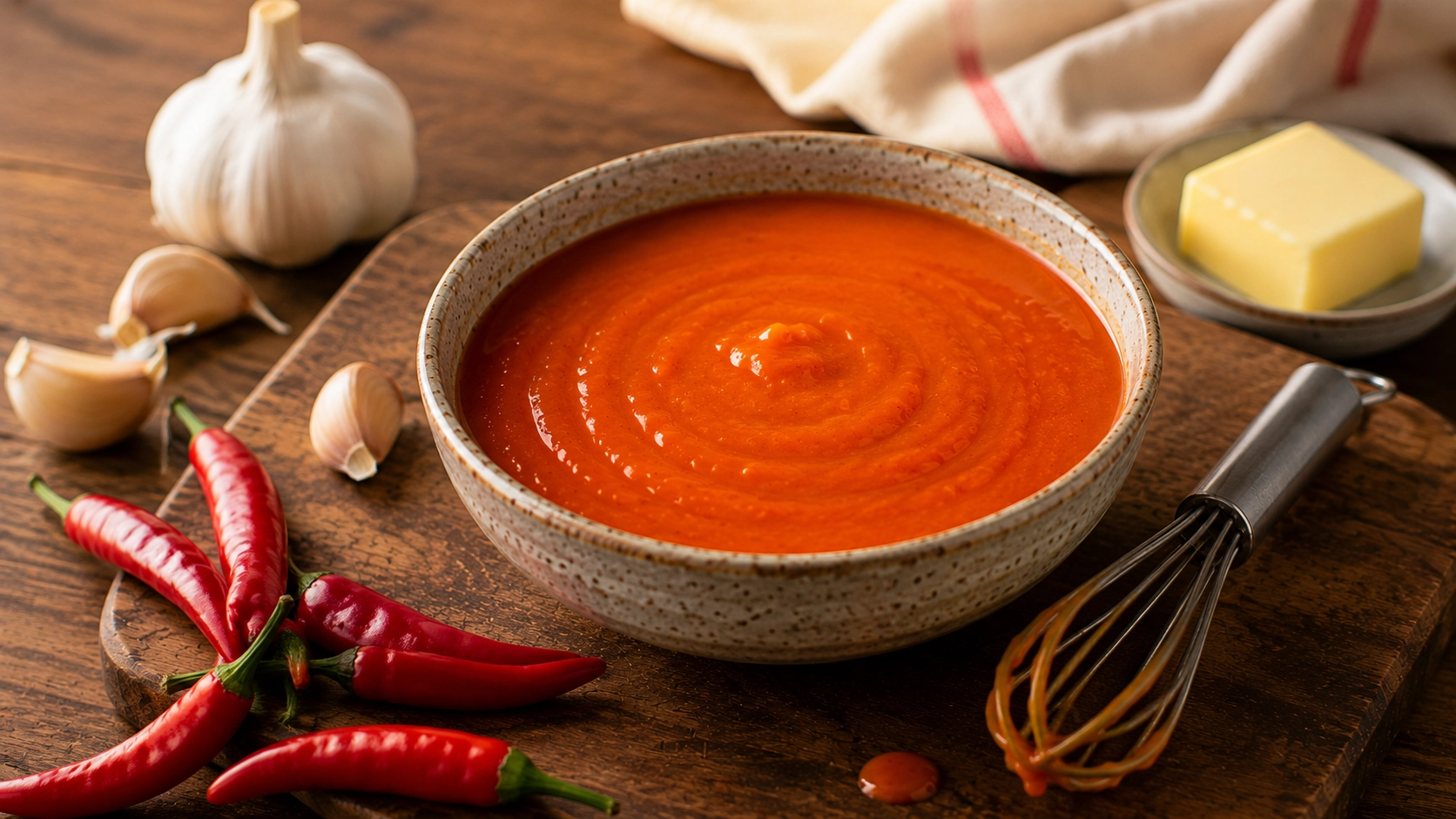
Homemade Buffalo sauce is a smooth, buttery sauce made by combining hot sauce with butter and a few simple seasonings. While hot sauce provides the signature heat and tang, the butter creates the rich, creamy texture that makes Buffalo sauce different from plain hot sauce.
Making homemade Buffalo sauce takes only a few minutes and gives you complete control over the heat, richness, and tanginess. Although it’s best known for coating chicken wings, it’s equally delicious on sandwiches, wraps, burgers, pizza, roasted vegetables, fries, and even macaroni and cheese.
Real-World Observation
Many people assume Buffalo sauce is simply bottled hot sauce until they make it themselves. Melting butter into the hot sauce completely changes both the flavor and texture, creating the smooth coating that clings so well to wings and other foods.
Small adjustments to the amount of butter, hot sauce, garlic powder, or cayenne can noticeably change the finished sauce. Many home cooks who first make it for wings soon begin using it on wraps, grilled chicken, pizza, roasted cauliflower, and burgers throughout the week.
The Real Food Upgrade
Store-bought Buffalo sauce offers convenience, consistent flavor, and the ability to use it straight from the bottle whenever you need it. It’s a dependable option for wings, sandwiches, and dipping sauces.
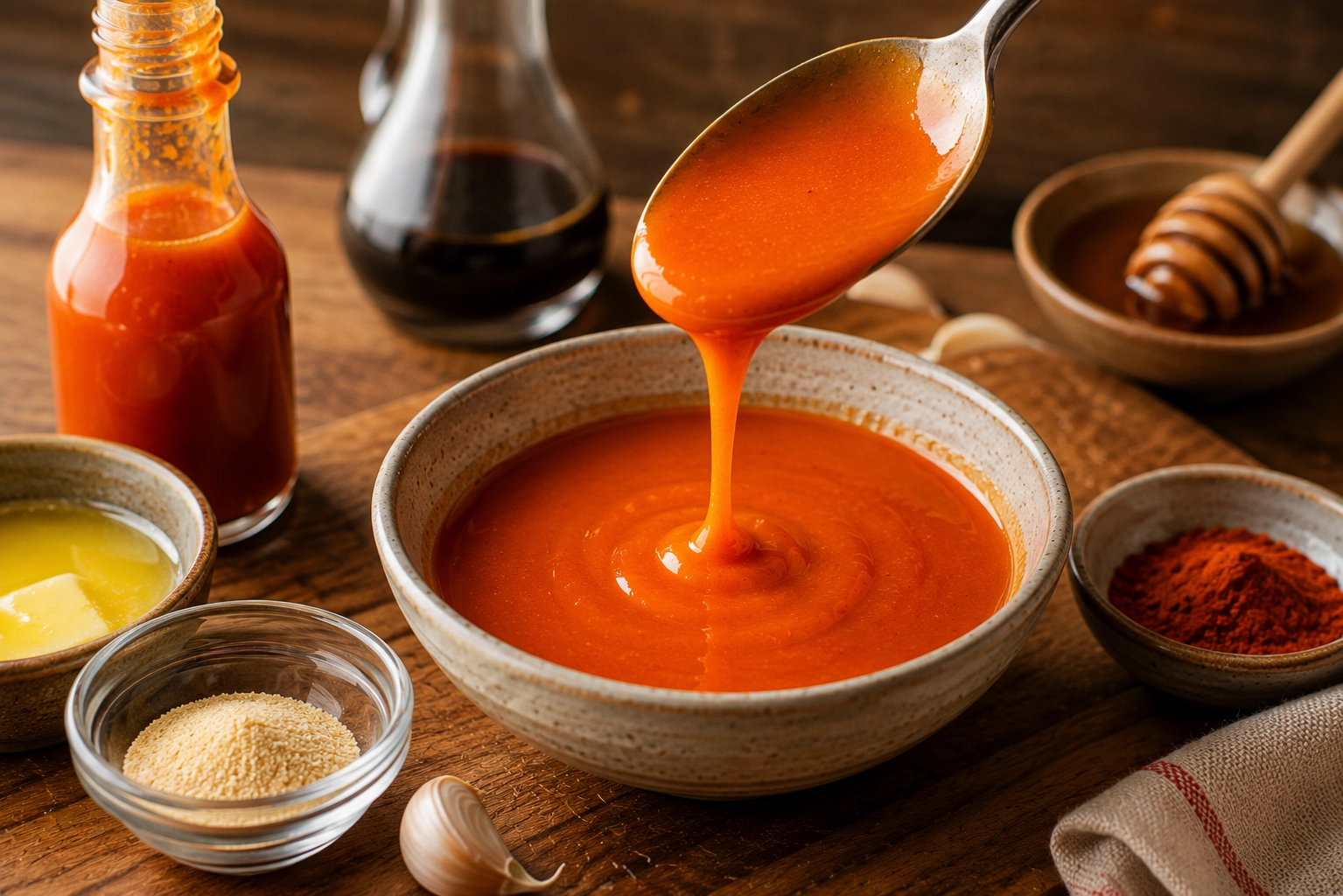
Homemade Buffalo sauce offers greater flexibility. You control the balance of buttery richness, tangy heat, and seasoning while using recognizable ingredients. Whether you prefer a mild sauce with extra butter or a spicier version with more hot sauce and cayenne, it’s easy to customize for different meals.
Rather than replacing convenience, homemade Buffalo sauce gives you more control while creating a fresh, restaurant-style sauce in just a few minutes.
Why This Recipe Works
Hot sauce provides the signature tangy heat that defines Buffalo sauce.
Butter creates the smooth, rich texture that separates Buffalo sauce from plain hot sauce while mellowing the heat.
Garlic powder adds subtle savory depth without overpowering the sauce.
Worcestershire sauce contributes gentle umami that rounds out the overall flavor.
Optional white vinegar brightens the sauce if you prefer a little extra tang.
Cayenne pepper allows you to increase the heat without changing the classic flavor profile.
The balance between buttery richness, tangy hot sauce, and gentle savory seasoning is what gives Buffalo sauce its signature flavor. Small adjustments to the butter or hot sauce can noticeably change the finished sauce while preserving its classic character.

Ingredients
Main Ingredients
Optional Additions
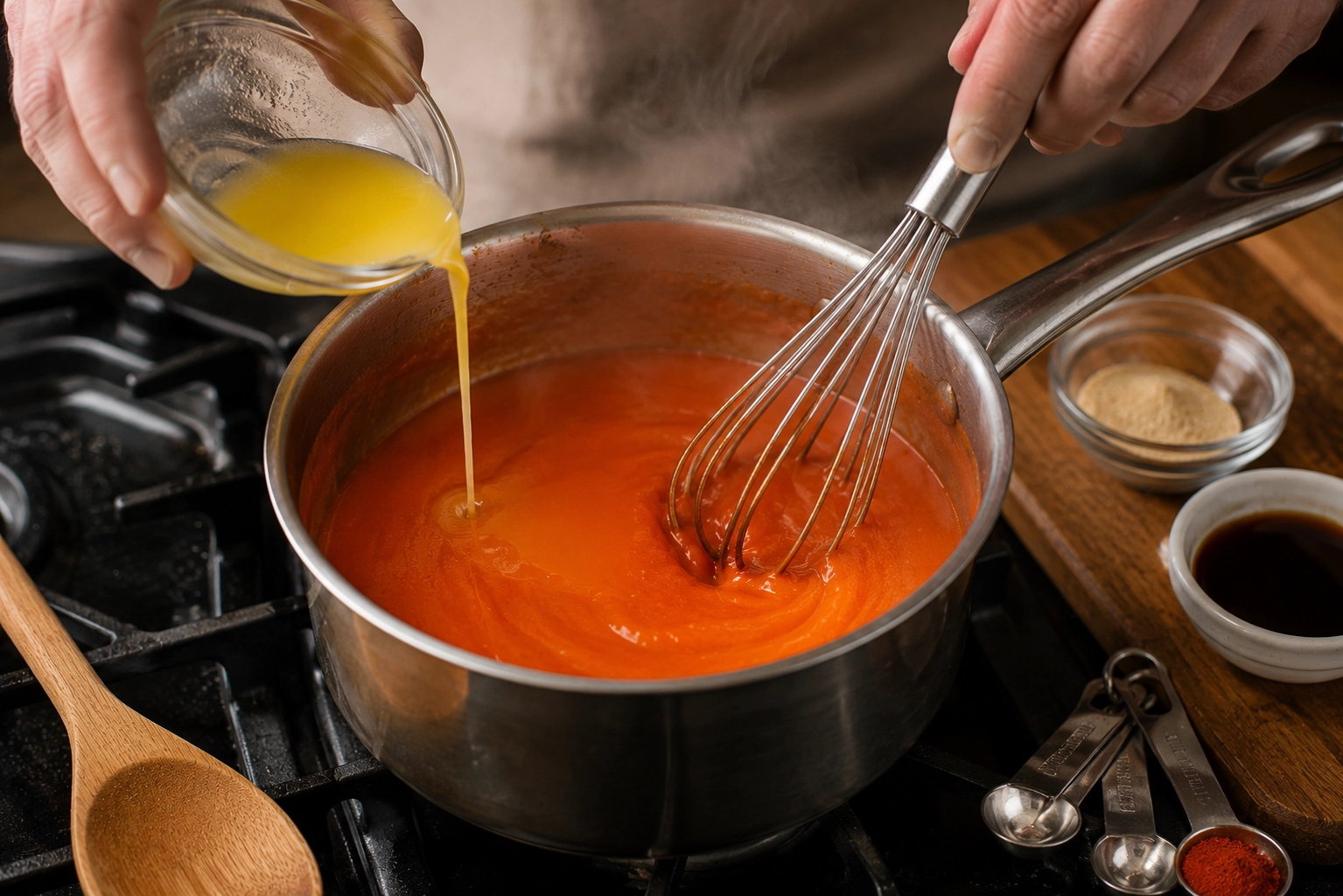
Instructions
1. Add the butter to a small saucepan and melt over low heat.
2. Stir in the hot sauce, garlic powder, and Worcestershire sauce.
3. Add any optional ingredients if using.
4. Whisk until the sauce is smooth and fully combined.
5. Simmer gently for 1 to 2 minutes without boiling.
6. Remove from the heat and use immediately or allow to cool slightly before storing.
Flavor & Outcome
This homemade Buffalo sauce is smooth and buttery with a balanced combination of tangy heat and savory flavor. The butter softens the sharpness of the hot sauce while creating the rich coating that’s characteristic of classic Buffalo wings.
The sauce stays pourable while warm and thickens slightly as it cools. Whether tossed with crispy wings or drizzled over pizza and sandwiches, it delivers bold flavor without overwhelming the food underneath.

Serving Ideas
Homemade Buffalo sauce is delicious with:
Storage & Make-Ahead Tips
Refrigerator Storage
Store the sauce in an airtight container in the refrigerator for up to 1 week.
Freezer Suitability
Freezing is not recommended, as the butter may separate slightly after thawing.
Shelf Life
For the freshest flavor, enjoy within the first week after preparing.
Make-Ahead Notes
The sauce can be prepared several days ahead and gently reheated over low heat while whisking before serving.
Common Questions
What’s the difference between Buffalo sauce and hot sauce?
Hot sauce is the primary ingredient, but Buffalo sauce combines hot sauce with butter and seasonings to create a smoother, richer, and less intensely spicy sauce.
Can I make Buffalo sauce milder?
Yes. Increase the amount of butter or reduce the hot sauce to create a milder flavor.
Can I make it hotter?
Absolutely. Add more hot sauce or stir in a pinch of cayenne pepper until it reaches your preferred level of heat.
Can I use homemade Buffalo sauce as a dip?
Yes. It’s excellent as a dipping sauce for chicken tenders, fries, roasted vegetables, and even pizza crust.
Can I make it ahead of time?
Yes. Store it in the refrigerator and gently reheat it over low heat while whisking until smooth before serving.
Next Real Food Upgrade
If you enjoyed making homemade Buffalo sauce, Homemade Ranch Dressing is a natural next recipe to try. The cool, creamy flavor of ranch pairs perfectly with Buffalo sauce on wings, wraps, salads, and vegetable platters. As your collection of homemade staples grows, Buffalo sauce also pairs naturally with homemade mayonnaise, roasted garlic aioli, homemade fry sauce, homemade honey mustard, and future blue cheese dressing, giving you a complete lineup of homemade game day favorites.