Homemade Cheeseburger Macaroni Skillet
Quick Answer
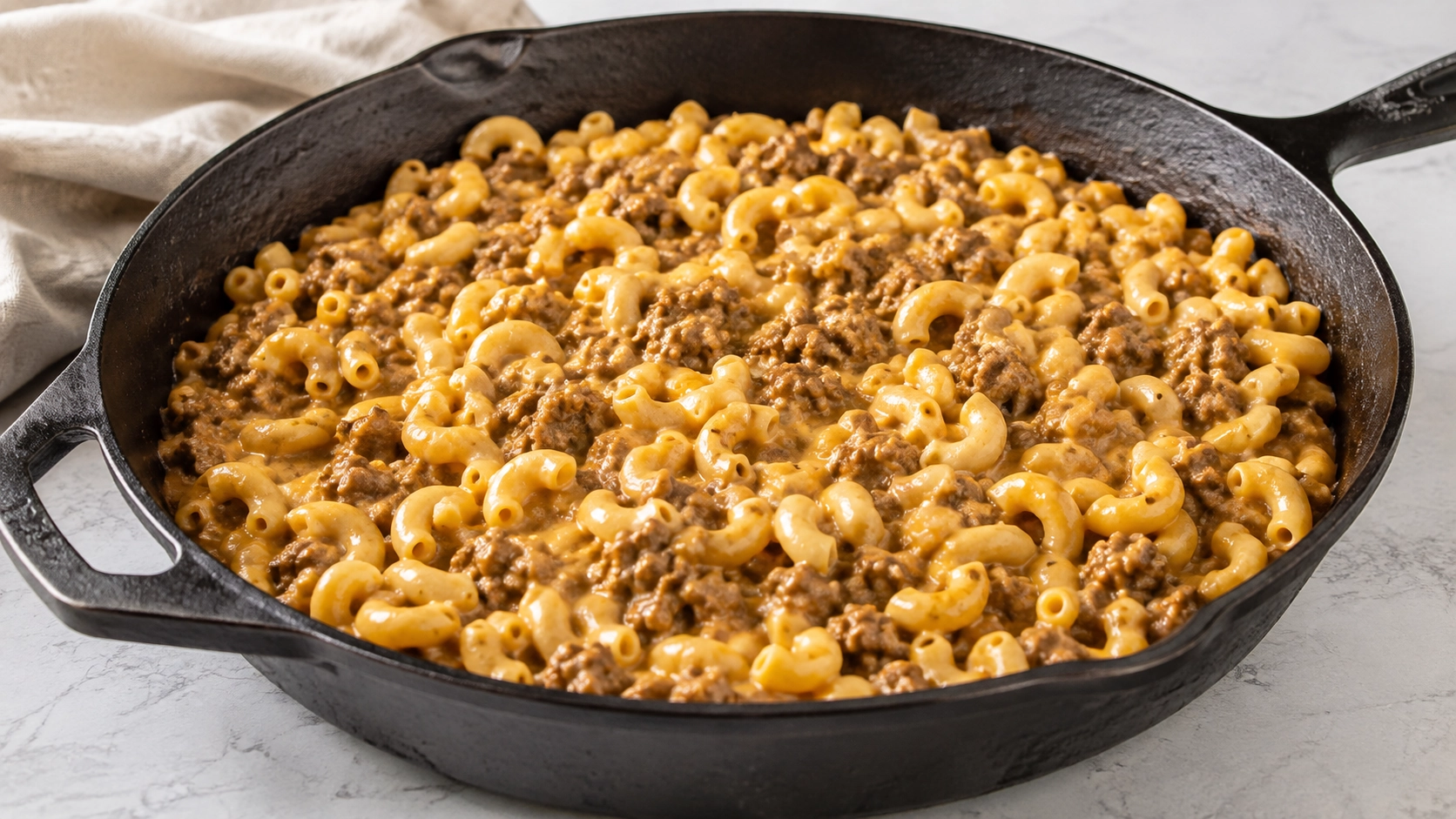
Homemade Cheeseburger Macaroni Skillet turns Homemade Cheese Sauce into a complete comfort-food dinner with browned ground beef, tender elbow macaroni, and familiar burger flavors from onion, ketchup, and mustard.
The important step is adding the cheese sauce after the skillet heat has been reduced. The beef gets the high heat it needs for browning, the macaroni cooks separately until tender, and the Homemade Cheese Sauce is folded in gently at the end. That keeps the sauce smooth and creamy rather than exposing it to unnecessary boiling.
Real-World Observation
Cheese sauce behaves very differently from ground beef. Beef benefits from a hot skillet, but an already-finished cheese sauce does not need aggressive heat to do its job.
Once the cooked macaroni and browned beef are together, lowering the heat before adding the sauce makes the finished skillet noticeably smoother. If the macaroni absorbs more sauce as it sits, a small splash of milk or reserved pasta water loosens it without requiring another large amount of cheese.
The Real Food Upgrade
Boxed Cheeseburger Macaroni
Boxed cheeseburger macaroni provides a useful dinner shortcut by combining pasta with a prepared seasoning and cheese component. Add ground beef and the required liquid, and most of the flavor decisions have already been made.
That convenience also means the cheese flavor, seasoning balance, and finished consistency are predetermined.
Homemade Cheeseburger Macaroni With Homemade Cheese Sauce
This version moves the shortcut somewhere else in the kitchen.
Homemade Cheese Sauce is already prepared as a standalone staple, so it becomes the creamy foundation of the skillet rather than relying on a powdered cheese packet.
The individual ingredients keep separate jobs:
Ground beef → savory cheeseburger base
Elbow macaroni → tender pasta
Ketchup + mustard + onion → familiar burger character
Homemade Cheese Sauce → smooth creamy finish
The result still has the recognizable appeal of beef, macaroni, and cheese, but the cheese sauce has a purpose beyond being something to pour over vegetables or potatoes.
You made the staple first. Now it becomes dinner.
Why This Recipe Works
90/10 ground beef keeps the skillet beefy without creating excessive grease. It browns well while usually leaving only a small amount of rendered fat behind.
Elbow macaroni holds onto the sauce. Its curved shape and hollow center catch small amounts of cheese sauce and beef in each spoonful.
The pasta cooks separately. This gives you dependable control over the macaroni texture and prevents the cheese sauce from becoming responsible for both cooking pasta and staying smooth.
Onion cooks with the beef. A small amount reinforces the cheeseburger flavor without turning the skillet into an onion-heavy pasta dish.
Ketchup and mustard stay restrained. They provide familiar burger-style sweetness and tang without making the cheese sauce taste like a condiment mixture.
Homemade Cheese Sauce goes in last. The sauce is already finished. It only needs gentle heat to coat the beef and macaroni.
A little milk or pasta water controls the final consistency. Pasta continues absorbing moisture after it is drained, so a few tablespoons of liquid can restore a creamy coating if necessary.
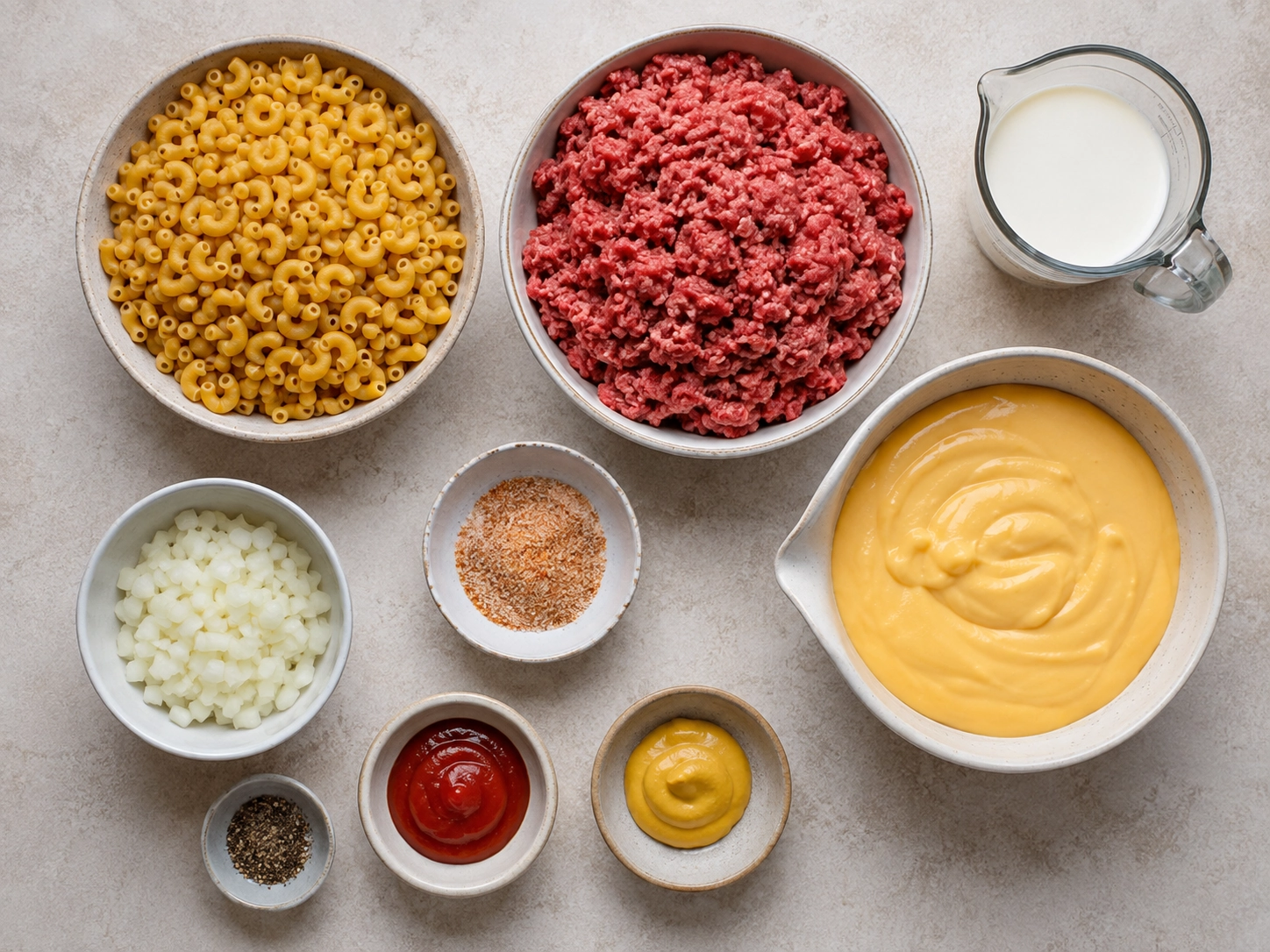
Ingredients
Main Ingredients
Optional Additions
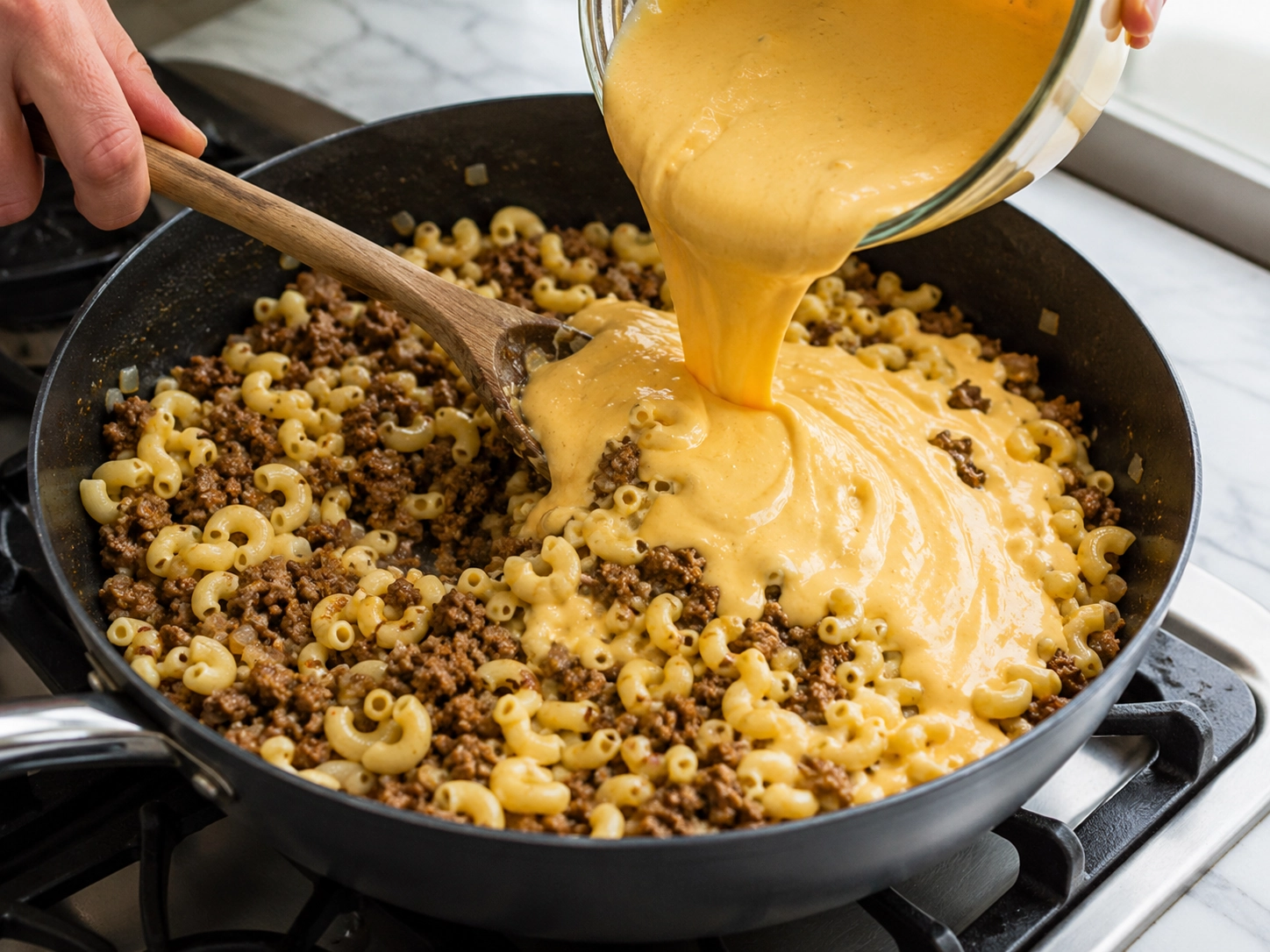
Instructions
1. Bring a pot of salted water to a boil.
2. Add the elbow macaroni and cook according to the package directions until just tender.
3. Reserve about 1/2 cup of the pasta cooking water before draining.
4. Drain the macaroni and set it aside.
5. Heat a large skillet over medium-high heat.
6. Add the ground beef and diced onion.
7. Cook for 6 to 8 minutes, breaking the beef into small crumbles, until the meat is browned and the onion is soft.
8. Drain excess grease only if a noticeable amount has accumulated in the skillet.
9. Stir in the Homemade Seasoned Salt and black pepper.
10. Reduce the heat to medium-low.
11. Stir the ketchup and mustard into the beef.
12. Add the drained macaroni and fold it gently through the beef mixture.
13. Reduce the heat to low.
14. Add the Homemade Cheese Sauce.
15. Fold everything together gently until the macaroni and beef are evenly coated.
16. Warm for 2 to 3 minutes, stirring occasionally. Do not bring the finished cheese sauce to a hard boil.
17. If the mixture is thicker than desired, add milk or reserved pasta water 1 tablespoon at a time until the sauce coats the macaroni smoothly.
18. Remove the skillet from the heat.
19. Let the macaroni stand for 2 to 3 minutes before serving.
20. Add optional pickles, green onions, tomatoes, or other toppings at the table.
Flavor & Outcome
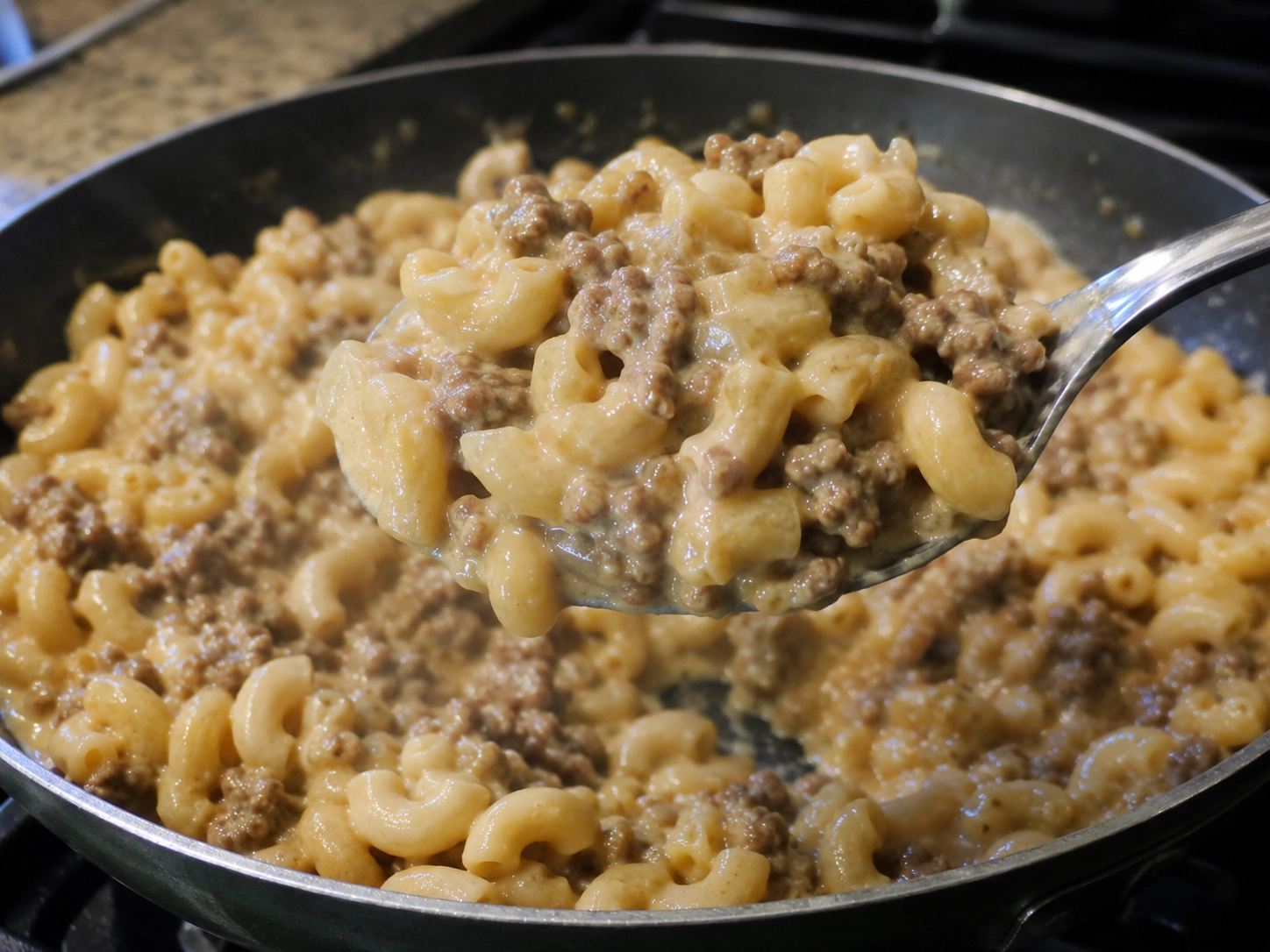
The finished skillet should have distinct pieces of browned beef distributed throughout tender macaroni rather than a small amount of meat disappearing into an oversized pot of pasta.
The Homemade Cheese Sauce should form a smooth coating over the macaroni. There may be a small amount of sauce between the noodles, but there should not be a large puddle underneath the mixture.
Ketchup adds mild sweetness and tomato tang, while mustard provides enough acidity to push the flavor toward cheeseburger territory without becoming dominant. The onion should soften into the beef rather than remaining crunchy.
The skillet will thicken as it rests because the macaroni continues absorbing moisture. If it sits longer before serving, stir in another small splash of milk over low heat.
Pickles are best added afterward. Their acidity and crunch contrast with the rich macaroni much better when they remain fresh rather than simmering in the cheese sauce.
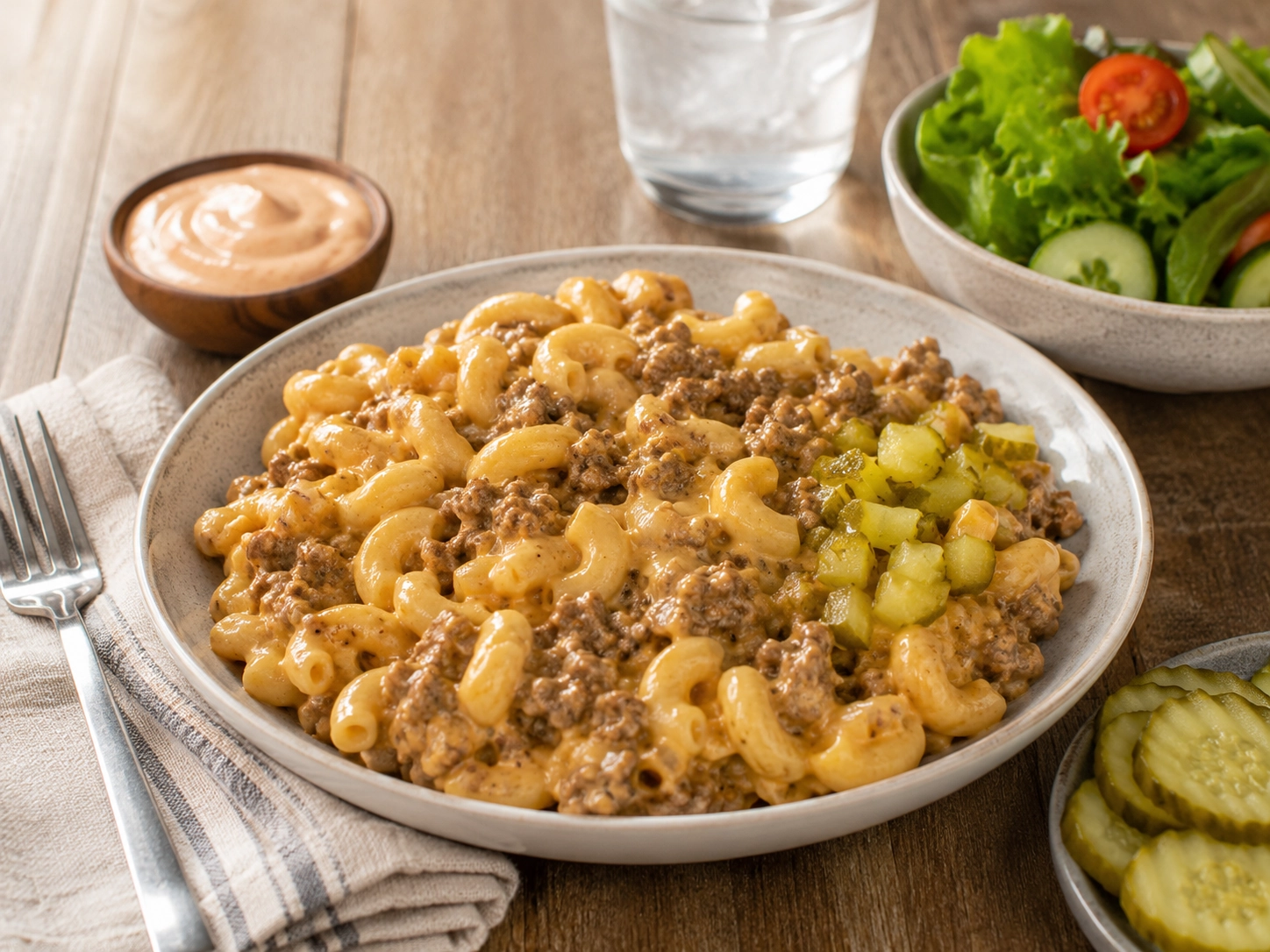
Serving Ideas
Homemade Cheeseburger Macaroni Skillet pairs naturally with simple vegetables, salads, and familiar burger sides, including:
Storage & Make-Ahead Tips
Refrigerator Storage
Cool leftover Cheeseburger Macaroni and transfer it to a covered container.
Refrigerate leftovers for up to 3 to 4 days.
The macaroni will continue absorbing some of the cheese sauce during storage, so refrigerated portions will usually be thicker than the freshly made skillet.
Freezer Suitability
Cheeseburger Macaroni can be frozen, but creamy cheese sauces may become somewhat less smooth after freezing and reheating.
For the best texture, divide cooled leftovers into individual freezer-safe portions.
Thaw overnight in the refrigerator before reheating.
Reheating
Reheat leftovers gently in a skillet over low to medium-low heat.
Add a tablespoon or two of milk before reheating, then stir as the sauce warms. Add additional milk only if needed.
Avoid aggressively boiling the reheated macaroni. Gentle heat gives the cheese sauce a better chance of returning to a smooth consistency.
Make-Ahead Notes
Homemade Cheese Sauce can be prepared ahead and refrigerated until needed.
The onion can also be chopped in advance.
For the best pasta texture, cook the macaroni and assemble the skillet closer to serving instead of storing fully cooked pasta in the cheese sauce for several days before eating.
Common Questions
What kind of ground beef is best for cheeseburger macaroni?
90/10 ground beef works well because it provides plenty of beef flavor without releasing a large amount of grease into the skillet.
An 85/15 blend can also be used. If more fat collects after browning, drain the excess before adding the ketchup, mustard, macaroni, and cheese sauce.
How do I keep Homemade Cheese Sauce smooth in cheeseburger macaroni?
Lower the skillet heat before adding it.
Homemade Cheese Sauce is already prepared, so it does not need to boil. Fold it into the cooked beef and macaroni over low heat and warm everything only until combined.
If the sauce becomes too thick, loosen it with a small amount of milk or reserved pasta water.
Should I cook the macaroni before adding it to the skillet?
Yes, for this recipe.
Cooking the macaroni separately provides better control over both pasta doneness and cheese-sauce consistency. It also means the Homemade Cheese Sauce does not need additional liquid or prolonged heat to cook dry pasta.
Can Homemade Cheeseburger Macaroni Skillet be made ahead?
Yes, although it is creamiest shortly after assembly.
Homemade Cheese Sauce can be prepared ahead, and the beef can also be browned in advance. Cook the macaroni and combine everything when you are ready to serve.
If making the entire skillet ahead, refrigerate it and add a splash of milk during reheating.
Should pickles be mixed into cheeseburger macaroni?
They can be, but adding them after cooking works better.
Fresh chopped pickles provide acidity and crunch against the creamy pasta. Heating them directly in the cheese sauce softens their texture and distributes pickle flavor throughout the entire skillet.
Serving them as an optional topping also solves the important dinner-table problem of people having surprisingly firm opinions about pickles.
Next Real Food Upgrade
If you enjoyed turning Homemade Cheese Sauce into a complete skillet dinner, Better Burger Sauce is the natural next upgrade. The cheese sauce handles creamy comfort-food recipes like this macaroni, while Burger Sauce gives actual burgers, sandwiches, wraps, and dipping plates a tangy condiment built specifically for a different job.
From there, Homemade Fry Sauce makes a natural companion for burgers, fries, potato wedges, and other casual dinners, while Homemade Seasoned Salt gives ground beef, potatoes, vegetables, and skillet meals an easy everyday seasoning option.