Why Homemade Balsamic Vinaigrette Tastes Better Than Store-Bought
Quick Answer
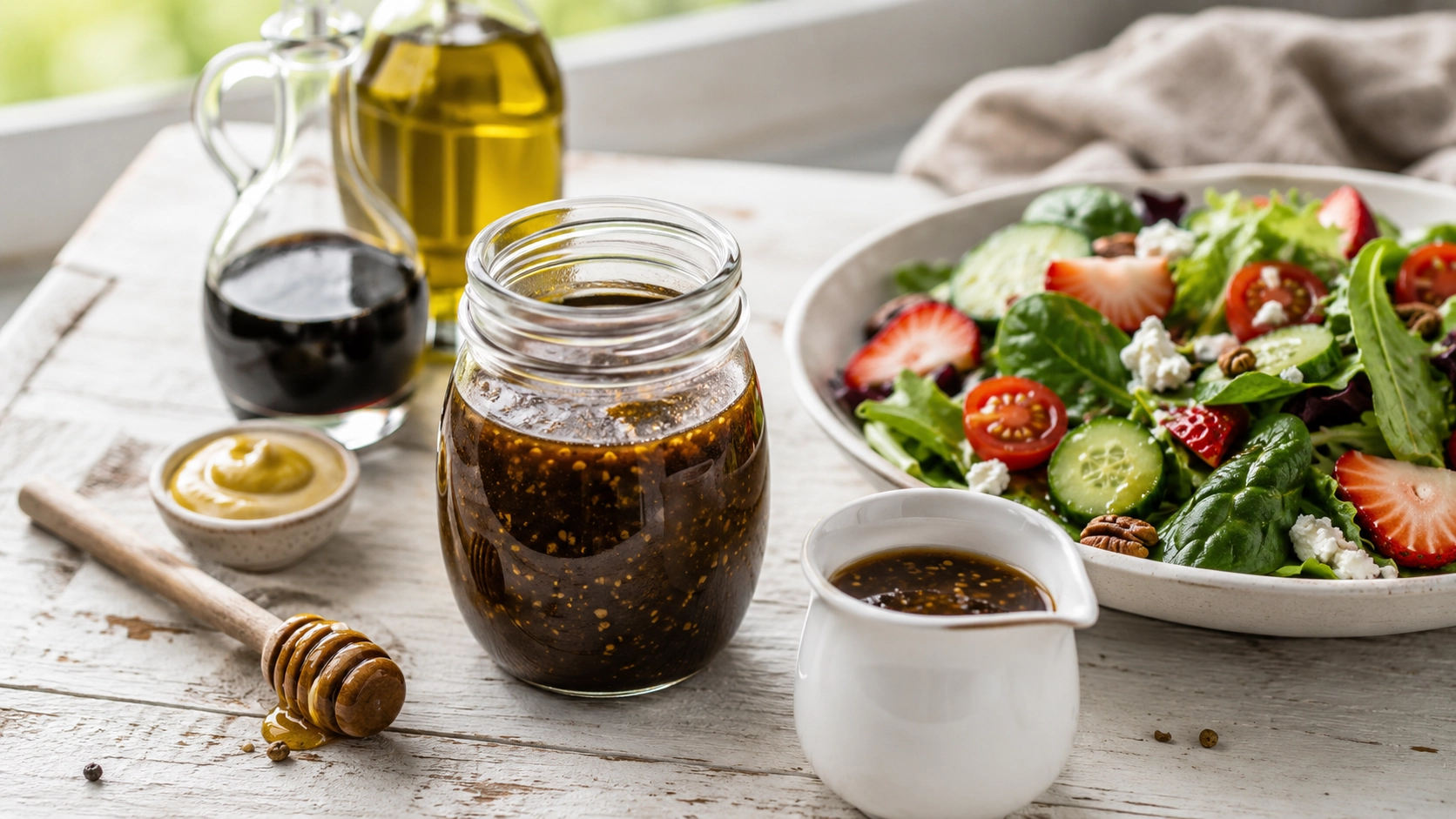
Homemade balsamic vinaigrette combines balsamic vinegar, olive oil, Dijon mustard, honey, garlic, salt, and pepper into a smooth, tangy dressing. It has enough sweetness to soften the vinegar without covering its deeper fruit and caramel notes.
Bottled vinaigrette provides convenience and a consistent texture. Making it at home gives you control over the sweetness, acidity, seasoning, and thickness. The same mixture can be used on green salads, roasted vegetables, grain bowls, sandwiches, or as a marinade for chicken.
Real-World Observation
Freshly mixed balsamic vinaigrette may appear completely blended at first and then separate as it rests. That separation is normal. Oil and vinegar naturally pull apart, while Dijon mustard helps them remain combined longer.
The dressing also changes in the refrigerator. Olive oil may become cloudy or partially solid, and the vinaigrette will feel thicker when cold. Letting it stand at room temperature for several minutes and shaking it again restores its pourable consistency.
The Real Food Upgrade
Store-Bought Balsamic Vinaigrette
Bottled balsamic vinaigrette is ready to pour, remains consistent from serving to serving, and is formulated to hold its texture during refrigerated storage.
Its balance is fixed. The sweetness, acidity, oil content, garlic, and seasoning cannot be changed after the dressing has been bottled.
Homemade Balsamic Vinaigrette
Homemade balsamic vinaigrette begins with a short list of familiar pantry ingredients. Each part of the dressing can be adjusted independently.
More olive oil produces a softer, rounder flavor. Additional balsamic vinegar makes the dressing sharper. Honey can be increased or reduced without changing the amount of vinegar, and Dijon mustard can be adjusted to change both the flavor and the way the dressing blends.
The practical upgrade is not simply freshness. It is the ability to build a vinaigrette that suits the salad, vegetable, sandwich, or marinade you are preparing.
Why This Recipe Works
Balsamic vinegar provides the acidity and the dressing’s dark, slightly sweet character. Different balsamic vinegars vary in sharpness, so the finished vinaigrette should always be tasted before adding more honey.
Extra-virgin olive oil softens the vinegar and gives the dressing body. A ratio of two parts oil to one part vinegar creates a vinaigrette that remains tangy without tasting harsh.
Dijon mustard does two jobs. It adds a mild savory sharpness and helps break the oil into smaller droplets so the dressing stays blended longer. It does not create a permanent emulsion, but it slows the separation.
Honey rounds out the acidity. The goal is not to make the vinaigrette taste sugary. One tablespoon provides a useful starting point, but a naturally sweeter balsamic vinegar may need less.
Garlic adds a savory edge that helps the dressing work beyond leafy salads. Fresh garlic tastes sharper, while garlic powder produces a smoother dressing with no small pieces.
Salt and black pepper bring the oil, vinegar, mustard, and sweetness into focus. Add extra salt only after the dressing has been fully mixed and tasted.
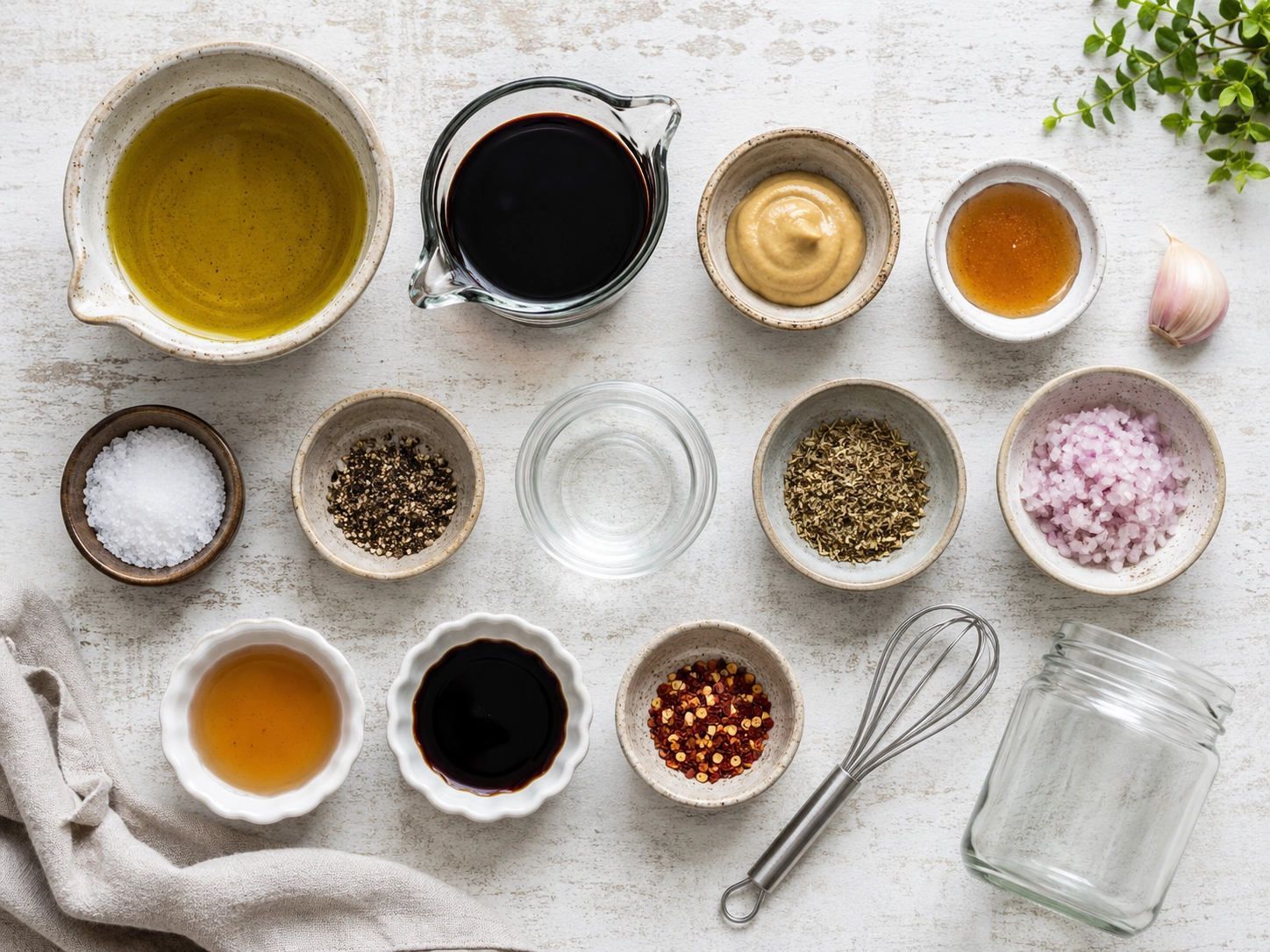
Ingredients
Main Ingredients
Optional Additions
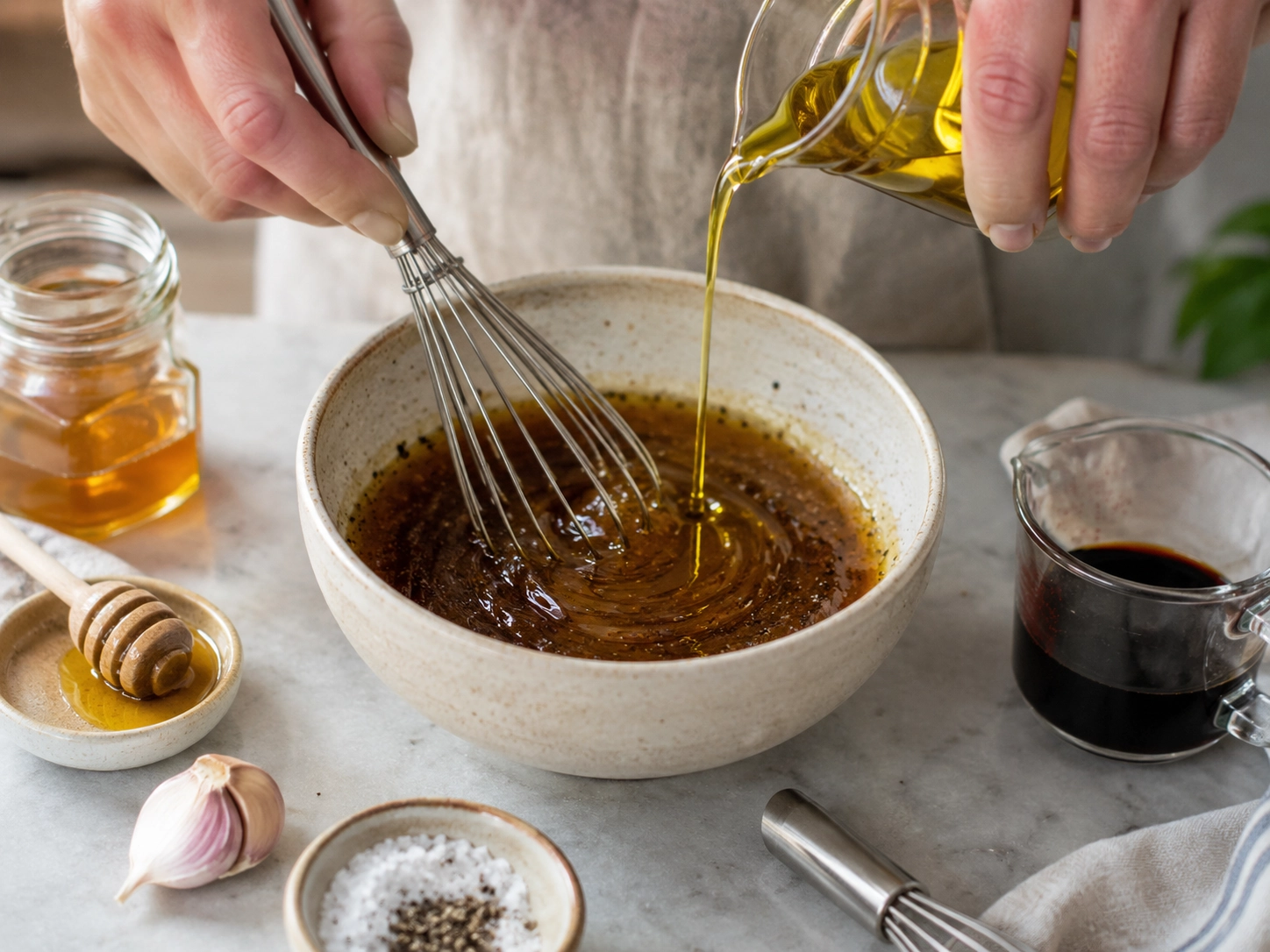
Instructions
1. Add the balsamic vinegar to a jar or small mixing bowl.
2. Add the Dijon mustard, honey, garlic, salt, and black pepper.
3. Whisk the ingredients until the honey and mustard are evenly distributed.
4. Slowly pour in the olive oil while whisking continuously.
5. Continue whisking until the dressing looks smooth and slightly thickened.
6. Taste the vinaigrette and adjust the sweetness, acidity, salt, or pepper.
7. Add water one teaspoon at a time when a thinner consistency is needed.
8. Use the dressing immediately or refrigerate it in a covered container.
9. Shake or whisk the vinaigrette again before each serving.
Flavor & Outcome
The finished dressing is tangy, slightly sweet, and more pourable than a creamy salad dressing. Balsamic vinegar gives it a deep brown color and a rounded acidity, while Dijon mustard adds a quiet savory note.
The garlic becomes more noticeable as the vinaigrette rests. Freshly mixed dressing tastes more vinegar-forward, but the flavors become more cohesive after 20 to 30 minutes.
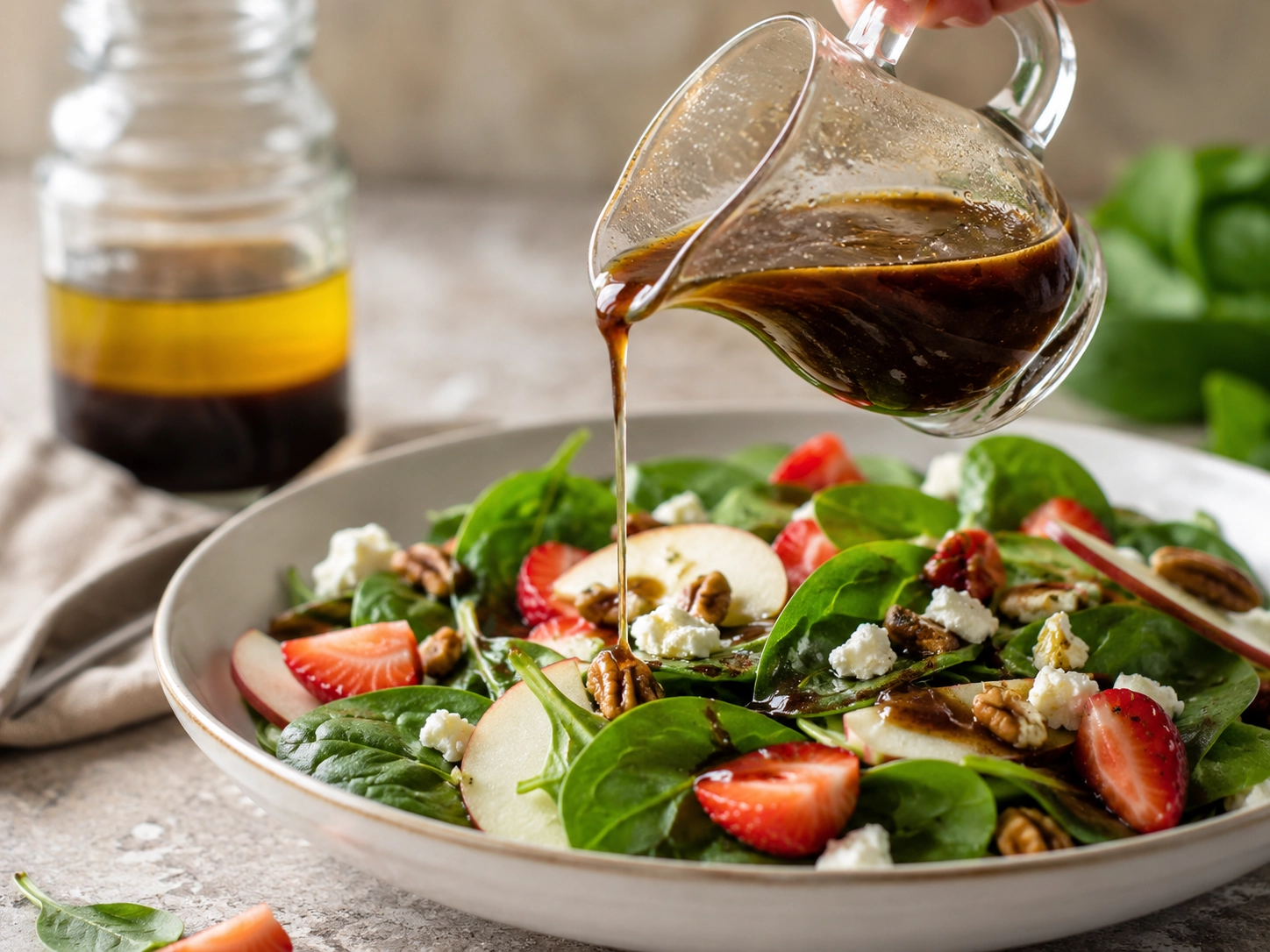
The dressing should lightly coat greens rather than gather heavily at the bottom of the bowl. When it seems too thick for delicate lettuce, a teaspoon or two of water can loosen it without adding more oil.
Balsamic Vinaigrette vs. Italian Dressing
Both balsamic vinaigrette and Italian dressing are oil-and-vinegar dressings, but they emphasize different ingredients.
Balsamic vinaigrette gets most of its character from balsamic vinegar, mustard, and a small amount of sweetness. Italian dressing usually relies on a sharper vinegar and a more noticeable mixture of dried herbs and seasonings.
Balsamic vinaigrette works especially well with fruit, roasted vegetables, beef, chicken, and darker leafy greens. Italian dressing is often more herb-forward and works well with pasta salads, vegetables, sandwiches, and marinades.
Balsamic Vinaigrette vs. Balsamic Glaze
Balsamic vinaigrette is a pourable mixture of vinegar, oil, mustard, and seasonings. It is designed to coat salad greens, vegetables, grains, or meat.
Balsamic glaze is balsamic vinegar that has been reduced until thick and concentrated. It is usually drizzled in small amounts over tomatoes, cheese, vegetables, fruit, or cooked meat.
The two are not interchangeable. Vinaigrette provides moisture and coats food evenly, while glaze adds a concentrated finishing accent.
Vinaigrette vs. Creamy Salad Dressing
Vinaigrettes are based on oil and acid. They remain fluid, coat ingredients lightly, and separate naturally during storage.
Creamy dressings such as homemade ranch dressing and homemade Caesar dressing use ingredients such as mayonnaise, yogurt, sour cream, or cheese to create a thicker texture.
The choice depends on the meal. Vinaigrette keeps individual vegetables and greens distinct. Creamy dressing creates a heavier coating and carries herbs, cheese, or garlic differently.
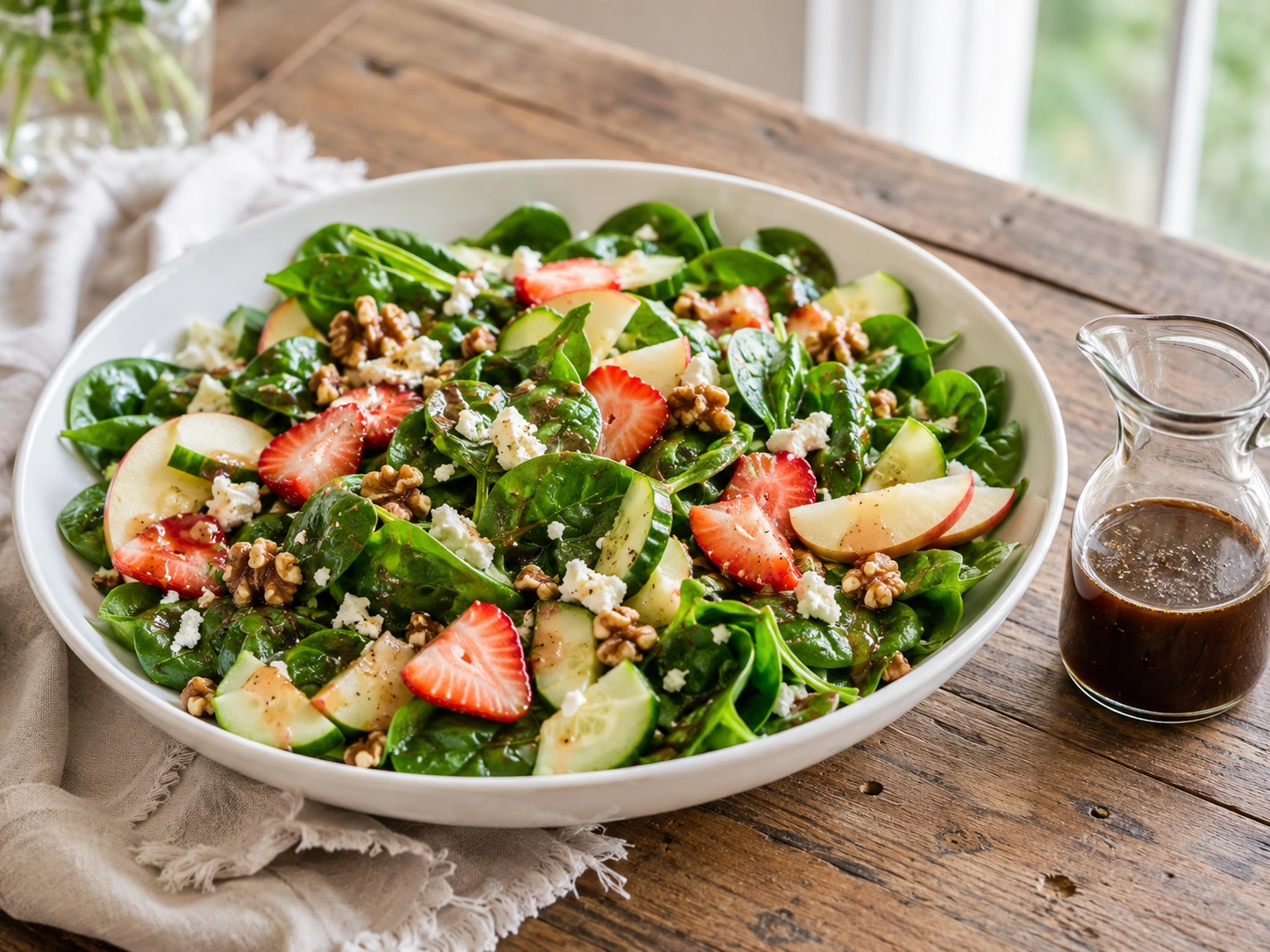
Serving Ideas
Use homemade balsamic vinaigrette with:
Storage & Make-Ahead Tips
Refrigerator Storage
Store homemade balsamic vinaigrette in a covered jar or container in the refrigerator.
Freezer Suitability
Freezing is not recommended. The dressing may separate unevenly after thawing, and fresh garlic or shallot can lose its original texture.
Shelf Life
Use the vinaigrette within one week when it contains fresh garlic or shallot.
Make-Ahead Notes
The vinaigrette can be prepared several days before serving. Its garlic and mustard flavors become more noticeable as it rests.
Olive oil may thicken or solidify in the refrigerator. Let the container stand at room temperature for 10 to 15 minutes, then shake or whisk the dressing before serving.
Common Questions
What is balsamic vinaigrette made of?
Balsamic vinaigrette is made from balsamic vinegar, olive oil, mustard, a sweetener, and seasonings. Garlic, shallots, herbs, or pepper can be added depending on how the dressing will be used.
How do I keep balsamic vinaigrette from separating?
Dijon mustard helps the oil and vinegar remain combined longer, but some separation is expected. Whisk the oil in slowly or shake the ingredients in a tightly closed jar. Shake the dressing again before serving.
Can I make balsamic vinaigrette without Dijon mustard?
Yes. The vinaigrette will still work, but it may separate more quickly and taste less savory. You can omit the mustard or replace it with a small amount of another smooth mustard.
How can I make the vinaigrette less acidic?
Add olive oil one tablespoon at a time until the vinegar tastes softer. A small additional amount of honey can also round out the acidity, but adding too much may hide the balsamic flavor.
What foods can I use balsamic vinaigrette on?
Use it on leafy salads, roasted vegetables, grain bowls, chicken, steak salads, tomato dishes, sandwiches, wraps, beans, lentils, and grilled vegetables. It also works as a dipping mixture for bread.
Next Real Food Upgrade
After making your own balsamic vinaigrette, try homemade sweet salad dressing. Both dressings let you adjust the balance between sweetness and acidity, but sweet salad dressing offers a different flavor profile for leafy greens, fruit salads, vegetables, and composed salads.